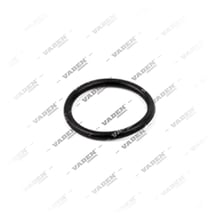
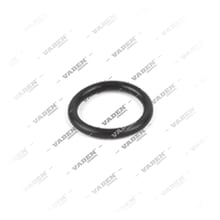
What Is a Caliper Mechanism O-Ring?
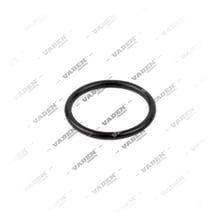
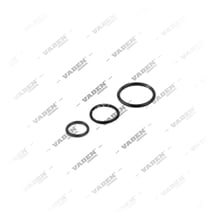
The Caliper Mechanism O-Ring is an elastomer sealing component fitted around the moving parts of heavy commercial vehicle air disc brake calipers, such as the piston, the adjuster mechanism, and the guide pins, providing air-tightness together with protection against dust and moisture. On the shop floor it's also called the "caliper O-ring," "piston O-ring," or "mechanism sealing ring." It forms a thin but critical barrier between the caliper housing and the moving mechanism inside it; once this barrier fails, moisture and dirt work their way in, the mechanism starts to corrode, and braking performance drops. It is typically produced from nitrile rubber (NBR) or fluorocarbon (FKM) compounds engineered to withstand high temperature, oil vapor, and brake dust. On Wabco- and Knorr-Bremse-type disc calipers, it sits around the adjuster mechanism housing, the piston guide, and the guide pin bushings.
How Does a Caliper Mechanism O-Ring Work?
As the caliper mechanism operates, the piston and the adjuster sleeve are in constant axial and rotating motion; the O-ring keeps the seal by forming a flexible contact line between these surfaces and the fixed housing. Every time the brake is applied the O-ring deforms slightly, then springs back close to its original shape as the mechanism resets; this elasticity is what keeps the seal intact over thousands of brake cycles. It also keeps grease from escaping, helping the adjuster mechanism and guide pins stay low-friction long-term. Against temperature swings, road salt, mud, and brake dust, this small part is the first line of defense protecting the caliper's internal mechanism.
- Sealing Function: Forms a continuous contact line between the moving mechanism surfaces and the fixed housing.
- Dirt and Moisture Barrier: Keeps dust, mud, and moisture from working their way into the mechanism.
- Grease Retention: Keeps lubricating grease inside the mechanism, cutting down on friction.
Caliper Mechanism O-Ring Technical Specifications
When choosing a Caliper Mechanism O-Ring, the deciding criteria are material type, cross-section diameter, inner diameter, and hardness (Shore A). The material is usually NBR (nitrile), or FKM (fluorocarbon) where high-temperature resistance is needed; both stand up to brake fluid, grease, and ozone exposure. Cross-section and inner diameter vary by caliper manufacturer, so the O-ring has to seat into the housing groove with millimeter precision. Hardness typically falls in the 70-90 Shore A range; too soft wears out early, too hard may not seal well enough. The operating range generally runs from -40°C to +150°C; for exact tolerances, the vehicle manufacturer's current service manual is the final word.
Caliper Mechanism O-Ring Types and Subgroups
- Piston O-Ring: Positioned around the caliper piston, it delivers the primary seal against brake fluid and air pressure.
- Adjuster Mechanism O-Ring: Protects the housing of the automatic clearance adjuster from moisture and dirt.
- Guide Pin O-Ring: Works together with the boots covering the caliper's sliding guide pins to keep the pins moving freely.
- Shaft O-Ring: Seals the point where the adjuster shaft or drive shaft exits the caliper housing.
- Cover and Flange O-Ring: Closes off the joint surface between the caliper mechanism cover and the housing.
How to Choose the Right Caliper Mechanism O-Ring
Choosing the right Caliper Mechanism O-Ring starts with confirming dimensional and material compatibility for the specific caliper brand and mechanism type. The wrong cross-section or inner diameter leaves the seal falling short, or makes the mechanism stiff. The table below sums up the key criteria worth weighing.
Caliper Mechanism O-Ring Selection Criteria| Criterion | Description |
|---|
| Material Type | NBR (standard) or FKM (high-temperature/chemical resistance) |
| Cross-Section Size | Millimeter fit to the caliper groove; varies by caliper model |
| Hardness (Shore A) | Generally in the 70-90 Shore A range |
| Caliper Compatibility | Wabco / Knorr-Bremse-type disc caliper and mechanism variant |
| Temperature Resistance | Roughly -40°C to +150°C (varies by material) |
| Mounting Position | Piston, adjuster mechanism, guide pin, or cover/flange |
Caliper Mechanism O-Ring Maintenance and Key Points
- Always Replace It During Caliper Service: Whenever the caliper mechanism is removed and refitted, always install a fresh O-ring rather than reusing the old one.
- Clean the Groove: Before installation, clear the O-ring groove of old grease, dirt, and rust residue.
- Use the Right Grease: During assembly, apply a caliper-specific, high-temperature grease that's compatible with the rubber compound; a mismatched grease can cause the rubber to swell.
- Avoid Cutting and Twisting: Don't drag the O-ring across sharp edges or overstretch it while fitting it.
- Carry Out Periodic Visual Checks: During routine maintenance, check for cracking, hardening, or any sign of permanent deformation.
Common Faults and Solutions
- Stiffness or Sticking in the Caliper Mechanism: Moisture and rust getting in is usually traced back to a hardened or cracked O-ring; clean out the mechanism and renew both the O-ring and the grease.
- Grease Leaking from the Adjuster Mechanism: A worn or wrong-size adjuster mechanism O-ring leads to leakage; replace it with a correctly sized original O-ring.
- Guide Pins Moving Stiffly: A torn boot together with a degraded pin O-ring lets dirt in; replace the boot and O-ring as a pair, then clean and grease the pin.
- Uneven Brake Pad Wear: An adjuster mechanism seized by moisture ingress can stop the pad from contacting evenly; replacing the O-ring frees the mechanism back up.
- Visible Moisture or Rust Marks on the Caliper: A failed cover or flange O-ring lets moisture reach the internal mechanism; renew the cover seal.
Why VADEN ORIGINAL?
VADEN ORIGINAL Caliper Mechanism O-Ring products are manufactured to OE dimensions and tolerances, delivering the same precise seal as the original factory fitment. They offer broad OEM matching with Wabco- and Knorr-Bremse-type caliper mechanisms; backed by a production base exporting to more than 100 countries, VADEN ORIGINAL lets workshops and fleets renew the mechanism quickly and reliably.
- OE Dimensions and Tolerances: Fits original caliper grooves precisely.
- Broad OEM Matching: Offers compatible options for Wabco- and Knorr-Bremse-type mechanisms.
- Durable Rubber Compound: Delivers long service life against brake dust, oil vapor, and temperature swings.
- Extensive Export Network: Backed by a supply and stock base reaching more than 100 countries.
Conclusion
Despite its small size, the Caliper Mechanism O-Ring is a critical seal that protects the brake caliper's internal mechanism from moisture, dirt, and grease loss. Fitting the correct dimension and material during caliper maintenance or mechanism overhaul has a direct bearing on both braking safety and mechanism service life. Built to VADEN ORIGINAL quality, the Caliper Mechanism O-Ring offers a dependable, consistent solution for heavy commercial vehicle fleets.
Frequently Asked Questions (FAQ)
What does a Caliper Mechanism O-Ring do?
The Caliper Mechanism O-Ring is a small rubber seal that provides sealing around the piston, adjuster mechanism, and guide pins inside the brake caliper. By keeping moisture, dust, and dirt out of the mechanism, it lets these parts move smoothly and keeps the mechanism from corroding.
When should a Caliper Mechanism O-Ring be replaced?
The O-ring should always be renewed whenever the caliper mechanism is removed for service or the piston/adjuster mechanism is overhauled. It should also be replaced without delay if you notice cracking, hardening, or a grease leak.
What material is a Caliper Mechanism O-Ring made from?
These O-rings are typically produced from nitrile rubber (NBR), or fluorocarbon (FKM) compounds in applications that need high-temperature resistance. Both materials are formulated to resist brake fluid, grease, and ozone exposure.
What symptoms does a worn Caliper Mechanism O-Ring show?
Stiffness in the adjuster mechanism, grease leaks, guide pins that move stiffly, and visible moisture or rust marks on the caliper housing are all signs the O-ring has given out. When these symptoms show up, the mechanism should be inspected and the O-ring replaced.
Which calipers is the VADEN ORIGINAL Caliper Mechanism O-Ring compatible with?
VADEN ORIGINAL Caliper Mechanism O-Ring products are compatible with the Wabco- and Knorr-Bremse-type disc caliper mechanisms widely used on heavy commercial vehicles. It's a good idea to confirm the caliper model and mechanism variant before ordering.