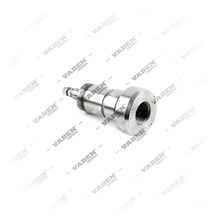
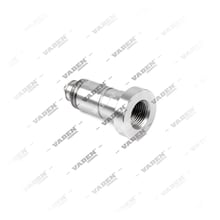
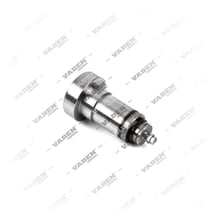
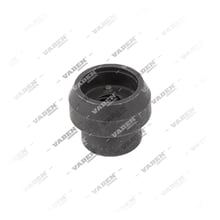
What Is a Caliper Guide Pin Bushing?
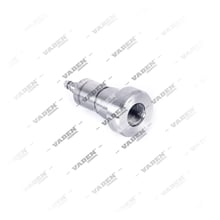
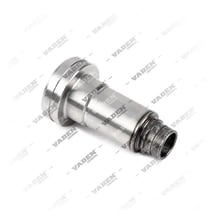
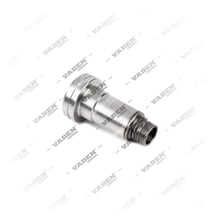
The Caliper Guide Pin Bushing is the guide pin socket that keeps the floating body of a heavy commercial vehicle's disc brake caliper aligned with its carrier bracket. As the moving element of the caliper mechanism, this bushing housing carries the pin and bushing bearing that let the caliper slide axially back and forth on the bracket every time the brake pedal is pressed. In the field it is also referred to as the "caliper guide bushing," "slide pin bushing socket," or "caliper bushing housing." It occupies a critical position in the disc brake systems of trucks, tractor units, buses, and trailers, particularly in sliding (floating) caliper designs. Without a properly functioning Caliper Guide Pin Bushing, the caliper cannot slide smoothly on the bracket, the pads cannot contact the disc with even pressure, and overall braking performance becomes uneven.
How Does a Caliper Guide Pin Bushing Work?
When the brake pedal is pressed, the caliper piston pushes the inner pad against the disc; the reaction force then slides the caliper body along the guide pins, bringing the outer pad into contact with the disc as well. This sliding action depends entirely on the condition of the bushing and pin inside the Caliper Guide Pin Bushing. When the bushing wears or the boot tears, sliding resistance increases, the caliper binds on the bracket, and brake balance is thrown off.
- Axial Sliding: The pin moving inside the bushing allows the caliper to slide back and forth on the bracket.
- Alignment: The bushing housing holds the caliper body steady against lateral deviation, preserving parallelism between the disc and the pads.
- Sealing: The rubber boot forms a barrier against dust, mud, and moisture, protecting the bushing and pin from corrosion.
- Friction Reduction: A layer of grease lowers friction between the pin and bushing, ensuring smooth sliding.
- Return Action: It allows the caliper to return freely to its starting position once the brake is released.
Caliper Guide Pin Bushing Technical Specifications
Caliper Guide Pin Bushing - Key Technical Data| Feature | Description |
|---|
| Product Group | Brake caliper mechanism - guide pin socket and bushing kit |
| Core Components | Sliding bushing, guide pin, protective rubber boot, sealing element |
| Material | Wear-resistant bronze/composite bushing, synthetic rubber boot, steel pin body |
| Operating Principle | Keeps the caliper balanced on the bracket through axial sliding motion |
| Vehicle Compatibility | Mercedes-Benz, MAN, Scania, Volvo, DAF, Iveco, Renault Trucks heavy commercial vehicles |
| Caliper Type | Wabco and Knorr-Bremse based sliding (floating) disc brake calipers |
| Application Area | Front/rear disc brake systems of trucks, tractor units, buses, and trailers |
| Quality Standard | VADEN ORIGINAL manufacturing to OE dimensions |
Caliper Guide Pin Bushing Types and Subcomponents
- Sliding Bushing (Guide Bushing): The wear-resistant inner bearing element inside which the pin slides.
- Guide Pin: The steel pin that aligns the caliper body with the bracket and permits axial movement.
- Protective Rubber Boot: Shields the housing from dust, mud, and water, and prevents grease from escaping.
- Sealing Ring: The retaining element that seats the boot onto the pin and housing.
- Complete Housing Kit: A full replacement set containing the bushing, pin, boot, and grease together.
- Bracket-Type Housing Variants: Applications that vary in diameter and length depending on the design of the caliper bracket.
How to Choose the Right Caliper Guide Pin Bushing
The first criterion when choosing a Caliper Guide Pin Bushing is an exact match to the vehicle's caliper brand and model; the bushing's inner diameter, the pin's outer diameter, and the boot dimensions must correspond precisely to the vehicle's original specification. Fitting a housing with different manufacturer tolerances increases sliding resistance and causes uneven pad wear. The second criterion is the quality of the materials used; low-quality bushings wear prematurely and can cause the caliper to seize on the bracket. Before ordering, it is advisable to verify the application using the OEM reference number or chassis/axle information; when in doubt, consult the vehicle's current service manual or the VADEN technical support line. The table above summarizes the key points to consider during the selection process.
Caliper Guide Pin Bushing Maintenance and Key Considerations
- Inspect the Boot Regularly: A torn or cracked boot lets in moisture and dirt; it must be replaced immediately once noticed.
- Monitor Grease Levels: Re-lubrication with the correct high-temperature grease should be carried out during periodic maintenance.
- Verify Free Pin Movement: When changing pads, pull and release the pin by hand to check for binding.
- Apply Correct Installation Torque: Guide pin bolts must be tightened to the torque value specified in the vehicle manufacturer's current service manual.
- Prefer Kit Replacement: Since the bushing, pin, and boot wear together, replacing the complete housing kit is recommended.
Common Faults and Solutions
- Uneven Pad Wear: A worn or seized housing prevents the pin from sliding freely; the housing kit should be replaced and the bracket cleaned.
- Pulling or Vibration Under Braking: When the caliper binds on the bracket, the vehicle pulls to one side; the pin and bushing should be checked for wear and renewed if necessary.
- Squealing or Metallic Noise: A dry or worn bushing causes a friction noise; if re-greasing does not resolve it, the housing kit should be replaced.
- Torn Boot and Dirt Ingress: Moisture and dust corrode the bushing; the boot, and the entire housing kit if necessary, should be renewed.
- Stiff Brake Pedal Feel: A pin seized inside the housing hampers the caliper's return; the pin should be cleaned, the grease renewed, or the kit replaced.
Why VADEN ORIGINAL?
- Manufactured to OE Dimensions: Bushing, pin, and boot dimensions match the original caliper mechanism precisely.
- Broad OEM Coverage: Offers an extensive application range for Wabco and Knorr-Bremse based caliper mechanisms.
- Durable Materials: Wear-resistant bushings and synthetic boots are engineered for long service life.
- Low-Friction Operation: Precise tolerances ensure smooth sliding within the guide pin socket.
- International Quality Control: Tested on a production line that exports to more than 100 countries.
Conclusion
The Caliper Guide Pin Bushing is a component that looks small but plays a critical role in braking performance, allowing the disc brake caliper to slide on the bracket in a balanced, trouble-free manner. A worn or contaminated housing can shorten pad life and upset brake balance, so regular inspection and timely replacement are essential. A Caliper Guide Pin Bushing kit built to VADEN ORIGINAL quality is a reliable way to preserve the vehicle's original performance and safety standards.
Frequently Asked Questions (FAQ)
What does a Caliper Guide Pin Bushing do?
The Caliper Guide Pin Bushing lets the disc brake caliper slide on the guide pin while staying aligned with the bracket. This allows the caliper to bring both pads into even contact with the disc every time the brake pedal is pressed, ensuring balanced wear.
When should a Caliper Guide Pin Bushing be replaced?
If you notice a torn boot, a pin that binds, uneven pad wear, or the vehicle pulling under braking, the housing kit should be inspected and replaced if necessary. It is generally recommended to check it as part of every pad replacement.
Can the housing kit be maintained with greasing alone?
If the boot and bushing are still in good condition, re-lubrication with the correct high-temperature grease may be sufficient. However, if the boot is torn or the bushing shows clear wear, greasing will not solve the problem and the complete kit must be replaced.
Which vehicles is the VADEN ORIGINAL Caliper Guide Pin Bushing compatible with?
VADEN ORIGINAL housing kits are compatible with Wabco and Knorr-Bremse based sliding calipers fitted to Mercedes-Benz, MAN, Scania, Volvo, DAF, Iveco, and Renault Trucks heavy commercial vehicles. For exact fitment, verify with the OEM reference number or chassis information.
How does a worn housing affect brake safety?
A worn or seized housing prevents the caliper from sliding evenly on the bracket, so one of the pads may not make sufficient contact with the disc. This can extend stopping distance, cause the vehicle to pull to one side, and shorten pad life.