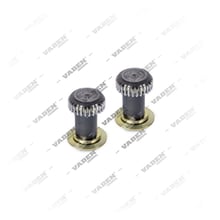
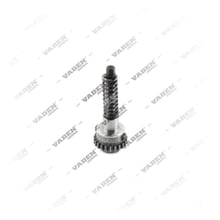
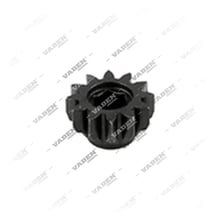
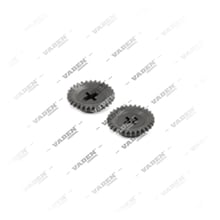
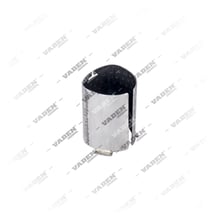
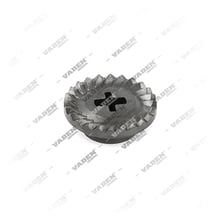
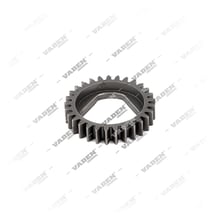
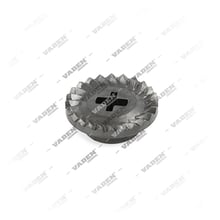
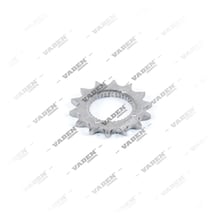
What are the functions of the brake caliper mechanism gear?
The brake caliper mechanism gear performs several functions together to keep the mechanical adjustment chain inside the caliper working precisely.
- Automatic clearance adjustment: As the pad wears, it gradually advances the actuator's position, maintaining a constant air gap.
- Torque transfer: Transmits rotational motion from the adjuster shaft to the screw mechanism on the actuator.
- Synchronization: Coordinates multiple gears inside the caliper so pad pressure is distributed evenly.
- Over-adjustment prevention: Works together with the slip coupling to limit the gear from rotating more than needed.
- Limiting vibration transfer: Its correct tooth profile allows vibration generated during brake application to be transmitted without damaging the mechanism.
What are the symptoms of a faulty brake caliper mechanism gear?
A fault in this gear disrupts the automatic adjustment function and, consequently, degrades brake performance.
- Increased pedal travel: When automatic adjustment stops working, the brake pedal travels deeper than normal.
- Delayed brake response: When the clearance between pad and disc opens up too much, brake response time increases.
- Uneven pad wear: When gear synchronization is disrupted, the pads on the two sides of the caliper can wear at different rates.
- Abnormal noise: Worn or broken gear teeth can produce a clicking or clattering noise during brake application.
- Excessive engagement (brake drag): If the gear mechanism is fitted the wrong way or damaged, the actuator may fail to retract, causing the brake pad to stay in constant contact with the disc.
How is the brake caliper mechanism gear inspected?
Inspection involves a detailed examination that requires removing the caliper and is usually performed together with a pad change.
- Visual inspection: Check gear teeth for breakage, wear, or deformation.
- Rotational freedom: Check whether the gear binds or feels stiff when turned by hand, and whether lubrication is adequate.
- Pad clearance measurement: Measure whether the automatic adjuster mechanism maintains clearance within factory tolerance.
- Coupling condition: Check whether the slip coupling working with the gear is worn.
- Function test: With the caliper mounted, apply and release the brake to observe whether the actuator retracts correctly.
What should be considered during replacement?
Replacing the brake caliper mechanism gear must be done carefully, as it directly affects braking safety.
- Correct orientation: The gear must be installed in the direction and position specified by the manufacturer; incorrect installation prevents automatic adjustment from working.
- Lubrication: The gear and adjacent mechanism parts should be lubricated with high-temperature-rated grease matching the OE type.
- Full kit replacement: It is generally recommended to replace the gear together with the other parts in the relevant repair kit rather than on its own.
- Resetting pad clearance: After fitting the new gear, the automatic adjuster mechanism should be reset or calibrated according to the manufacturer's procedure.
- Function verification: After installation, apply the brake several times to test that clearance adjustment functions correctly.
How to choose the right brake caliper mechanism gear?
Correct selection depends on the caliper model; choosing by OE part number rather than brand guarantees the mechanism works compatibly.
Brake caliper mechanism gear selection criteria| Criterion | Description |
|---|
| OE reference number | Use the number matching exactly the caliper model |
| Tooth profile | Tooth count and profile compatible with adjacent gears in the adjuster mechanism |
| Material | Hardened steel or alloy, depending on caliper type |
| Kit compatibility | Suitability for use with the contents of the related repair kit |
| Coupling type | Connection profile matching the slip coupling |
Maintenance and service life
The brake caliper mechanism gear has a long service life with regular lubrication and correct pad clearance adjustment, and does not require periodic replacement on its own. Check the automatic adjuster mechanism's function at every pad change, and inspect the caliper in detail if abnormal noise or a change in pedal travel is noticed. Always follow the caliper maintenance intervals in the vehicle's current OE service manual.
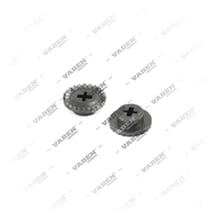
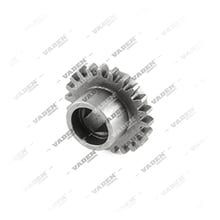
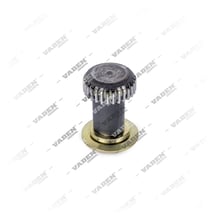
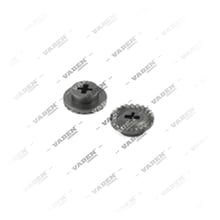
VADEN brake caliper mechanism gear
VADEN offers OE-referenced brake caliper mechanism gears for the heavy commercial vehicle brake caliper group as stocked spare parts. Products are matched by OEM number to the caliper model, allowing technical workshops to identify the correct part quickly.
Frequently Asked Questions (FAQ)
Does the brake stop working completely if the caliper mechanism gear fails?
The brake usually keeps working, but since automatic clearance adjustment is disrupted, symptoms such as increased pedal travel or brake drag appear; the vehicle should be brought to a workshop promptly.
Should the pads also be replaced when the gear is replaced?
Not mandatory, but since the caliper is already open, checking pad wear and replacing them in the same operation if needed is recommended.
How is the automatic adjuster mechanism recalibrated?
Following the manufacturer's procedure, the actuator is typically manually returned to its zero position and then several brake applications allow the mechanism to self-adjust.
Can a worn gear be left in service temporarily?
Not recommended; worn gear teeth can disrupt clearance adjustment, lengthen brake response time, and create a safety risk.
Is the VADEN caliper mechanism gear a direct fit for the original part?
VADEN products are matched by OE reference number; when the correct OEM number is selected, tooth profile and connection points match the original.