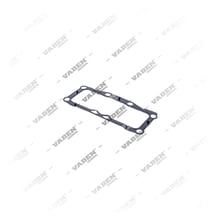
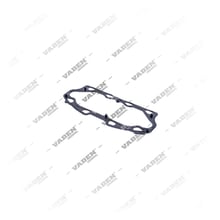
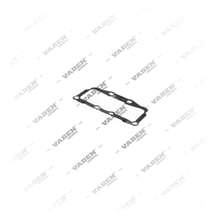
What Is a Caliper Mechanism Seal?
The caliper mechanism seal is a sealing component that isolates the adjuster spindle, gear set, and drive mechanism inside a heavy commercial vehicle's disc brake caliper mechanism housing from the outside environment. In the brake caliper > caliper mechanism > seal chain, this part sits at the cover-to-housing mating surfaces and at the spindle pass-through points of the mechanism housing. In the field it is sometimes also called the "mechanism seal" or "caliper housing seal." Unlike the O-rings and lip seals found in repair kits, this seal is a static sealing part with a flat or profiled cross-section that closes off the housing's mating surface, keeping grease in and dust, water, and dirt out. Widely used in the Wabco and Knorr-Bremse caliper mechanisms fitted to Mercedes-Benz, MAN, Scania, Volvo, DAF, Iveco, and Renault Trucks heavy trucks and buses, this seal is a critical wear part that is frequently replaced during scheduled maintenance and caliper overhauls.
How Does a Caliper Mechanism Seal Work?
The caliper mechanism seal sits against the mating surface between the mechanism housing and the cover or adjacent components, forming a static sealing barrier. As the mechanism operates, the adjuster spindle rotates and the gears move; this moving assembly constantly needs grease lubrication, and the seal keeps that grease from escaping through the mating surface. At the same time, heat cycles generated during braking cause the mechanism to expand and contract, and the seal must maintain its sealing performance despite these volume changes. Road water, salt, mud, and dust are also kept out of the mechanism's internal cavity by this seal. When the seal's integrity is compromised, grease loss and moisture ingress happen together, leading to accelerated wear and hardening of the gears and adjuster spindle, and ultimately to the mechanism seizing up.
Caliper Mechanism Seal Technical Specifications
Caliper mechanism seals are manufactured from elastomer compounds suited to the caliper's operating temperature range and grease type, while dimensional fit is determined by the inner diameter, outer diameter, and thickness tolerances specific to the caliper model. When selecting a part, the vehicle make, caliper manufacturer, and caliper reference number should all be checked together. Because exact values vary by caliper model, the vehicle's current service manual should always be the primary reference.
- Material: Elastomer compound based on NBR (nitrile) or FKM (viton), resistant to high temperatures and grease-based lubricants.
- Cross-Section Profile: Flat ring, lipped, or grooved profile, depending on the mechanism housing's design.
- Temperature Resistance: Generally designed to cover a range of -40°C to +150°C.
- Surface and Elasticity Balance: Optimized to maintain sealing performance without restricting mechanism movement.
Types and Subgroups of Caliper Mechanism Seals
- Housing Mating Seal: Flat or profiled ring seal that closes the main mating surface between the mechanism housing and the cover.
- Adjuster Spindle Pass-Through Seal: Lipped seal that maintains sealing at the point where the adjuster spindle exits the housing, despite its rotating motion.
- Under-Cover Seal: Thin-profile seal fitted beneath the mechanism cover that isolates the grease chamber from outside influences.
- Gear Housing Seal: Seal type with high grease-retention capacity that surrounds the compartment housing the gear set.
- Dust Protection Seal: Secondary support seal that works alongside the primary sealing element to block dust and water ingress.
How to Choose the Right Caliper Mechanism Seal
Choosing the correct caliper mechanism seal depends on accurately identifying the caliper's make, model, and reference number; two mechanism housings that look identical can still differ in dimensions and profile. The seal material must match the operating temperature and grease type, since a mismatched choice quickly leads to hardening or swelling. The table below summarizes the key selection criteria.
Caliper Mechanism Seal Selection Criteria| Criterion | Why It Matters |
|---|
| Caliper Reference Number | Ensures an exact fit to housing and cover dimensions, preventing incorrect installation |
| Seal Profile | Flat, lipped, or grooved cross-section; determines how the seal seats in its groove |
| Material Type (NBR/FKM) | Affects temperature and grease compatibility, and sealing service life |
| Inner and Outer Diameter Tolerance | Balances a tight fit against excessive stress |
| Vehicle Compatibility | Matches Mercedes-Benz, MAN, Scania, Volvo, DAF, Iveco, and Renault Trucks caliper series |
Caliper Mechanism Seal Maintenance and Key Considerations
- Carry Out Periodic Visual Inspections: During caliper maintenance, check around the mechanism housing for signs of grease leakage or drying.
- Clean the Seal Groove Before Installation: Remove all traces of the old seal and grease so the new seal seats correctly.
- Lubricate with the Correct Grease: Use the grease type recommended by the manufacturer, applying it lightly to the surfaces that contact the seal.
- Do Not Force the Seal During Installation: Fit the seal into its groove by hand, evenly, avoiding contact with sharp edges.
- Follow Torque Specifications: Tighten the cover and housing connection bolts to the manufacturer's specified torque; over- or under-tightening compromises the seal.
Common Faults and Solutions
- Grease Leakage from the Mechanism Housing: Hardened or cracked seal; replace the seal and clean the groove.
- Stiffness or Seizing in the Adjuster Mechanism: Grease degraded by moisture ingress and worn gears; renew the seal, disassemble and clean the mechanism, and relubricate.
- Irregular Brake Pad Adjustment: Faulty adjuster spindle operation caused by water and dirt entering the mechanism; replace the sealing element and, if necessary, the mechanism's internal parts.
- Grease Build-Up Around the Cover: Worn or incorrectly installed under-cover seal; reinstall the seal with the correct profile and torque value.
- Premature Seal Wear: Incorrect material selection or incompatible grease use; choose a VADEN ORIGINAL seal suited to the caliper model along with the recommended grease.
Why Choose VADEN ORIGINAL?
- Manufactured to OE Dimensions: Caliper mechanism seals are produced to match original housing and cover dimensions exactly.
- Broad OEM Coverage: A wide reference range covering Wabco and Knorr-Bremse-sourced caliper mechanisms is available.
- Durable Material Quality: High temperature- and grease-resistant elastomer compounds ensure long-lasting sealing performance.
- Exported to More Than 100 Countries: VADEN ORIGINAL parts are supplied worldwide with a quality standard tested across a range of climates and operating conditions.
Conclusion
Although the caliper mechanism seal may look like a small part, it contributes indirectly to brake safety by keeping the caliper's adjuster mechanism sealed. Timely replacement protects the mechanism from grease loss and moisture ingress, keeping the adjuster spindle running properly. Chosen with the correct reference number, a suitable material, and proper installation technique, a VADEN ORIGINAL caliper mechanism seal offers a reliable, long-lasting solution for caliper overhauls.
Frequently Asked Questions (FAQ)
What does a caliper mechanism seal do?
A caliper mechanism seal prevents grease from leaking out of the brake caliper's adjuster mechanism housing, while also keeping water, dust, and dirt from getting in. This keeps the adjuster spindle and gear set properly lubricated and protected.
What is the difference between a caliper mechanism seal and an O-ring or lip seal?
A caliper mechanism seal is a static sealing element that closes the mating surface between the mechanism housing and the cover. An O-ring is typically a separate sealing part with a round cross-section that fits into narrow grooves, while a lip seal is a different element used at moving spindle pass-throughs; each performs its role at a different point in the caliper mechanism.
When should a caliper mechanism seal be replaced?
The seal should always be replaced when there is grease leakage from the mechanism housing, stiffness in the adjuster mechanism, or whenever the caliper is overhauled. A mechanism seal that has been removed must always be replaced with a new one before reassembly, since its sealing capability diminishes once it has been disturbed.
Which vehicles are VADEN ORIGINAL caliper mechanism seals compatible with?
VADEN ORIGINAL caliper mechanism seals are compatible with Wabco and Knorr-Bremse caliper mechanisms used on Mercedes-Benz, MAN, Scania, Volvo, DAF, Iveco, and Renault Trucks heavy vehicles. Check the model number on the caliper to determine the correct reference.
What happens if a caliper mechanism seal fails?
A faulty seal can let moisture and dirt into the mechanism, cause grease loss, and eventually lead to the adjuster spindle hardening and seizing. This can disrupt brake pad adjustment and negatively affect braking performance.