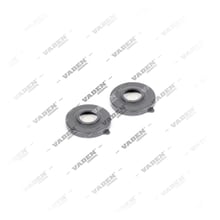
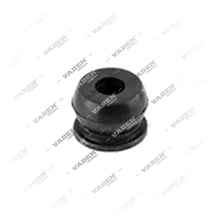
What is a Caliper Mechanism Dust Boot?
The Caliper Mechanism Dust Boot has a folded, bellows-like structure, fixed at one end to the mechanism housing and at the other to the moving shaft or lever. It is typically made from special rubber compounds resistant to high temperature and ozone exposure. Its folded design allows it to provide protection without restricting the linear or rotational motion the mechanism performs during brake application.
What are the functions of the Caliper Mechanism Dust Boot?
- Contamination barrier: Prevents dust, mud and road salt from entering the mechanism.
- Moisture protection: Prevents water and moisture from reaching moving parts and causing corrosion.
- Lubricant retention: Prevents the grease layer inside the mechanism from leaking out or becoming contaminated.
- Range of motion: Its folded structure maintains sealing throughout the mechanism's full range of motion.
- Wear prevention: Extends the service life of the parts it protects, reducing maintenance costs.
What are the symptoms of a Caliper Mechanism Dust Boot failure?
- Visible tears, cracks or holes on the boot surface
- A heavier feel on the brake pedal due to stiffening of the caliper mechanism
- Signs of rust and corrosion around the mechanism area
- Brake pad replacement intervals becoming shorter than expected
- Grease leakage or contaminated grease buildup around the boot
How is the Caliper Mechanism Dust Boot checked?
- Visual inspection: Check the boot surface for tears, cracks and stiffening.
- Hand movement test: Check the boot's flexibility and whether it seats fully on the mechanism.
- Grease condition: Evaluate the color and consistency of the grease under the boot for contamination.
- Mechanism movement: Observe whether the mechanism moves freely during brake application.
- Connection points: Check that the retaining clips at both ends of the boot are secure.
What should be considered when replacing it?
- Clean the area around the mechanism before removing the old boot, removing dirt and rust residue.
- Apply grease of the type and quantity recommended by the manufacturer to the mechanism; the wrong grease type causes premature deterioration.
- Fit the new boot so it seats fully with the clips at both ends; a partially seated boot tears quickly.
- Make sure the boot is not twisted or stretched during installation.
- Perform tightening and installation according to the vehicle's current OE service manual.
- After installation, test that the mechanism moves freely through its full range.
How to choose the right Caliper Mechanism Dust Boot?
Correct boot selection should be based on caliper model, boot dimensions and material resistance.
Caliper Mechanism Dust Boot Selection Criteria| Criterion | Description |
|---|
| Caliper model | The boot must be fully compatible with the vehicle's caliper mechanism type |
| Size and fold count | Must have a fold structure suited to the mechanism's travel distance |
| Material resistance | Must use a rubber compound resistant to high temperature, ozone and road salt |
| Retaining clips | Must be compatible with the original fixing elements |
| OE reference cross-check | Verify by matching the OE number of the removed part |
Maintenance and service life
The caliper mechanism dust boot is a low-cost but critical part that should be visually inspected at every regular brake service. Boot life can be shortened on vehicles operating in areas exposed to road salt, sand and temperature fluctuations. Boots replaced in time significantly extend the service life of the mechanism and the connected brake components.
VADEN Caliper Mechanism Dust Boot
VADEN manufactures dust boots compatible with OE references for heavy commercial vehicle brake calipers; products are put through temperature resistance and flexibility testing before release.
Frequently Asked Questions (FAQ)
What happens if a torn dust boot is not replaced right away?
Dust, water and salt entering through the tear gradually wear and stiffen the mechanism; this reduces braking performance and can lead to a more costly mechanism replacement.
Does grease always need to be replaced along with the boot?
Yes, since the old grease may be contaminated or dried out, the mechanism should be cleaned and refilled with new grease as recommended by the manufacturer.
What material is the dust boot made from?
It is typically made from special rubber compounds resistant to high temperature and ozone exposure, and synthetic elastomer may also be used in some applications.
Is boot stiffening a normal form of wear?
Some stiffening over time due to heat and ozone exposure is expected, but excessive stiffening or cracking is a failure symptom that requires early replacement.
Is the dust boot the same across all caliper models?
No, boots come in different sizes and fold structures depending on the caliper mechanism type and dimensions, so the correct part should be selected based on the OE reference.