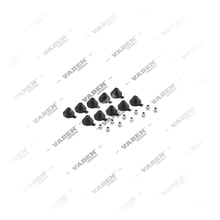
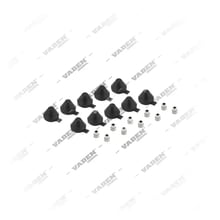
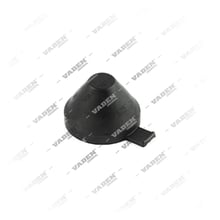
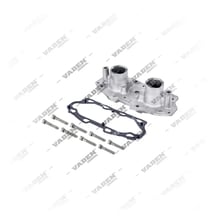
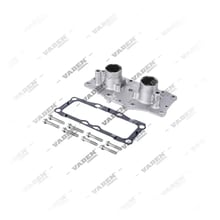
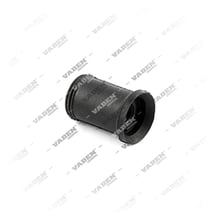
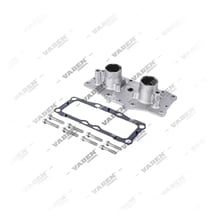
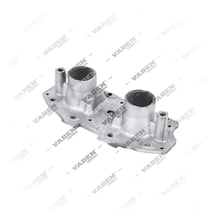
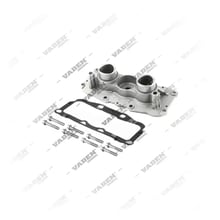
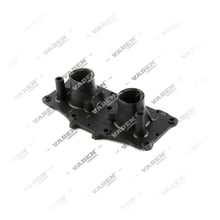
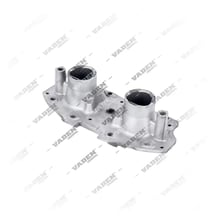
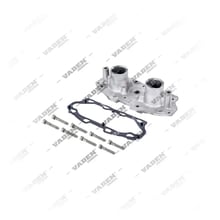
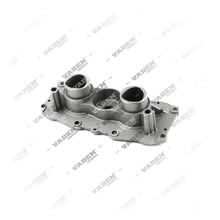
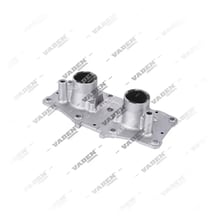
What is a Brake Caliper Mechanism Cover?
The caliper mechanism is a precision subsystem that automatically re-adjusts the piston-to-drive-gear relationship as the brake pad wears; the cover's sealing performance is therefore a direct factor in the mechanism's long-term, correct operation.
What are the functions of a Brake Caliper Mechanism Cover?
- Mechanism protection: Shields the automatic slack adjuster, gear set, and bearing elements from moisture, dust, and dirt.
- Sealing: Prevents water and road salt from entering the mechanism chamber via the gasket, protecting against corrosion.
- Lubrication retention: Prevents the grease layer used in the mechanism from being contaminated or washed out by external factors.
- Access cover function: On some models it serves as a removable cover for maintenance or manual adjustment.
- Mechanical protection: Physically shields the internal mechanism from road splash, stones, and mechanical impact.
What are the symptoms of a failing Brake Caliper Mechanism Cover?
- Visible crack or breakage: Impact-induced cracks in the cover directly compromise sealing.
- Gasket hardening/wear: Drying, cracking, or missing gasket sections may be observed at the cover edge.
- Rust/dirt buildup in the mechanism chamber: Moisture marks, rust stains, or contaminated grease found on the inner surface once the cover is removed indicate loss of sealing.
- Pad adjustment problems: Dirt and moisture entering the mechanism can hinder the automatic slack adjuster's movement, leading to uneven pad wear.
- Abnormal noise: A loose or broken cover can cause a rattling noise while driving.
- Signs of corrosion: Rust formation around the cover and at connection points.
How is a Brake Caliper Mechanism Cover inspected?
- Visual inspection: Check the cover surface for cracks, breakage, deformation, or missing parts.
- Gasket condition: The gasket between the cover and housing should retain flexibility, with no hardening or cracking.
- Fastening integrity: Verify that the bolts or bayonet mechanism securing the cover are not loose.
- Leak test: If the cover is removed and moisture/rust marks are found inside, loss of sealing is confirmed.
- Check at pad replacement: The condition of the cover and the mechanism beneath it should be reviewed at every pad replacement.
What should be considered during replacement?
- Correct OE number: Choose a cover that exactly matches the caliper model (families such as SB, SN, SK); a dimensional mismatch compromises sealing.
- Use a new gasket: The gasket must always be renewed together with the cover; never reuse the old one.
- Mechanism cleaning: If dirt or old grease is found in the mechanism chamber when the cover is opened, clean and re-lubricate with the manufacturer's recommended grease type.
- Correct tightening sequence and torque: Fasteners must be tightened to the specified torque in a symmetric sequence; the vehicle's current OE service manual is the authority for the exact torque.
- Post-installation check: After the cover is fitted, verify sealing and free movement of the mechanism.
How to choose the right Brake Caliper Mechanism Cover?
Selection should be based on OE part number, not brand, and the correct cover model determined by caliper family (e.g., SB6/SB7, SN6/SN7/SK7).
Brake Caliper Mechanism Cover selection criteria| Criterion | Description |
|---|
| OE reference number | Exact match with the original part number specified by the caliper manufacturer |
| Caliper family | Compatibility with mechanism housing type such as SB, SN, SK |
| Gasket compatibility | Original-dimension gasket for use with the cover |
| Material durability | Corrosion-resistant coating and impact resistance |
| Connection type | Compatibility with bolted or bayonet mounting system |
Maintenance and service life
Although the cover itself is not a wearing part, gasket life and installation tightness directly affect the mechanism's lifespan. Road salt, mud, and high-pressure washing can weaken the cover-gasket integrity over time. Removing the cover and checking the mechanism's grease condition at pad replacement intervals extends the life of both the cover and the automatic slack adjuster inside it. When a crack or hardened gasket is found on the cover, early replacement before moisture enters the mechanism is recommended.
VADEN Brake Caliper Mechanism Cover
Within its brake caliper product range, VADEN offers mechanism covers for common caliper families at OE dimensional and material standards, manufactured with attention to gasket compatibility and installation precision.
Frequently Asked Questions (FAQ)
Does the cover come with a gasket?
This varies by product line; in VADEN's catalog some covers are listed with a gasket included, others as separate items. A new, original-dimension gasket must always be used during installation.
Does a cracked cover need to be replaced immediately?
Yes. A cracked cover allows moisture and dirt into the mechanism, which can cause the automatic slack adjuster to fail and lead to uneven pad wear. Replacement soon after discovery is recommended.
Does the caliper need to be removed from the vehicle to replace the cover?
On most models the cover can be removed and installed while the caliper is on the vehicle; however, follow the vehicle's current OE service procedure for access and mechanism cleaning.
Can covers from different caliper families be used interchangeably?
No. Families such as SB, SN, and SK have different housing and gasket dimensions; an incorrect cover compromises sealing and causes installation errors.
What should be done if rust is found under the cover?
This indicates that sealing has been compromised for some time. The mechanism should be cleaned and assessed, and both the cover and any affected internal parts replaced if necessary.