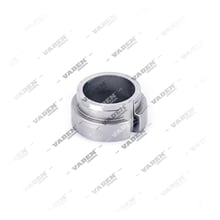
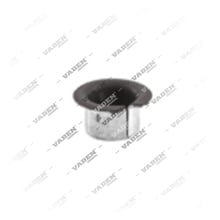
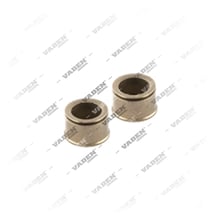
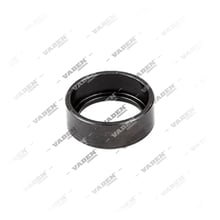
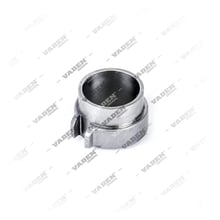
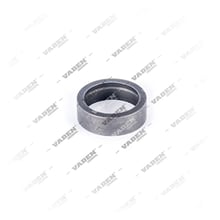
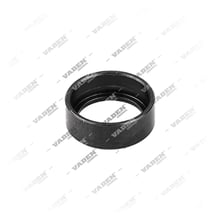
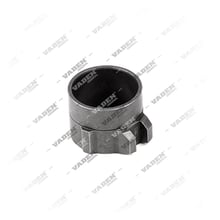
What Is a Caliper Mechanism Bushing?
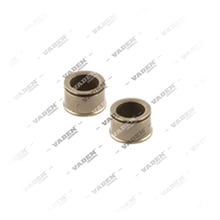
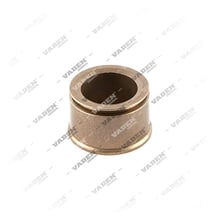
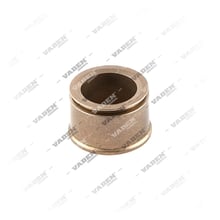
The Caliper Mechanism Bushing is the cylindrical sleeve inside a heavy commercial vehicle's disc brake caliper that lets the guide pins (slide pins) move inside the carrier bracket without friction or play. In the field it is also known as the caliper bushing, guide pin bushing, slide pin sleeve, or caliper slide bushing. In a floating caliper mechanism, the caliper housing slides on these bushings every time the brake is applied, automatically balancing the gap between the pad and the disc. When the bushing wears or hardens, the caliper's free movement is disrupted, leading to uneven pad wear and reduced braking performance. The bushing works together with the rubber boot to shield the pin from dirt and moisture, extending the service life of the whole guide pin system.
Caliper Mechanism Bushing Functions and Working Principle
Within the caliper mechanism, the bushing carries out two tasks at once: letting the caliper slide smoothly along its linear axis, and protecting the pin from metal-to-metal contact during that motion to keep wear to a minimum. When the brake pedal is pressed, the piston pushes the fixed-side pad against the disc, while the caliper housing slides on the guide pins and bushings to press the opposite pad against the disc with equal force. This lets both pads wear evenly even in single-piston floating calipers.
- Sliding Surface: Lets the guide pin move inside the bracket with low friction.
- Centering and Alignment: Keeps the caliper housing correctly positioned relative to the disc axis, preventing uneven wear.
- Vibration Damping: Its rubber or composite structure reduces vibration and noise generated during braking.
- Contamination Barrier: Works together with the boot to protect the pin surface from dust, mud, and moisture.
- Free Return Motion: Ensures the caliper returns smoothly to its starting position once the brake is released, preventing drag.
Caliper Mechanism Bushing Technical Specifications
The Caliper Mechanism Bushing is typically made from brass, PTFE-coated steel, or a high-density composite; some applications use a rubber-metal combination. Material choice depends on the guide pin diameter, the caliper type (single-piston, dual-piston, fixed, or floating), and the vehicle's operating conditions. The inner diameter is produced to a tight tolerance matching the pin's outer diameter; excessive clearance causes rattling, while excessive tightness makes the pin bind. The decisive criteria are the caliper manufacturer and model, pin diameter and length, bracket geometry, and boot connection dimensions. Installation torque varies by vehicle and caliper model; for exact figures, the vehicle's current service manual should always be consulted.
Caliper Mechanism Bushing Types and Subgroups
- Brass Guide Bushings: Offer high wear resistance and dimensional stability, widely used in heavy-duty calipers.
- PTFE-Coated Steel Bushings: Low friction delivers a longer service life with reduced lubrication needs.
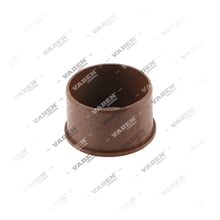
- Rubber-Metal Combination Bushings: Excel at vibration damping, reducing noise and rattling complaints.
- Guide Pin Boots (Boot Kits): Protective rubber boots sold together with the bushing to block contamination ingress.
- Complete Guide Pin Repair Kit: A full overhaul set combining the pin, bushing, boot, and mounting clips.
How to Choose the Right Caliper Mechanism Bushing
Choosing the right bushing means weighing the caliper brand and model, guide pin diameter, bracket bore size, and boot connection type together. For calipers used in Wabco, Knorr-Bremse, and Meritor systems, bushings matching OEM dimensions precisely should be selected; an incorrect size leads to caliper binding or excessive play. The table below summarizes the key criteria to consider during selection.
Caliper Mechanism Bushing Selection Criteria| Criterion | Why It Matters |
|---|
| Guide Pin Diameter | How well the bushing's inner diameter matches the pin determines play-free sliding |
| Bracket Bore Size | A precise fit of the bushing's outer diameter in the bracket bore ensures a proper seal |
| Material Type | Brass, PTFE-coated steel, or rubber-metal choice depends on operating conditions |
| Caliper Type | Floating or fixed caliper design determines the number and position of bushings required |
| Boot Compatibility | A correct fit between bushing and boot guarantees protection against contamination |
| Vehicle Application | Dimensions vary across Mercedes-Benz, MAN, Scania, Volvo, DAF, Iveco, and Renault Trucks models |
Caliper Mechanism Bushing Maintenance and Key Points to Watch
- Inspect the Boots Regularly: Torn or cracked boots leave the bushing exposed to dirt and moisture, causing premature wear.
- Test Guide Pin Movement: During pad replacement, check by hand whether the pins slide freely inside the bracket.
- Lubricate with the Correct Grease: Use a high-temperature, rubber-safe brake grease; standard greases can damage the boot.
- Replace a Worn Bushing as a Set: A complete repair kit with the pin and boot, not just the bushing, prevents uneven wear.
- Mind the Dimensions During Installation: Fitting the wrong size disrupts caliper centering and accelerates pad wear.
Common Faults and Solutions
- Uneven Pad Wear: A seized or worn bushing prevents the caliper from sliding freely; renew the bushing and pin set.
- Rattling or Noise During Braking: A worn or dry bushing creates play; replace the bushing and lubricate it with the correct grease.
- Caliper Pulling or Steering Drift: A sticking bushing on one side causes uneven brake force; check both sides.
- Overheating Disc or Pad: A caliper that fails to retract causes continuous drag; inspect and replace the bushing and pin.
- Vibration in the Brake Pedal: Bushing play causes the caliper housing to wobble; overhaul with a complete repair kit.
Why Choose VADEN ORIGINAL Caliper Mechanism Bushings?
- OE-Dimension Manufacturing: Precision production matching guide pin diameter and bracket bore tolerances exactly.
- Broad OEM Coverage: Compatible with numerous heavy commercial vehicle brands, mainly Wabco and Knorr-Bremse caliper systems.
- Durable Material Selection: Brass, PTFE-coated steel, or rubber-metal options built for heat and rough road conditions.
- Complete Kit Approach: Repair kits combining the pin, bushing, and boot deliver a balanced, lasting overhaul.
- Global Quality Assurance: VADEN ORIGINAL parts, exported to over 100 countries, undergo consistent quality control.
Conclusion
Despite its small size, the Caliper Mechanism Bushing is a critical component for the balanced and safe operation of a disc brake system. A worn or contaminated bushing can trigger a range of problems, from one-sided pad wear to brake noise, steering pull, and overheating. Checking the guide pins and bushings together during every pad replacement is the most practical way to keep a vehicle's braking system performing as expected. VADEN ORIGINAL Caliper Mechanism Bushing products, built to OE dimensions with broad vehicle compatibility, offer a reliable overhaul solution for heavy commercial vehicle fleets.
Frequently Asked Questions (FAQ)
What does a Caliper Mechanism Bushing do?
The Caliper Mechanism Bushing lets the disc brake caliper slide with low friction along its guide pins. In floating calipers, this sliding motion allows both pads to make balanced contact with the disc every time the brakes are applied.
What happens when the Caliper Mechanism Bushing wears out?
A worn or hardened bushing prevents the caliper from sliding freely on the bracket. This leads to one-sided pad wear, rattling or noise during braking, and in some cases steering pull.
How often should the bushing and guide pin be checked?
It is recommended to check the guide pins and bushings at every pad replacement. If the boots are torn, the pin binds, or visible wear is detected, the bushing and pin set should be renewed without delay.
Should the Caliper Mechanism Bushing be replaced alone or as a set?
For a balanced and lasting overhaul, the bushing should be replaced as a complete repair kit together with the guide pin, boot, and mounting clips. Replacing only the bushing can quickly cause problems again if the pin or boot is mismatched or already worn.
Which vehicles are VADEN ORIGINAL Caliper Mechanism Bushings compatible with?
VADEN ORIGINAL bushings are compatible with the Wabco and Knorr-Bremse caliper systems used in Mercedes-Benz, MAN, Scania, Volvo, DAF, Iveco, and Renault Trucks heavy commercial vehicles. It is recommended to verify the caliper brand and model before ordering.