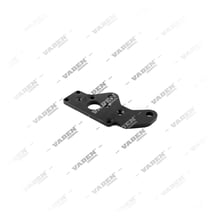
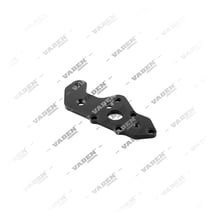
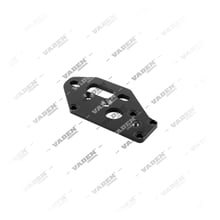
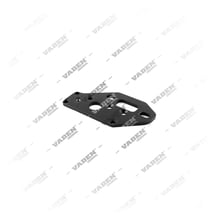
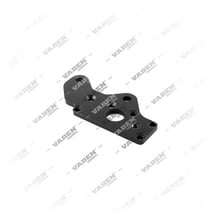
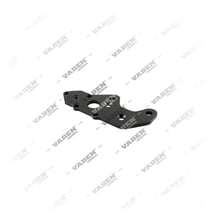
What are the functions of the Caliper Cover Plate?
The main functions of the caliper cover plate in the brake system are:
- Pressure and retention: Keeps the caliper cover seated on the mechanism housing with balanced, constant pressure.
- Protection support: Supports the internal structure of the cover that shields the adjuster spindle and gear set from dust, moisture and road dirt.
- Sealing contribution: Works together with the cover gasket to help block moisture and dirt ingress into the mechanism.
- Vibration damping: Reduces micro-movement at the contact surface between cover and housing, preventing loosening.
- Assembly alignment: Provides a reference surface for fitting the cover at the correct angle and position.
What are the symptoms of Caliper Cover Plate failure?
A worn or deformed plate usually shows the following symptoms: looseness or play felt in the caliper cover; moisture, dust or oil leaking around the cover; a light knocking or rattling noise from the brake mechanism, more noticeable on rough roads; the cover sitting visibly crooked or with a gap due to not seating fully; and stiffening in the adjuster spindle and gear set caused by contamination, or irregular brake pad adjustment. When the plate is fully deformed, the cover can no longer stay fixed, dirt and moisture ingress into the mechanism accelerates, and this can eventually lead to failure of the brake adjustment mechanism.
How is the Caliper Cover Plate inspected?
Inspection starts by removing the cover and visually examining the plate for cracks, breakage, excessive corrosion or deformation. The seating surface between the plate, cover and housing should be wiped with a clean cloth and checked for flatness — even slight bending can compromise sealing. With the cover refitted, press by hand to test for play; any movement indicates a worn plate or cover gasket. The adjuster spindle and gear set inside the mechanism should also be checked for dirt or moisture at this time and cleaned if needed. Performing this check together with pad replacement at scheduled brake maintenance is recommended.
What should be considered when replacing it?
Before removing the cover, pressure on the brake mechanism must be released and the vehicle safely supported. When removing the old plate, the condition of the cover gasket should also be checked and replaced together if damaged. Before fitting the new plate, seating surfaces should be cleaned of dirt and old gasket residue. The plate must be positioned correctly inside the cover and seated fully; it should never be forced into place, as this can deform the thin metal structure. Cover bolts should be tightened to the manufacturer-specified torque; over-tightening can crush the plate. After assembly, the cover's full and stable seating should be verified by hand.
How to choose the right Caliper Cover Plate?
The right plate should be selected based on the caliper family (SB6, SB7, SL7, SM7, ST7, SN6, SN7, SK7, etc.) and the OE part number; since visually similar plates can differ in thickness or diameter, selection should be based on OE number rather than brand. The table below summarizes the key selection criteria.
Caliper Cover Plate selection criteria| Criterion | Description |
|---|
| Caliper family | Compatible caliper series such as SB6/SB7/SL7/SM7/ST7/SN6/SN7/SK7 |
| OE number | Exact match with the reference number in the caliper manufacturer's catalog |
| Material thickness | Same thickness as OE, resistant to deformation at the pressure surface |
| Surface finish | Corrosion-resistant coating (galvanizing or similar) |
| Compatible cover gasket | Should be evaluated together with the gasket used in the same series |
Maintenance and service life
The caliper cover plate generally has a long service life running roughly parallel to the pad replacement interval on vehicles with regular brake maintenance. However, on vehicles constantly exposed to dust, mud or salted roads, the risk of corrosion and deformation increases. At scheduled maintenance, the cover's stability and the plate surface condition should be checked, and plates showing wear should be replaced proactively. The long-term reliability of the adjuster spindle mechanism largely depends on the protective integrity provided by the plate and cover.
VADEN Caliper Cover Plate
VADEN offers caliper cover plates manufactured to OE tolerances for different caliper families. The products are made with the correct thickness and surface coating, contributing to the long-lasting, safe operation of the caliper mechanism.
Frequently Asked Questions (FAQ)
Can the vehicle still be driven with a damaged caliper cover plate?
It can be driven for a short time, but since dirt and moisture ingress into the mechanism will accelerate, replacement as soon as possible is recommended.
Should the plate and cover gasket be replaced at the same time?
It is not mandatory, but if the gasket is also worn, replacing both together is safer for sealing.
Which caliper families use this plate?
Variants exist for common caliper series such as SB6, SB7, SL7, SM7, ST7, SN6, SN7 and SK7; the OE number should be used to confirm the fit.
Does a deformed plate affect braking performance?
It does not directly affect braking performance, but it affects the protection of the adjuster mechanism and cover stability; if ignored it can cause indirect problems.
What material is the VADEN caliper cover plate made of?
It is made from metal with a corrosion-resistant coating, manufactured to OE specifications.