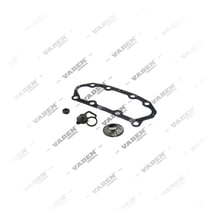
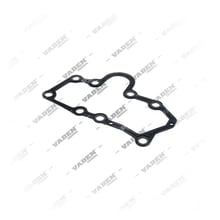
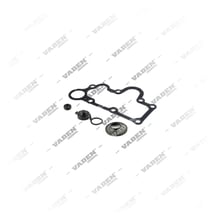
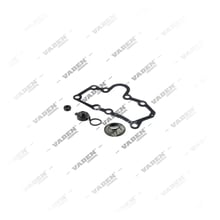
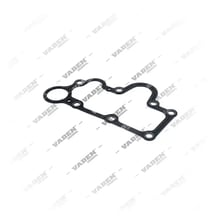
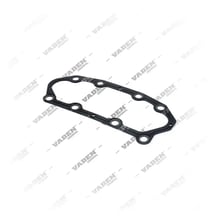
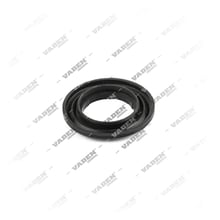
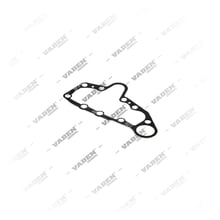
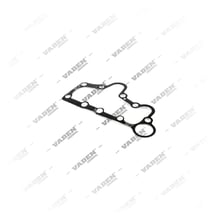
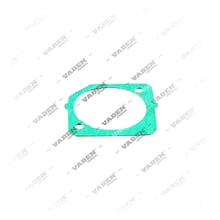
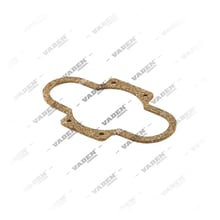
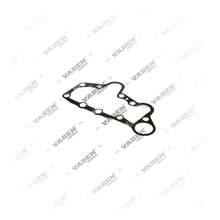
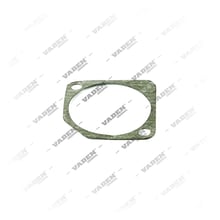
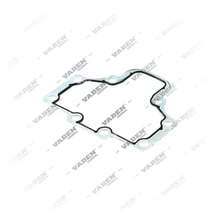
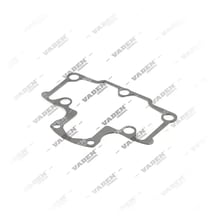
What are the functions of a caliper cover gasket?
The functions of the caliper cover gasket center on isolating the precision mechanism under the cover from environmental exposure.
- Sealing: Seals the joint surface between the cover and housing against water and dust ingress.
- Corrosion prevention: Delays corrosion by keeping moisture and salt water away from the adjuster gear and mechanism parts.
- Vibration damping: Creates a flexible interface between cover and housing, reducing loosening caused by vibration.
- Pressure balance: On some designs, contributes to controlled equalization of air pressure inside the cover.
- Contamination barrier: Prevents road dust and pad wear particles from entering the mechanism.
- Cover integrity: Ensures the cover seats fully and evenly against the housing, adding an extra layer of protection against impact and moisture.
What are the symptoms of a failed caliper cover gasket?
When the gasket hardens or cracks, sealing is lost, and the effects eventually show up in the caliper mechanism.
- Moisture traces under the cover: A visual check without removing the cover may reveal rust or moisture staining at the edges.
- Stiffness in the adjuster mechanism: If corrosion begins in the moisture-exposed gear set, the automatic adjuster can bind.
- Uneven pad wear: When the mechanism is not fully functional, premature pad wear can appear on one side.
- Loose cover: A hardened or fragmented gasket can leave the cover loose and rattling.
- Visible cracking: Hardened rubber develops fine surface cracks that can be spotted visually.
- Dust buildup under the cover: Once sealing is lost, fine road dust and dirt accumulation can be seen under the cover.
How is a caliper cover gasket checked?
Checking is done as part of periodic brake maintenance by removing the cover.
- Visual inspection: The gasket is examined for flexibility, cracking, hardening, or deformation.
- Seating check: Confirm the gasket is fully seated in its groove and not partially protruding.
- Mechanism moisture check: Moisture or rust traces in the mechanism under the cover indicate the gasket seal has failed.
- Cover surface check: The cover's mating surface is checked for scratches or deformation, since surface damage can cause a leak even with a new gasket.
- Fasteners: The cover retaining clips or screws are checked for soundness.
- Groove wear: The edges of the groove the gasket seats in are reviewed for deformation or wear.
What should be considered when replacing it?
Although the caliper cover gasket is a small part, incorrect installation can lead to a repeat failure quickly.
- Cleanliness: The cover and housing surfaces must be fully cleaned of old gasket residue and dirt.
- Correct orientation: The gasket must be installed in the manufacturer-specified orientation, fully seated in its groove.
- Careful installation: Care must be taken that the gasket does not twist or pinch when the cover is closed.
- Combined replacement: If the cover's mating surface is damaged when the gasket is replaced, the cover should be assessed as well.
- Final check: After installation, confirm the cover is fully seated with no gap remaining.
- Mechanism check: While the gasket is being replaced, also verify that the adjuster mechanism underneath moves freely.
How to choose the right caliper cover gasket?
Correct gasket selection depends on dimensional and material compatibility specific to the caliper model; selection should be based on OE number, not brand.
Caliper Cover Gasket selection criteria| Criterion | Description |
|---|
| OE number | A reference exactly matching the caliper model (e.g. SN6, SN7, SK7 series) is required. |
| Material | An NBR or FKM based compound resistant to heat and road chemicals should be selected. |
| Dimensional tolerance | Inner/outer diameter tolerance must fully match the cover groove. |
| Hardness grade (Shore A) | Hardness close to the factory value preserves the balance between sealing and service life. |
| Kit/set compatibility | In some caliper repair kits, the gasket ships together with the cover as a set. |
| Identification | Some manufacturers use different color codes for different caliper series to avoid mix-ups. |
Maintenance and service life
The service life of the caliper cover gasket varies with the temperature, salt, and chemical exposure of the vehicle's operating environment; hardening over time is natural for rubber-based gaskets. Opening the cover and inspecting the mechanism during periodic brake maintenance allows the gasket to be diagnosed and replaced early. Shortening the inspection interval is recommended for vehicles operating on salted winter roads. On vehicles operating in dusty environments such as urban transit or construction sites, checking more frequently for dust ingress under the cover is advisable, since dust buildup can eventually mix with moisture and turn into an abrasive paste. For the exact maintenance interval, the vehicle's current OE service manual is authoritative.
VADEN Brake Caliper Cover Gasket
VADEN supplies caliper cover gaskets for various caliper series manufactured to OE dimensional and material tolerances. Products can be matched to the correct caliper model by cross-checking against OEM reference numbers.
Frequently Asked Questions (FAQ)
Can a vehicle be driven without a caliper cover gasket?
No, without the gasket the adjuster mechanism under the cover is exposed to moisture and dirt, which can quickly lead to corrosion and mechanism failure; immediate replacement is recommended.
Does the caliper cover gasket need to be replaced at every brake pad change?
Not necessarily, but the gasket should be visually inspected whenever the cover is opened, and renewed together with the pad change if hardening or cracking is found.
Does a leaking gasket affect braking performance?
It does not directly affect braking force, but corrosion of the mechanism can disrupt the automatic adjuster function, indirectly affecting braking performance and pad wear balance.
Are cover gaskets from different caliper series interchangeable?
No, cover dimensions differ by caliper series (for example SB6/SB7 versus SN6/SN7/SK7), so the correct series must be selected by OE number.
Can overtightening damage the cover gasket?
Yes, overtightening or closing the cover at an angle can twist the gasket and cause premature tearing; installation must follow the manufacturer's procedure.