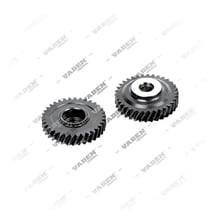
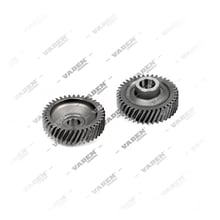
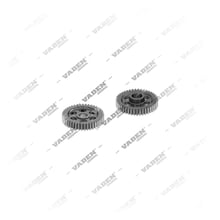
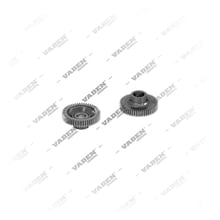
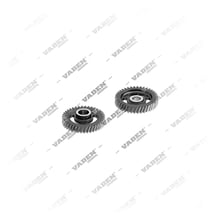
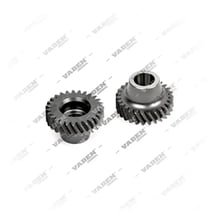
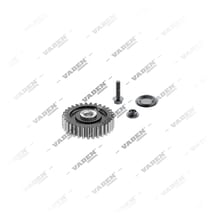
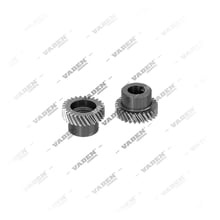
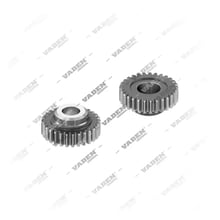
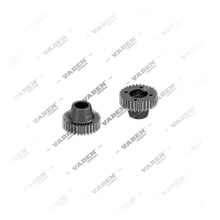
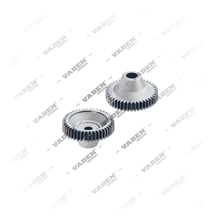
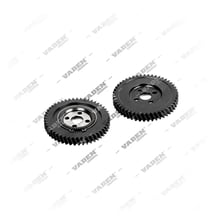
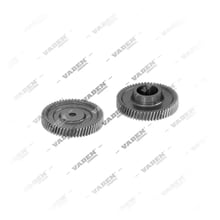
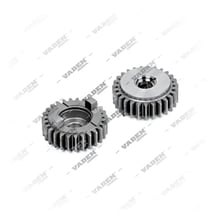
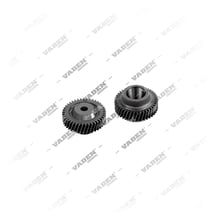
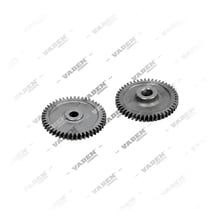
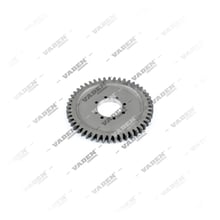
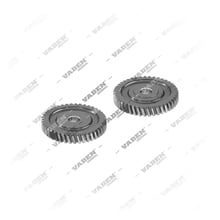
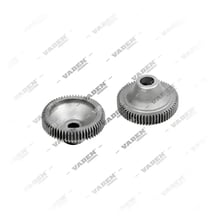
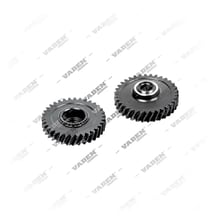
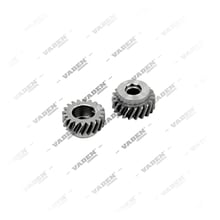
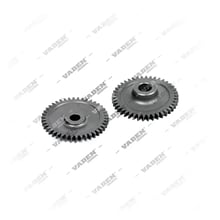
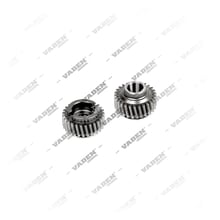
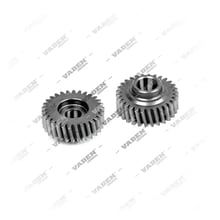
What Is a Compressor Parts Gear?
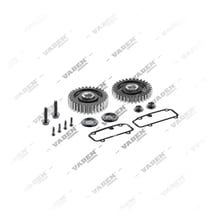
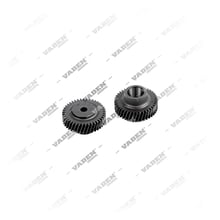
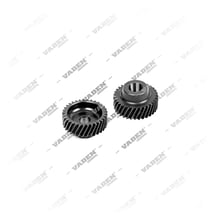
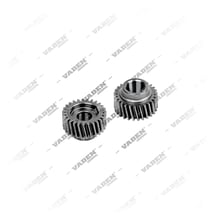
The Compressor Parts Gear is the drive component that lets the air brake compressor take rotation from the engine; in the field it's also called the compressor gear or crankshaft-end gear. It sits within the Compressor Parts sub-family under the Air Brake Compressors main group. It mounts onto the compressor crankshaft end or drive flange and meshes with the engine's timing gear train to transfer rotary motion to the piston assembly. When it wears out, renewing just the gear set is usually enough.
How Does a Compressor Parts Gear Work?
The gear carries the engine's rotation to the compressor at a fixed ratio. Tooth count directly sets compressor speed, and therefore air output. A wrong gear makes the compressor build pressure too slowly or spin too fast and overheat.
- Motion input: Rotation coming from the engine's gear train is transferred to the crankshaft through the teeth.
- Torque transfer: A keyway, tapered mounting face, or flange bolts secure the connection against slippage.
- Timing alignment: The marks on the gear are lined up with their counterpart on the engine side; if they're off, synchronization is lost.
- Backlash control: Tooth flank clearance is kept within a set range; too much causes rattling, too little causes overheating.
- Lubrication: The gear train is lubricated by engine oil; the oil film reduces friction and surface heat.
Compressor Parts Gear Technical Specifications
Gears are typically made from case-hardening or heat-treatable steel; the tooth surface is hardened while the core stays tough, so it resists wear without raising the risk of tooth-root fracture under shock loading. Some engine families use composite-bodied quiet gears to cut noise.
The dimensions that determine compatibility are tooth count, module, tooth profile, helix angle, outside diameter, tooth width, bore diameter, and keyway; all must match the original part, and a matching outside diameter alone is not enough. Torque and tolerance values vary by engine family; for exact figures, the vehicle manufacturer's current service manual is the authority.
Compressor Parts Gear Types and Subgroups
- Spur gears: Teeth run parallel to the shaft axis and produce no axial thrust.
- Helical gears: Teeth are angled; meshing is quieter, load is shared across more teeth, and axial thrust results.
- Taper-fit crankshaft-end gears: Seat on a tapered shaft end, secured with a center nut; removal requires a puller.
- Keyed and flanged gears: Transfer torque through a keyway or bolted flange; check the keyway for peening or wear.
- Idler and intermediate gear sets: Carry motion between engine and compressor; assessed together with their bushing and pin.
How to Choose the Right Compressor Parts Gear
The most reliable approach is to work from the OE reference number on the removed part. If the number can't be read, identify the gear by its dimensions and mounting style. The table below summarizes the general selection logic; for exact figures, the vehicle manufacturer's current service manual is the authority.
- Read the OE number: Use the number stamped on the gear hub or side face as your reference.
- Confirm the engine variant: Mercedes-Benz, MAN, Scania, Volvo, DAF, Iveco, and Renault Trucks can use different gears within the same series.
- Identify the compressor type: Single- and twin-cylinder Wabco or Knorr-Bremse compressors have different crankshaft-end connections.
- Compare the dimensions: Measure tooth count, outside diameter, tooth width, and bore diameter on the removed part.
Compressor Parts Gear selection and compatibility criteria| Criterion | What to check | Why it matters |
|---|
| OE reference number | Original number stamped on the gear | The most reliable basis for matching |
| Tooth count and module | Number and size of the teeth | Sets the gear ratio and compressor speed |
| Tooth profile | Spur or helical, and helix direction | The wrong profile disrupts meshing |
| Hub connection type | Taper fit, keyway, or flange | How torque is transferred to the shaft |
| Dimensions | Outside diameter, tooth width, bore diameter | Correct positioning within the gear train |
| Material and hardness | Case-hardened steel or composite body | Wear resistance and impact strength |
| Timing mark | Position of the alignment mark | Keeps the gear train in sync |
| Tightening torque range | Center nut or flange bolts | Under-tightening loosens it, over-tightening cracks it |
Compressor Parts Gear Maintenance and What to Watch For
- Clean the mating surfaces: Remove oil and rust from the taper face, keyway, and flange.
- Use the right tools: Pull a taper-fit gear off with a puller; forcing it with a lever cracks the tooth roots.
- Align the marks: Line up the timing marks before assembly and confirm by turning the engine by hand.
- Measure the backlash: Check flank clearance with a dial gauge; if it's out of range, check the idler bushing too.
- Apply torque in stages: Tighten nuts and bolts with a torque wrench, in the sequence and stages given in the manual.
- Renew the fasteners: Don't reuse keys, washers, locking plates, or single-use nuts.
Common Failures and Their Solutions
- Rattling from the front of the engine: Usually caused by increased backlash, a worn idler bushing, or a loose hub; replace the worn bushing together with the gear.
- Air pressure builds up slowly: If the gear has slipped or the key is peened, compressor speed drops; check the keyway and taper face.
- Pitting on the tooth surface: A sign of poor lubrication or overload; check oil pressure and the mating gear too.
- Broken teeth: Caused by shock loading, incorrect assembly, or foreign debris; clean the area and inspect the compressor's internal parts.
- Center nut loosening: Caused by insufficient torque, a damaged locking plate, or a deformed taper face; renew the locking hardware and apply torque per the manual.
Why VADEN ORIGINAL?
- Manufactured to OE dimensions: Tooth count, module, helix angle, bore diameter, and keyway are produced using the original part as the reference.
- Broad OEM matching: Extensive cross-references cover Wabco- and Knorr-Bremse-type compressors on Mercedes-Benz, MAN, Scania, Volvo, DAF, Iveco, and Renault Trucks.
- Controlled material and heat treatment: Surface hardness and core toughness are balanced, so wear resistance and impact strength are addressed together.
- A complete product family: Related compressor parts — gears, flanges, keys, bearings, and gaskets — come from the same range.
- Exported to over 100 countries: A wide distribution network supports parts availability and shorter fleet downtime.
Conclusion
The Compressor Parts Gear is the critical drive component that lets the air brake compressor take rotation from the engine and that determines whether system pressure builds up at the right time. Correct selection starts with verifying the OE reference number, tooth count, module, profile, and hub connection type. During assembly, clean mating surfaces, correct timing alignment, and the torque values from the manual are essential; for exact figures, the vehicle manufacturer's current service manual is always the authority.
Frequently Asked Questions (FAQ)
What role does the Compressor Parts Gear play?
It is the drive component that lets the air brake compressor take rotation from the engine. It transfers the rotary motion coming from the engine's timing gear train to the compressor crankshaft. This drives the compressor pistons and produces the compressed air the brake system needs.
If the compressor gear wears out, does the whole compressor need to be replaced?
No — if the fault is limited to the gear, key, flange, or idler gear bushing, renewing just these parts is usually enough. However, if a tooth has broken, check whether the broken fragments have reached the compressor's internal components. If there is additional damage to the crankshaft or housing, the entire compressor should be evaluated.
How do I choose the right compressor gear?
The most reliable method is to use the OE reference number on the removed gear as your reference. If the number can't be read, compare it by measuring tooth count, module, tooth profile, outside diameter, tooth width, and bore diameter. You should also confirm the vehicle make, model, engine variant, and compressor type.
What are the most common mistakes made when installing the gear?
The most frequent mistakes are failing to clean the taper face and keyway, removing the gear by forcing it instead of using a puller, not aligning the timing marks, and tightening the center nut without a torque wrench. These mistakes quickly lead to loosening, rattling, and premature wear. For torque and clearance values, the vehicle manufacturer's current service manual should always be the reference.
What can cause a rattling noise from the gear train?
The most common causes are increased tooth flank backlash, a worn idler gear bushing, or the gear hub loosening on the shaft. Clearance should be measured with a dial gauge, and if it falls outside the manual's range, both the gear and the bushing should be evaluated together. If there is pitting on the tooth surface, the mating gear should also be checked.