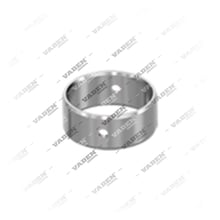
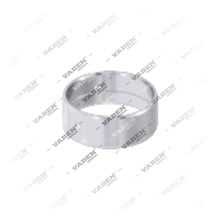
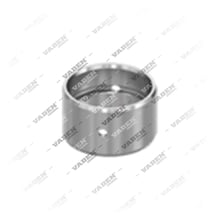
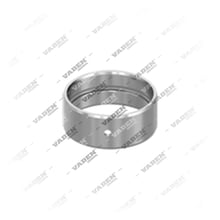
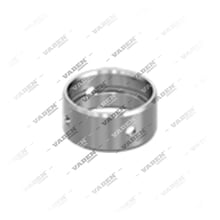
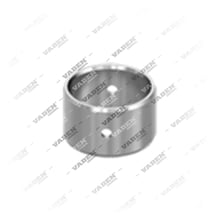
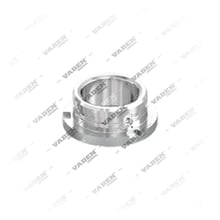
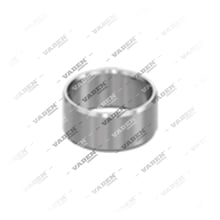
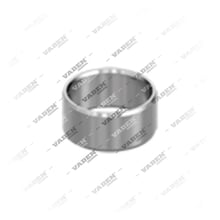
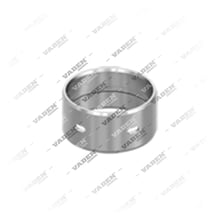
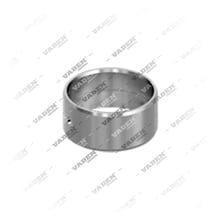
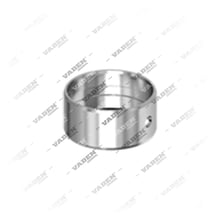
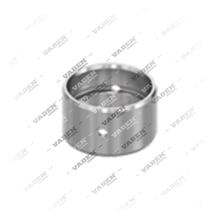
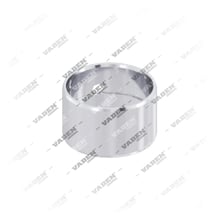
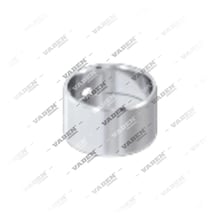
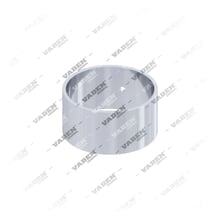
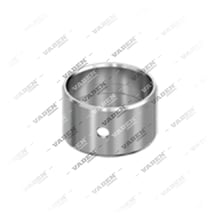
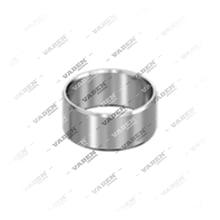
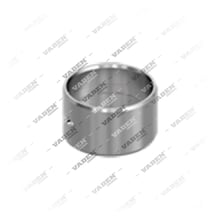
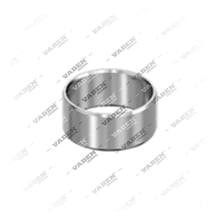
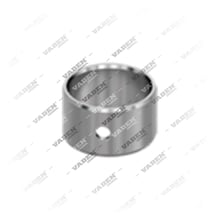
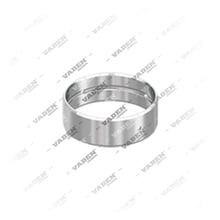
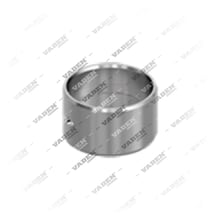
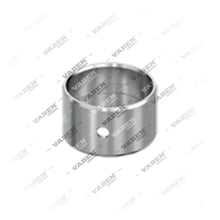
What Is a Compressor Parts Bushing?
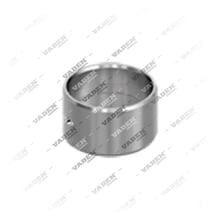
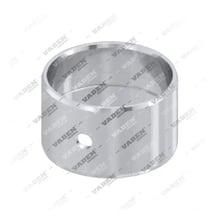
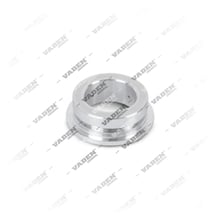
Compressor Parts Bushing is a cylindrical wear component that forms the plain bearing between the rotating and oscillating shafts inside an air brake compressor and the housing bores they sit in. Listed under Compressor Parts within the Air Brake Compressors group, the range covers the crankshaft main bushing, connecting rod small-end bushing, piston pin bushing, and drive shaft bushing — also known in the field as bearing bushings or sleeves. On truck, tractor, bus, and trailer compressors, bushings stop metal-to-metal contact and protect costly components such as the crankshaft and connecting rod.
During an overhaul, bushings are usually replaced together with gaskets, rings, and piston kits. As a bushing wears, shaft clearance grows, the piston drifts off-axis, and the cylinder liner begins to wear unevenly; small as it is, this part has a direct effect on air delivery efficiency.
How Does a Compressor Parts Bushing Work?
The bushing works on the plain-bearing principle. A thin oil film forms between the shaft and the bushing's inner diameter, and load is carried across that film. The crankshaft rotates continuously while the connecting rod oscillates back and forth; the bushing absorbs both motions while keeping friction to a minimum.
- Load carrying: spreads the piston's compression-stroke force over a wide surface, lowering surface pressure on the shaft.
- Forming the oil film: oil from the lubrication circuit passes through the bushing's grooves and holes to build the load-carrying film.
- Centering: keeps the shaft on its own axis, preserving piston alignment so the rings seat evenly in the liner.
- Absorbing wear: made from a softer material than the shaft and housing, so wear concentrates on the cheaper part.
Compressor Parts Bushing Technical Specifications
Three dimensions are critical: inner diameter, outer diameter, and length. The outer diameter is an interference fit in the housing bore, the inner diameter a sliding fit on the shaft; some types need the inner diameter reamed after pressing. Because exact tolerance varies by compressor, the vehicle or compressor manufacturer's current service manual is the reference for working clearance.
- Material: tin bronze, lead bronze, steel-backed composite, and sintered bronze are common.
- Surface treatment: the inner surface carries oil-retaining pores or grooves; some types add a solid-lubricant coating.
- Fit class: interference fit outside, sliding fit inside, held within a narrow tolerance band.
- Compatibility criterion: OE part number, compressor type, and shaft diameter must all be verified together — similar-looking bushings can have different inner diameters.
Compressor Parts Bushing Types and Subgroups
Bushings sit at more than one point inside the compressor, and each location carries a different load character. Identifying which zone a bushing belongs to comes first when choosing the right part.
- Crankshaft main bushing: the crankshaft's main support inside the housing; carries continuous rotational load.
- Connecting rod small-end bushing: between the piston pin and the rod; runs under oscillating motion and high surface pressure.
- Piston pin bushing: fitted in the pin bore at the piston's hub; lets the pin rotate freely.
- Drive gear shaft bushing: carries the radial load where the compressor takes drive from the engine.
- Flanged bushings: limit axial float as well as radial load; used where lengthwise shaft movement must be controlled.
How to Choose the Right Compressor Parts Bushing
The most reliable route is the OE reference number of the removed part. If it can't be read, match by compressor type label, shaft diameter, and mounting position. The table below summarizes the field decision points.
Compressor Parts Bushing selection and compatibility criteria| Criterion | What to check | Decision note |
|---|
| OE part number | Reference on the old bushing or repair kit | Most reliable matching path |
| Mounting position | Crankshaft, rod small end, piston pin, drive shaft | Same compressor can use bushings of different sizes |
| Shaft diameter | Measured on a sound section of the shaft | A standard bushing won't give correct clearance on a worn shaft |
| Housing bore diameter | Ovality and surface condition of the bore | If the bore has expanded, the housing needs repair |
| Material type | Bronze, lead bronze, steel-backed composite | A solid-lubricant type suits weak lubrication conditions |
| Compressor type | Wabco, Knorr-Bremse type architectures | Mercedes-Benz, MAN, Scania, Volvo, DAF, Iveco applications verified separately |
Compressor Parts Bushing Maintenance and What to Watch For
A bushing gets no direct maintenance of its own; its life depends on lubrication quality and correct installation. Every time the compressor is opened, bushing clearance should be measured and, if out of limits, assessed together with the shaft.
- Correct pressing: use a properly sized punch or press, not a hammer; a bushing driven in at an angle turns oval inside.
- Oil hole alignment: after assembly, check that the bushing's oil hole lines up with the housing channel.
- Pre-assembly cleanliness: clear the bore and shaft of swarf, gasket residue, and carbon; a single chip can tear the oil film.
- First start-up: coat the bushing surface with clean oil and run the compressor unloaded until the oil circuit fills.
- Common mistake: fitting a new bushing onto a worn crankshaft — a scored or oval shaft wears the new bushing out again fast.
Common Failures and Solutions
Bushing problems usually show up as noise, pressure loss, or oil consumption. Reading the symptom correctly avoids unnecessary parts replacement.
- Rhythmic knocking sound: enlarged bushing clearance or a worn rod small-end bushing. Measure clearance; renew the bushing and, if needed, the pin together.
- Slow air pressure build-up: ring leakage from a piston running off-axis. Check bushing clearance and liner ovality.
- Excessive oil consumption: piston alignment thrown off by bushing wear. Assess and renew bushing, rings, and liner together.
- Bluing or smearing on the bushing: interrupted oil flow or a misaligned oil hole. Clean the oil circuit and correct alignment.
- Bushing spinning in its bore: the bore has expanded or the interference fit is too loose. Measure the bore and fit a bushing with the correct tolerance.
Why VADEN ORIGINAL?
VADEN specializes in air brake compressors and compressor parts. Bushings in this range are made to the dimensional and tolerance logic of the original part and cross-matched against OEM references.
- OE dimensions: inner diameter, outer diameter, and length tolerances machined to the original part.
- Broad OEM coverage: Mercedes-Benz, MAN, Scania, Volvo, DAF, Iveco, and Renault Trucks applications built on Wabco and Knorr-Bremse type architectures.
- Kit-level completeness: bushings supplied from one source alongside pistons, rings, gaskets, and valve assemblies for overhaul work.
- International supply: part of a product range exported to more than 100 countries.
Conclusion
Compressor Parts Bushing is one of the quiet but decisive parts of an air brake compressor. Correctly sized and properly installed, it protects the crankshaft, keeps piston alignment steady, and holds the compressor's air delivery capacity at standard. Weigh the OE number, mounting position, shaft diameter, and bore condition together, and check the manufacturer's current service manual for the final clearance.
Frequently Asked Questions (FAQ)
What does a compressor bushing do?
A compressor bushing acts as a plain bearing between moving parts such as the crankshaft, connecting rod, and piston pin and the surrounding housing. The oil film that forms between the shaft and the bushing prevents metal-to-metal contact. This reduces friction losses and protects expensive main components from wear.
How can you tell a compressor bushing is worn?
The clearest sign is a rhythmic knocking sound from the compressor along with increased vibration. This can be accompanied by slower air pressure build-up, higher oil consumption, and oil visible in the air line. For a definitive diagnosis, the compressor must be removed and the clearance between the bushing and shaft measured.
Does the crankshaft also need replacing when the bushing is changed?
If the shaft surface is smooth, unscored, and within dimension, replacing the bushing alone is enough. But if the shaft surface has deep scoring, ovality, or smearing, a new bushing will wear out again quickly. In that case the shaft must also be renewed or machined to the appropriate repair size.
Does a compressor bushing need reaming after fitting?
This depends on the bushing type. Some bushings are manufactured to finished size and work directly once pressed in; others need reaming or honing because the inner diameter shrinks slightly during pressing. The vehicle manufacturer's current service manual is the reference for which method to apply and the final assembly clearance.
How do I choose the right compressor bushing?
The most reliable route is to work from the OE reference number of the removed part or the compressor repair kit. If the number can't be read, the bushing's mounting position, shaft diameter, housing bore diameter, and compressor type must all be verified together. Keep in mind that the same compressor can contain more than one bushing size.