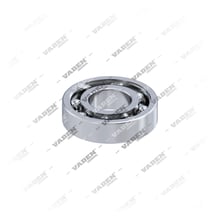
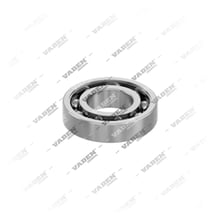
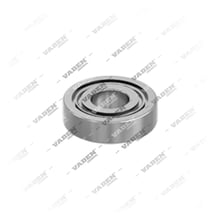
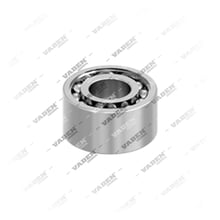
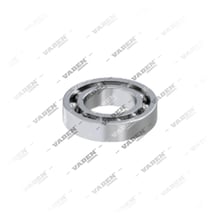
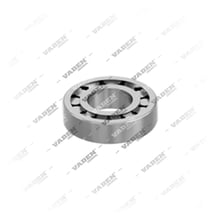
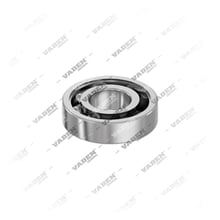
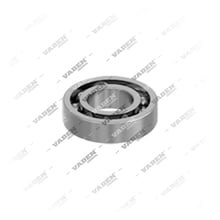
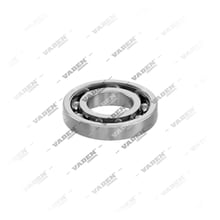
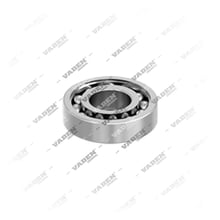
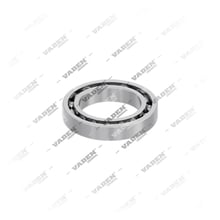
What is an Air Brake Compressor Bearing?
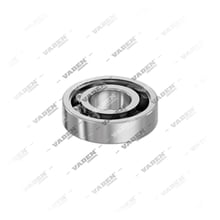
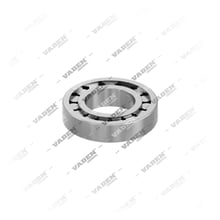
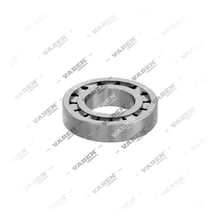
The air brake compressor bearing is a precision mechanical bearing fitted between the compressor housing and the crankshaft that allows the shaft to rotate in alignment with low friction. The compressor's mechanical efficiency and quiet operation depend heavily on this bearing's condition. Vaden's catalog in this category covers bearing sizes for different compressor models (including Wabco and Knorr-Bremse OE-referenced applications), each cross-referenced to OEM part numbers.
What are the functions of the Air Brake Compressor Bearing?
- Rotational support: allows the crankshaft/piston shaft to rotate inside the compressor housing with low friction.
- Load carrying: absorbs the radial and axial forces generated by piston motion.
- Alignment retention: keeps the shaft centered within the housing, maintaining correct piston-to-cylinder contact.
- Vibration damping: reduces the compressor's operating vibration, protecting other fasteners and linkages.
- Efficiency support: minimizes friction losses, supporting the compressor's flow rate and pressure-build performance.
What are the symptoms of an Air Brake Compressor Bearing failure?
The first sign of bearing wear is usually a continuous or speed-rising hum, whine, or metallic grinding noise from the compressor. As bearing clearance progresses, the shaft begins to shift on its axis, causing premature wear of piston seals and gaskets and, in turn, increased oil consumption. An overheating bearing can raise compressor housing temperature above normal and, in some cases, produce a burnt-oil smell. In advanced wear, the shaft can become stiff and hard to turn, reducing the compressor's air delivery rate and pressure build-up speed, which lengthens system fill time. In severe cases the bearing can seize completely and stop the crankshaft, which can also damage the engine accessory drive that turns the compressor via belt or gear.
How is an Air Brake Compressor Bearing checked?
Before removing the compressor from the engine, localize the noise source with a listening stick (mechanic's stethoscope) while it runs. Remove the compressor and turn the shaft by hand to check for smooth rotation, tight spots, or excessive play. Measure radial and axial shaft play with a dial gauge and compare against OE tolerance. Visually inspect the bearing balls/rollers and race for pitting, discoloration, or wear marks. Also check whether the compressor's lubrication passage is blocked, since inadequate lubrication is a common root cause of bearing failure.
What should be considered during replacement?
Follow the compressor manufacturer's specified disassembly sequence, removing the shaft without scoring the shaft or housing surfaces. Fit the new bearing axially using a proper press tool, applying heating or cooling per the manufacturer's instructions rather than forcing it. Before assembly, clean the compressor's lubrication passages and confirm there is no blockage. After fitting the bearing, pre-lubricate with the recommended engine oil type and avoid dry running. After assembly, confirm the shaft turns freely by hand, then briefly run the compressor once refitted to the engine and check for abnormal noise and heat.
How to choose the right Air Brake Compressor Bearing?
Selection should be based on the compressor model and OE part number, with the bearing's inner/outer diameter, width, and type (ball/roller) matching the original dimensions exactly.
Air Brake Compressor Bearing selection criteria| Criterion | Description |
|---|
| Compressor model | Exact match to the OE-referenced compressor type (select by OE number, not brand) |
| OE part number | Use the vehicle's/compressor's current OE reference |
| Bearing dimensions | Inner diameter, outer diameter and width must match the original |
| Bearing type | Ball or roller, selected per original design |
| Position | Correctly distinguish crank-side from pulley-side bearing |
Maintenance and service life
Compressor bearing service life largely depends on the cleanliness of the engine's lubrication system and how regularly oil changes are performed. Dirty or degraded engine oil, on the shared circuit that also lubricates the compressor, accelerates bearing wear. The intake air filter element should be checked regularly and replaced more often in dusty environments. Abnormal noise from the compressor must always be evaluated during periodic maintenance — early diagnosis prevents a bearing replacement from turning into a much larger compressor failure.
VADEN Air Brake Compressor Bearing
Vaden supplies bearings for different air brake compressor models, built to OE tolerances across a wide OEM cross-reference range. For correct performance, select by compressor model and OE part number rather than brand.
Frequently Asked Questions (FAQ)
Does a failing compressor bearing reduce brake pressure?
In advanced wear, yes; as shaft rotation becomes harder, the compressor's air delivery and pressure build-up rate drop, system fill time lengthens, and there is a risk of insufficient pressure in the brake circuits.
How is bearing noise distinguished from other compressor noises?
Bearing noise is usually a continuous hum or grinding that increases with speed; a definitive diagnosis requires localizing the source with a listening stick and, if needed, removing and inspecting the compressor.
Does low engine oil affect the compressor bearing?
Yes, on most vehicles the compressor is lubricated by the engine oil system; low level or dirty oil is one of the most common causes of accelerated bearing wear.
Why is heating used during bearing replacement?
Heating the bearing to expand it makes axial installation onto the shaft easier without scoring or forcing it; driving it in directly with a hammer can cause permanent damage.
What happens if the compressor bearing seizes?
The shaft can no longer turn, the compressor stops working, and it can also damage the engine accessory drive connected to it via belt or gear — early attention to warning signs is important.