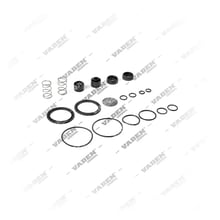
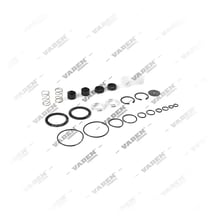
What is an ABS Electronic Control Unit Repair Kit?
The kit is used to restore that seal integrity and the safety of the electrical contacts. On modern trucks the ABS unit usually works together with EBS functions and constantly exchanges data over the CAN bus with the transmission electronics and engine control unit, so even a small breach in housing integrity can trigger fault messages across the vehicle. The kit is typically replaced only when a fault appears rather than on a fixed OE interval, which is why keeping it in stock matters for avoiding long workshop downtime after a sudden failure.
What are the functions of the ABS Electronic Control Unit Repair Kit?
The functions of the kit are directly tied to the operating safety of the ABS/EBS unit.
- Sealing: Blocks moisture and dust ingress between the unit housing and its cover.
- Electrical connection: Connector seals and pins ensure lossless transmission of sensor and valve signals.
- Vibration damping: Rubber mounts and clips protect the unit from chassis vibration.
- Corrosion protection: Delays oxidation at the connection points.
- Assembly integrity: Keeps the unit securely fixed in its correct position.
What are the symptoms of a faulty ABS Electronic Control Unit Repair Kit?
When the repair kit components wear out, electrical symptoms appear first, followed by mechanical ones. The ABS or EBS warning lamp on the dash flickers intermittently, and the fault often becomes persistent in damp weather or after a wash. The brake pedal occasionally feels like ABS is engaging even though the road surface is not slippery. A diagnostic scanner may show an intermittent sensor signal or a CAN bus communication timeout. Moisture traces, rust stains or greenish oxide buildup can be seen around the housing or inside the connector. In advanced stages the unit loses communication entirely and the vehicle can enter a brake limp-home mode. In some cases the fault is not constant but intermittent; vibration or temperature changes can make the connector contact open and close, so the warning lamp flickers on and off, which complicates diagnosis and often needs to be reproduced during a road test.
How is the ABS Electronic Control Unit Repair Kit checked?
Before inspection, the battery must be disconnected for electrical safety. The unit housing is removed and the gasket surfaces are visually inspected for hardening, cracking or witness marks; any of these calls for replacement. Connector pins are checked for shine and oxidation, and loose pins must be replaced. A multimeter is used to measure pin resistance and ground continuity. Fault codes are read with a diagnostic scanner; repeated sensor-open codes point to a worn repair kit. Light compressed air can also be applied to the housing joint surface to check for a sealing leak. During the check, the unit's mounting brackets should also be reviewed, since a loose or cracked bracket can stress the connector through vibration and cause the fault to recur. The section of the wiring harness near the unit inlet should also be inspected for chafing, insulation cracks or rodent damage.
What should be considered during replacement?
Replacement must always be done with the battery disconnected and the vehicle parked. Old gaskets must be fully cleaned off before a new gasket is seated; leftover sealing material on the surface must be scraped away. Pins must be pushed in the correct orientation until fully seated, never bent by force. Locking clips must click audibly into place; a half-seated clip will eventually let the connector work loose. After assembly, ignition should be switched on and the ABS/EBS fault memory cleared before retesting the system. The torque and sequence information in the vehicle's current service manual should be followed. During replacement, removed screws and clips should be kept sorted on a tray so nothing gets mixed up, and connector pins should never be touched with oily or dirty hands, since even fingerprint moisture can promote later oxidation.
How is the ABS Electronic Control Unit Repair Kit selected?
Selection is determined by vehicle make, the housing code of the unit, and the number of pins on the connector. The table below summarizes the main criteria to consider when selecting.
ABS Electronic Control Unit Repair Kit selection criteria| Criterion | Description |
|---|
| Housing code | The code on the unit must exactly match the kit code |
| Pin count | Connector pin count and layout vary by vehicle fitment |
| Material quality | NBR/FKM based gaskets must resist heat and oil exposure |
| Kit content | Gaskets, pins, clips and fitting instructions should be complete |
| Storage | Rubber parts should be kept cool and away from light |
Maintenance and service life
Repair kit components can last a long time with regular maintenance. The unit should never be sprayed directly with high-pressure water during washing, and the connector area should be visually checked at periodic services. Average service life depends on vehicle type and operating conditions; the maintenance intervals in the vehicle's current service manual are decisive. A suitable electrical contact protectant can be applied to the connection points against corrosion. For fleets, adding an ABS connector and housing check to the periodic maintenance plan significantly reduces unexpected breakdown stops, especially for vehicles running on salted, wet winter roads. This check frequency can be increased based on the vehicle's age and duty cycle.
VADEN ABS Electronic Control Unit Repair Kit
VADEN supplies ABS electronic control unit repair kits for heavy commercial vehicle brake systems, matching OE dimensions with reliable material quality. The focus on sealing and electrical reliability gives workshops a fast and dependable replacement option.
Frequently Asked Questions (FAQ)
Which vehicles use an ABS Electronic Control Unit Repair Kit?
It is used on heavy commercial vehicles, trucks, tractor units and buses fitted with an ABS/EBS control unit. Fitment must be confirmed by the housing code.
How long does it take to replace the repair kit?
It typically takes 30 to 60 minutes for an experienced technician, depending on where the unit is mounted on the chassis.
Is the fault code cleared automatically after replacement?
No, the fault memory must be manually cleared with a diagnostic scanner after replacement, and the system must be retested.
Does a wet ABS unit always need full replacement?
No, renewing the sealing kit is usually enough; a full unit replacement is only needed if the internal electronic board itself is damaged.
What is the risk of using a non-original repair kit?
Dimensional or material mismatch can compromise sealing, allowing moisture ingress and causing recurring ABS faults.