What is a ABS Twin Relay Valve Repair Kit?
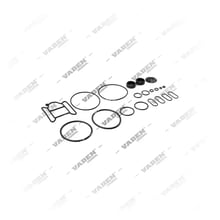
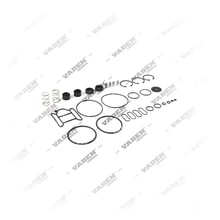
Over time the diaphragms harden, O-rings wear, valve seats become scored and internal springs weaken; in this condition renewing the internal components with a repair kit instead of replacing the whole valve is both more economical and practical for stock management. The VADEN repair kit consists of diaphragms, O-ring sets, seals, springs and guide pistons manufactured to the original geometry of the twin relay valve.
- Location: Within the ABS twin relay valve assembly of the brake system, typically mounted on the chassis near the axle.
- Contents: Diaphragm, O-ring set, seal, spring, guide piston and gasket set.
- Material: Oil- and ozone-resistant NBR/EPDM based elastomer parts, steel springs.
- Application: ABS/EBS equipped brake systems of tractors, trailers and buses with multiple axles.
What are the functions of the ABS Twin Relay Valve Repair Kit?
Each part in the repair kit serves to restore the valve's air tightness and modulation precision. The diaphragm isolates the pressure difference between the control air chamber and the supply chamber so the valve opens and closes at the correct moment; the O-rings maintain dynamic sealing between the piston and the body; the springs speed up the valve's return to the neutral position.
- Pressure isolation: Maintains sealing between the control and output lines.
- Fast response: Preserves the mechanical precision needed to respond to ABS/EBS unit commands within milliseconds.
- Dual circuit independence: Enables the two brake circuits to operate independently of each other.
- Energy saving: Reduces compressor load by preventing continuous air leakage caused by worn parts.
What are the symptoms of a faulty ABS Twin Relay Valve Repair Kit?
A fault requiring a repair kit usually shows itself as an air leak caused by worn diaphragms or O-rings. A continuous hissing sound from the valve body, the compressor cycling more often than normal, and the ABS warning lamp lighting intermittently are typical symptoms.
- Air leak: Continuous or intermittent hissing sound around the valve body.
- Pressure drop: System pressure dropping quickly even while the vehicle is parked.
- Delayed brake response: Brake pads contacting late after the pedal is pressed.
- Asymmetric braking: Brake force on one axle remaining weaker than the other.
- ABS/EBS fault code: ABS warning lamp on the dashboard or a pressure sensor deviation code in the diagnostic tool.
How is the ABS Twin Relay Valve Repair Kit checked?
Checking starts with a visual inspection of the valve body and connection points for oil leakage or moisture traces. Next, a soap-water leak test is performed while the system is pressurized; points where bubbles form indicate a worn O-ring or diaphragm.
- Visual inspection: Checking the body for cracks, corrosion and loose connections.
- Soap foam test: Detecting leak points while the system is under pressure.
- Manometer measurement: Comparing inlet and outlet pressures against OE tolerances.
- Diagnostic scan: Reading pressure sensor and valve response time data via the ABS/EBS ECU.
What should be considered when replacing it?
Before installing the repair kit, the system must be fully depressurized and the air tanks drained. The assembly order and orientation of the removed parts must be recorded, and the diaphragms and O-rings should be lubricated with a small amount of the recommended silicone-based grease so as not to damage the internal channels of the valve during installation.
- Pressure release: All air tanks must be drained before installation.
- Cleaning: The valve body and channels should be cleaned with compressed air, leaving no metal debris.
- Correct installation direction: Diaphragms and pistons must be oriented according to the manufacturer's markings.
- Tightening torque: A general torque range should be applied to the body screws; the vehicle's current OE service manual should be treated as authoritative.
- System bleeding: After installation the system should be pressurized slowly and the leak test repeated.
How to choose the right ABS Twin Relay Valve Repair Kit?
When selecting the correct repair kit, the vehicle's valve model, OEM part number and elastomer material compatibility must be considered. An O-ring of the wrong hardness can compromise sealing within a short time, so a product with specified temperature and oil resistance in the original dimensions should be preferred.
Selection criteria for the ABS Twin Relay Valve Repair Kit| Parameter | Typical value / range |
|---|
| Operating pressure | 6.5-8.5 bar (varies by vehicle system) |
| Temperature resistance | -40°C to +100°C |
| Elastomer type | NBR or EPDM based |
| Response time | General range; verify against OE service manual |
| Compatibility | Exact match with valve model and OEM part number |
Maintenance and service life
The service life of the ABS twin relay valve repair kit varies depending on the vehicle's usage intensity and the moisture and oil content of the air system. Regular air tank draining, dryer maintenance and periodic leak checks extend the life of the elastomer parts. In humid or contaminated air systems, diaphragms and O-rings may harden earlier, so visual and functional checks are recommended at periodic maintenance intervals.
VADEN ABS Twin Relay Valve Repair Kit
VADEN bases its ABS twin relay valve repair kits for heavy commercial vehicle brake systems on OEM dimensions and material standards. For service and fleet operators determining the correct application, the VADEN product catalog and technical support line are available for reference.
Frequently Asked Questions (FAQ)
What is the difference between an ABS twin relay valve repair kit and a complete valve replacement?
The repair kit only renews the worn internal components (diaphragm, O-ring, spring); the valve body and connection fittings are retained. If there is no crack or excessive corrosion in the body, the repair kit is the more economical solution.
Is special equipment needed to install the repair kit?
Standard hand tools and a compressed air source are sufficient, but access to suitable equipment for a post-installation leak test and, if needed, a diagnostic scan is recommended.
At what mileage should the repair kit be replaced?
There is no fixed mileage figure; it depends on the vehicle's usage conditions and the moisture content of the air system. Replacement should be carried out when wear is detected during periodic leak checks, with the vehicle's current OE service manual as the authority.
What happens if the wrong O-ring is used?
A mismatch in size or hardness quickly leads to renewed air leakage and valve malfunction, so using an original part matching OEM dimensions is recommended.
Why might the ABS lamp still light up after the repair kit is replaced?
Even if the mechanical leak has been fixed, the fault code stored in the ECU memory may not have been cleared; the code must be cleared and a function test performed using a diagnostic tool.