
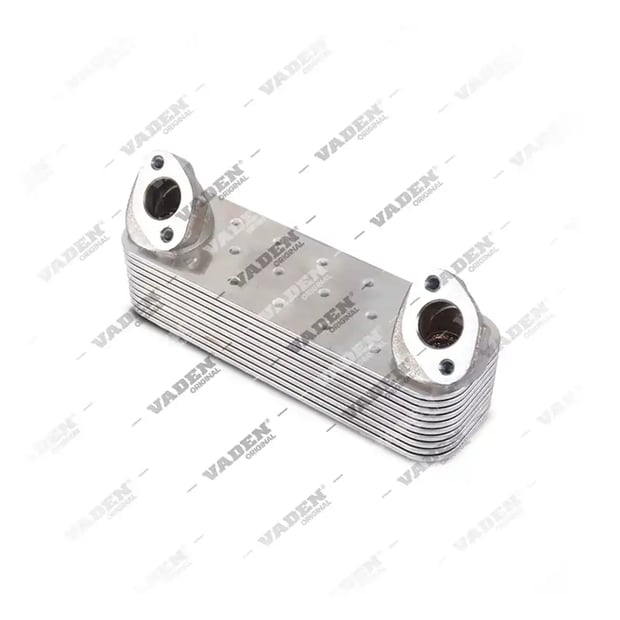
488.01.0003 Mercedes-Benz Oil Cooler Equivalent
488.01.0003
Summary
This high-strength engine oil cooler is designed for heavy commercial vehicle applications, specifically for Mercedes-Benz systems. Featuring a precise 10-layer construction, it ensures optimal thermal regulation and long-term reliability in demanding workshop environments.
| EAN Code | 8683457039988 |
|---|
Ready to Order
Compatible OEM Codes
- MERCEDES BENZ 001 188 30 01 001 188 12 01 001 188 11 01 000 188 87 01 000 188 84 01 000 188 81 01 000 188 76 01 000 188 64 01
- NISSENS 90728
- LASO 20186500
Description
The engine oil cooler plays a critical role in maintaining optimal operating temperatures within the engine system, preventing thermal degradation of the lubricant. This component is engineered with a high-strength 10-layer structure to withstand the intense heat and pressure cycles typical of heavy commercial vehicle operation.
Specifically designed for Mercedes-Benz, this unit is the OE equivalent of the 488.01.0003 part used in various heavy-duty engine configurations. It also serves as a reliable replacement for several high-value references including MERCEDES BENZ 0001886401, 0001887601, 0001888101, 0001888401, 0001888701, 0011881101, 0011881201, 0011883001, LASO 20186500, and NISSENS 90728. The 488.01.0003 is the OE equivalent of the MERCEDES BENZ oil cooler used in Mercedes-Benz vehicles.
Technicians should ensure that the mounting surfaces are clean and that all gaskets are replaced during installation to prevent leaks. Regular inspection of the cooling fins and connections is recommended to maintain system efficiency throughout its service life in heavy commercial transport.
Specifically designed for Mercedes-Benz, this unit is the OE equivalent of the 488.01.0003 part used in various heavy-duty engine configurations. It also serves as a reliable replacement for several high-value references including MERCEDES BENZ 0001886401, 0001887601, 0001888101, 0001888401, 0001888701, 0011881101, 0011881201, 0011883001, LASO 20186500, and NISSENS 90728. The 488.01.0003 is the OE equivalent of the MERCEDES BENZ oil cooler used in Mercedes-Benz vehicles.
Technicians should ensure that the mounting surfaces are clean and that all gaskets are replaced during installation to prevent leaks. Regular inspection of the cooling fins and connections is recommended to maintain system efficiency throughout its service life in heavy commercial transport.
Technical Specifications
| Number of Layers | 10 |
|---|
Other OEMs
LASO
- 20186500
MERCEDES BENZ
- A0021881101
- A0011883701
- A0011883101
- A0011883001
- A0011881201
- A0011881101
- A0001888701
- A0001888401
- A0001888101
- A0001887601
- A0001886401
- 0021881101
- 002 188 11 01
- 0011883701
- 0011883101
- 0011883001
- 0011881201
- 0011881101
- 001 188 37 01
- 001 188 31 01
- 0001888701
- 0001888401
- 0001888101
- 0001887601
- 0001886401
- 001 188 30 01
- 001 188 12 01
- 001 188 11 01
- 000 188 87 01
- 000 188 84 01
- 000 188 81 01
- 000 188 76 01
- 000 188 64 01
NISSENS
- 90728
Vehicles Used
| Brand | Model | Model Type | Engine |
|---|---|---|---|
| LASO | |||
| MERCEDES BENZ | |||
| NISSENS |
FAQ
What are the compatible OEM reference numbers for this part?
The compatible OEM references include: MERCEDES BENZ (codes: 2D5B... - see full list below), LASO (2D5B...), and NISSENS (9D72...); specifically MERCEDES BENZ codes: 2D5B..., 2D5B..., etc.
Is this oil cooler suitable for heavy commercial vehicles?
Yes, this component is engineered specifically for high-durability requirements in heavy commercial vehicle applications to ensure reliable thermal regulation.
How many layers does this oil cooler feature?
This specific model features a robust 1,C◦◦ construction consisting of exactly 1,C◦◦ layers for optimized heat exchange.
What brands are compatible with this component?
This part is compatible with systems from MERCEDES BENZ, LASO, and NISSENS as specified in the technical documentation.
When should a technician replace the engine oil cooler?
Replacement is typically required if signs of thermal inefficiency or leaks are detected during routine maintenance or if the system fails to maintain optimal engine temperature.