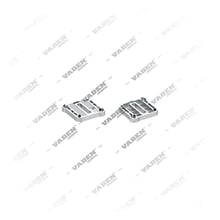
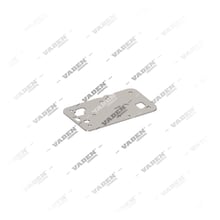
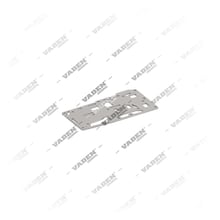
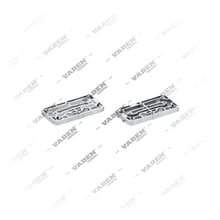
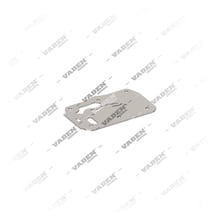
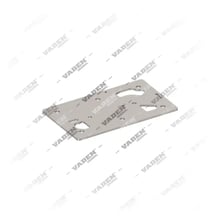
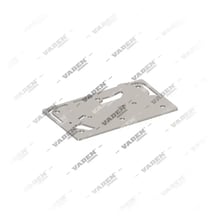
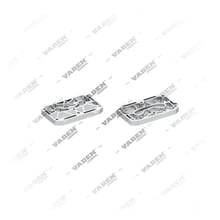
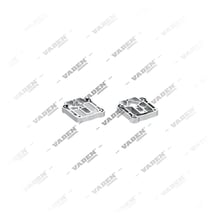
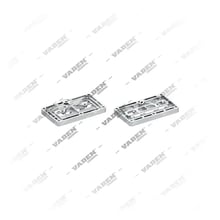
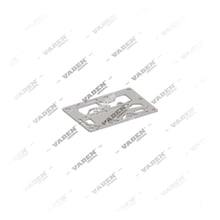
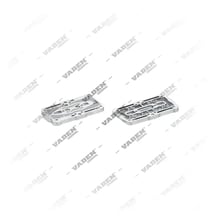
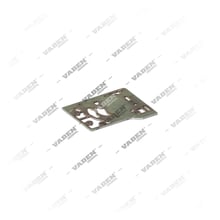
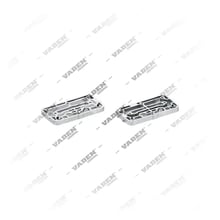
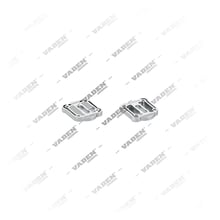
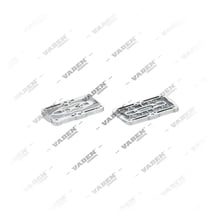
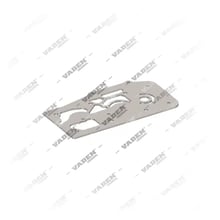
What Is a Compressor Cooling Plate?
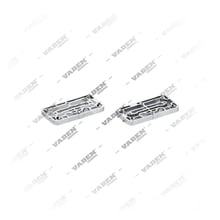
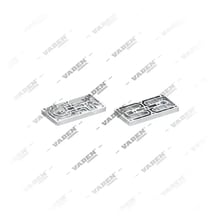
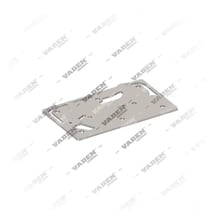
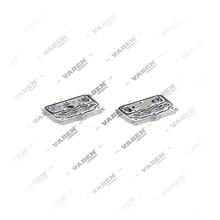
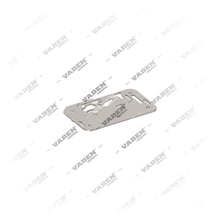
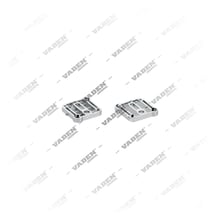
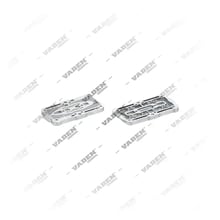
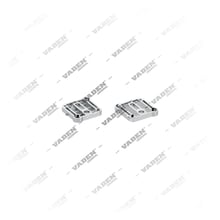
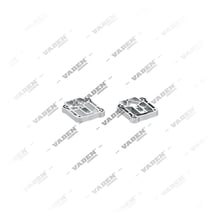
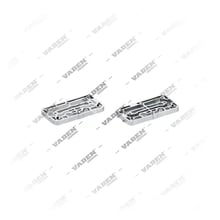
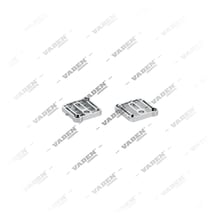
The Compressor Parts Cooler Plate is the intermediate plate that sits between the cylinder block and the cylinder head of an air brake compressor, carrying the heat released during compression into the cooling circuit. In the field it is also called the cooler plate, cooling plate, or intermediate plate. It is a service component within the Compressor Parts group under Air Brake Compressors; it does not generate air itself, but keeps the heat building up in the block and the compressed air under control. It is found in the majority of water-cooled compressors used on trucks, tractor units, buses, trailers and heavy construction machinery.
How Does a Compressor Cooling Plate Work?
As air is compressed inside the compressor, its temperature rises rapidly; if the heat around the head area is not removed, the oil carbonizes, gaskets fail and the valve plate deforms. Thanks to the water channels or cooling fins machined into it, the cooler plate draws this heat away and transfers it into the engine cooling circuit or to the surrounding air. At the same time it forms a flat sealing surface between the block and the head.
- Heat transfer: Carries the heat generated during the compression stroke through the plate body into the coolant or the surrounding air.
- Circuit separation: Keeps the water, air and oil return channels isolated from one another, preventing them from mixing.
- Thermal balance: Lowers head temperature so the valve plate and reed valves operate within a safe range.
- Service life protection: Slows the wear rate of heat-sensitive components such as piston rings, cylinder liners and gaskets.
Compressor Cooling Plate Technical Specifications
Because of its high heat conductivity, cooler plates are mostly made from aluminum alloy; in applications with high pressure and vibration loads, cast iron or steel alloy versions are used instead. Surface flatness is a critical dimension; if the plate shows any measurable warping, a leak is unavoidable no matter how good the gasket is. Thickness, bolt hole pattern, channel cross-section and O-ring groove dimensions vary by make and model, so visual similarity alone is not enough. For tightening torque and flatness tolerance, the vehicle manufacturer's current service manual is the authoritative source.
Compressor Cooling Plate Types and Subgroups
- Water-cooled intermediate plates: Engine coolant flows through internal channels; this is the most common solution for long-haul, continuous high-speed operation.
- Air-cooled finned plates: Releases heat directly into the surrounding air through surface fins; preferred in medium-duty applications.
- Single-cylinder compressor plates: Compact-bodied, small-scale plates produced for single-piston compressor layouts.
- Twin-cylinder compressor plates: Larger-channel-volume plates that cool both compression chambers at once.
- Gasket kit options: Sets that include the top and bottom gaskets and O-rings together with the plate, removing the risk of a missing part during assembly.
How to Choose the Right Compressor Cooling Plate
The most reliable approach is to start from the OE reference number stamped on the removed plate or the compressor housing. If the number cannot be read, the make, model, engine variant and cylinder count must be evaluated together. The cooling type must always match. The table below summarizes the criteria that should be verified before ordering.
Compressor Parts Cooler Plate selection and compatibility criteria| Criterion | What to Check | Why It Matters |
|---|
| OE reference number | Number stamped on the old plate or housing | The most precise way to cross-match |
| Cooling type | Water-channel or finned air-cooled | Wrong type blocks the circuit or causes a water leak |
| Cylinder count | Single- or twin-cylinder compressor layout | Determines chamber count and channel layout |
| Bolt hole pattern | Hole count, diameter, center distance | A mismatched pattern prevents even clamping |
| Plate thickness | Direct measurement against the original part | Changes head height and dead volume |
| Brand application | Mercedes-Benz, MAN, Scania, Volvo, DAF, Iveco, Renault Trucks | Same series can use a different plate depending on engine |
Compressor Cooling Plate Maintenance and Points to Watch
The cooler plate is not a part that wears through friction; it fails due to thermal fatigue, corrosion and incorrect installation. Every time the compressor is opened, the plate should be cleaned, its channels inspected, and its flatness checked with a straightedge.
- Clean the channels: Scale, rust and sediment narrow the channel cross-section; channels must be cleared at every overhaul.
- Measure flatness: Even warping too small to see with the naked eye creates a permanent leak; replace the plate if in doubt.
- Do not reuse the gasket: Removed gaskets and O-rings do not spring back after compression and must be renewed at every assembly.
- Follow the tightening sequence: Bolts must be tightened in a criss-cross, staged pattern; for final torque, the vehicle manufacturer's current service manual is the authoritative source.
- Do not overapply sealant: Excess sealing compound spills into the channel openings and restricts coolant flow.
Common Failures and Their Solutions
- Compressor overheats: Usually caused by blocked cooling channels or sediment buildup; clean the channels, and if they will not clear, replace the plate.
- Water appears in the air tank: A crack in the plate or a failed O-ring lets water cross into the air side; the plate and gaskets must be renewed together.
- Water leaks around the head: Caused by a plate that has lost flatness or bolts tightened incorrectly; measure the surface and renew the gaskets.
- Pressure build-up time increases: High head temperature may have deformed the valve plate; check the valve assembly along with the cooler plate.
- Oil is carried into the air line: Sustained high temperature accelerates piston ring and liner wear; replacing the rings will not be a lasting fix unless the cooling path is repaired.
Why VADEN ORIGINAL?
VADEN ORIGINAL cooler plates are manufactured true to the dimensions of the original part and cross-matched against a wide OEM reference list. This category offers 109 product options, covering most single- and twin-cylinder, water- and air-cooled compressors from a single range.
- Manufactured to OE dimensions: Hole pattern, plate thickness and channel geometry are machined to match the original part.
- Broad OEM matching: Reference-based matching for Mercedes-Benz, MAN, Scania, Volvo, DAF, Iveco and Renault Trucks compressors.
- Controlled surface finishing: Flatness and surface quality are separately inspected because they directly affect sealing.
- Exported to more than 100 countries: A broad distribution network with a field-proven track record across different climates and operating conditions.
Conclusion
The Compressor Parts Cooler Plate is one of the least visible yet most decisive components of an air brake compressor. Properly managing compression heat extends the service life of the valve plate, piston rings and gaskets. Every time the compressor is overhauled, the plate's channels should be cleaned, its flatness measured, and the plate replaced if there is any doubt. A plate selected with the correct dimensions and cooling type keeps the overhaul lasting and the brake system operating safely.
Frequently Asked Questions (FAQ)
What does a compressor cooler plate do?
In an air brake compressor, temperature rises quickly as air is compressed. Sitting between the cylinder block and the head, the cooler plate removes this heat through water channels or cooling fins. This keeps the valve plate, piston rings and gaskets within a safe operating temperature.
What are the symptoms of a failed cooler plate?
The most common symptoms are an overheating compressor, water appearing in the air tank, water leaking around the head, and longer pressure build-up times. A burnt oil smell and oil being carried into the air line also point to a breakdown in heat management. In that case the plate's channels and flatness should be checked.
Can a cooler plate be cleaned and reused?
A plate whose channels are blocked with sediment or scale can be reused if the channels can be fully cleared and the surface flatness is maintained. However, if there is a crack, porous corrosion or measurable warping, cleaning is not enough and the plate must be replaced. Gaskets should be renewed in every case.
Can water-cooled and air-cooled plates be interchanged?
No. A water-cooled plate has internal channels connected to the engine cooling circuit, while an air-cooled type releases heat through surface fins. The plate must match whatever cooling type the compressor block uses, otherwise the circuit gets blocked or water crosses into the air side.
How do I choose the right cooler plate?
The most reliable method is matching the OE reference number on the removed plate or the compressor housing. If the number cannot be read, the vehicle's make, model, engine variant, the compressor's cylinder count, cooling type, plate thickness and bolt hole pattern must all be verified together.
Related technical guide: Compressor Cooling Plate & Water Cooling: Faults, Repair & Care