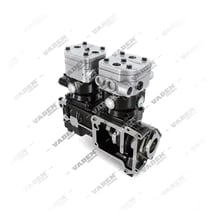
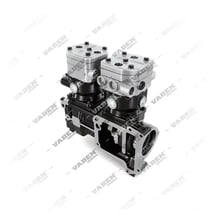
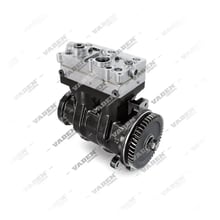
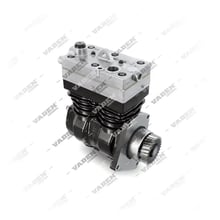
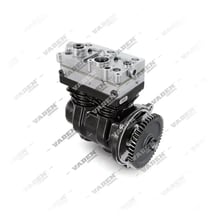
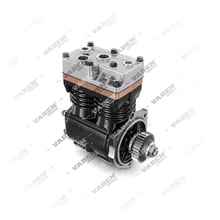
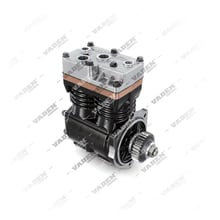
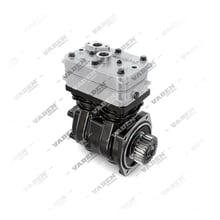
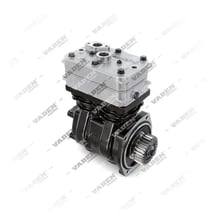
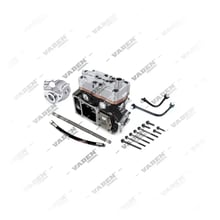
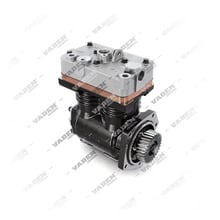
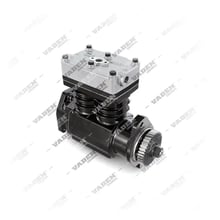
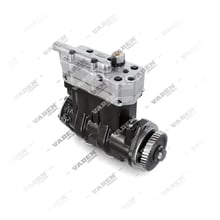
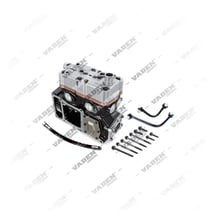
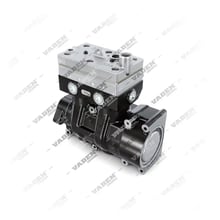
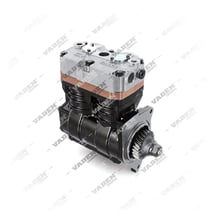
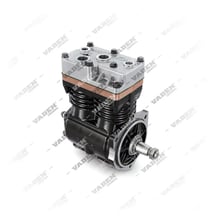
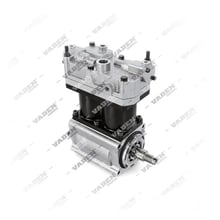
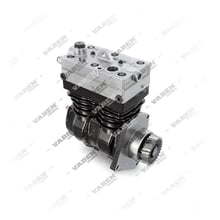
What Is a Twin Cylinder Compressor?
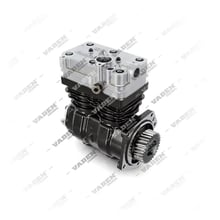
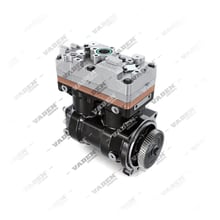
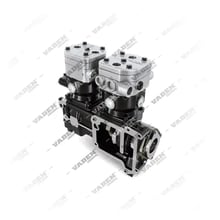
A Twin-Cylinder Compressor is an engine-driven compressor type in the air brake system of heavy commercial vehicles that generates compressed air through two piston-cylinder assemblies. Within the Compressor branch of the Air Brake Compressors group, these units deliver higher air output than single-cylinder equivalents at the same engine speed. For this reason, they are the preferred choice on multi-axle tractor units, touring coaches, tipper trucks, concrete mixers, and other high-air-demand bodied vehicles. In the field, this group is also called a twin-piston compressor or two-cylinder air compressor.
How Does a Twin Cylinder Compressor Work?
The unit draws drive from the engine through a gear, pulley, or clutch interface, with the crankshaft turning two connecting rods offset in phase. As a result, two compression strokes occur on every revolution, filling the air reservoirs faster. Once cut-out pressure is reached, the governor unloads the unit.
- Intake: Both cylinders draw air through the intake filter; filtration protects the valve plate and piston rings against dust-related wear.
- Compression: The two pistons, running out of phase, compress air in sequence; this arrangement reduces pressure pulses and vibration.
- Discharge and cooling: Air passes through the cylinder head valves to the dryer; heat is dissipated via cooling fins or a head connected to the water circuit.
- Regulation: The governor unloads the unit at cut-out pressure and returns it to loaded operation at the lower threshold.
Twin Cylinder Compressor Technical Specifications
Units are typically built with a cast-iron or aluminum crankcase, a cast-iron cylinder block, and a steel crankshaft. Cylinder bore, stroke, and engine speed together determine air output; lubrication is supplied from the engine's pressurized oil circuit. Exact flow, pressure, and torque figures vary by variant; for binding values, the vehicle manufacturer's current service manual is the authoritative source.
- Housing and block: The cast housing is sized for the higher thermal and mechanical load of the twin-cylinder layout.
- Drive interface: Gear-driven, pulley-driven, and clutch-equipped variants exist; the flange bolt pattern is application-specific.
- Sealing: The cylinder head gasket, valve plate gasket, and crankshaft seal maintain pressure and oil integrity.
Twin Cylinder Compressor Types and Subgroups
Twin-cylinder compressors are differentiated by cooling method, drive type, and mounting interface. Even within the same vehicle model, different units may be fitted depending on the engine variant and the body equipment installed. For this reason, selection should not rely on vehicle model alone — the removed unit's identification tag must also be checked.
- Air-cooled types: Dissipate heat through cooling fins; they offer a simpler installation and easier servicing, suited to moderate-duty operation.
- Water-cooled types: The head connects to the engine's coolant circuit, maintaining thermal stability on long hauls and under sustained high demand.
- Gear-driven and pulley-driven types: Gear drive transmits high torque without any risk of belt slip; pulley drive is easier to install but belt tension must be monitored.
- Clutch-equipped and high-output types: A clutch disengages the unit when there is no demand; high-output variants are intended for mixers and tippers.
How to Choose the Right Twin Cylinder Compressor
The safest approach is to start from the OE part number stamped on the removed unit's housing. If the number cannot be read, proceed using the make, model, engine code, and chassis number; the drive type, cooling arrangement, and mounting flange should then be physically compared.
Twin-Cylinder Compressor selection and compatibility criteria| Criterion | How to verify | Why it matters |
|---|
| OE part number | Unit label or casting number | The most reliable match method; prevents application errors |
| Output class | Confirming twin-cylinder configuration and flow rate | Low output extends reservoir fill time and delays brake response |
| Cooling type | Whether the head has water ports or cooling fins | Fitting the wrong type either prevents installation or causes overheating |
| Drive type | Gear, pulley, or clutch interface | A mismatch disrupts power transmission and timing |
| Mounting flange | Bolt count, spacing, and pilot diameter | A flange mismatch causes poor seating and leaks |
| Brand application | Mercedes-Benz, MAN, Scania, Volvo, DAF, Iveco | Even within the same series, different units may be used depending on the engine option |
Twin Cylinder Compressor Maintenance and Points of Attention
Because twin-cylinder units produce more air, the air dryer, intake filter, and lubrication circuit carry a correspondingly higher load, and most maintenance work concerns the condition of these surrounding components. During installation, attention must be paid to drive gear timing and to applying torque in stages; for exact values, the vehicle manufacturer's current service manual should be followed.
- Intake filter: A clogged filter reduces output and increases oil consumption; replace the filter at the service interval and check the hose for kinking or crushing.
- Oil supply: Clean the oil feed line before installation and confirm that oil reaches the unit on first start-up; running dry causes crankshaft damage.
- Air dryer: Replace the cartridge on schedule and drain condensate from the reservoirs regularly; trapped moisture causes corrosion and can freeze in winter.
- Common mistakes: Tightening the bolts to full torque in a single pass, reusing the old gasket, and fitting a new unit without replacing the dryer.
Common Faults and Solutions
- Air pressure builds slowly: This can result from a clogged intake filter, worn piston rings, or a leak in the circuit. Run a leak test first and check the filter; if the problem persists, inspect the valve plate and ring assembly.
- Compressor is overheating: Insufficient oil flow, blocked cooling fins, or continuous operation under load are the usual causes. Check the oil line, the cooling circuit, and the unloading function.
- Oil is carrying over into the air line: This is usually caused by worn piston rings or a blocked oil return line. Renew the ring set, clear the oil return, and replace the dryer cartridge.
- Metallic knocking and vibration: This points to crankshaft bearing wear, connecting rod clearance, or a loose drive gear. Measure the clearances and overhaul any worn assembly.
- Engine struggles at idle: The unit may be failing to unload even after reaching cut-out pressure. Check the governor and the unloader piston.
Why VADEN ORIGINAL?
VADEN is a manufacturer specializing in air brake compressors and compressor parts. Products in this group are manufactured to the dimensions and mounting interface of the original unit, so they install on the vehicle without any additional machining.
- Manufactured to OE dimensions: The flange bolt pattern, port locations, and drive interface are machined to match the original.
- Broad OEM coverage: A cross-reference list covers applications for Mercedes-Benz, MAN, Scania, Volvo, DAF, Iveco, Renault Trucks, and BMC.
- International reach: Products are exported to over 100 countries, giving wide aftermarket availability.
Conclusion
The Twin-Cylinder Compressor group meets the brake system's pressure demand quickly and reliably on heavy commercial vehicles with high air consumption. The right unit is selected through a match that starts with the OE part number and is confirmed by drive type and mounting interface. Service life is extended when intake filter, oil supply, and air dryer maintenance are not neglected.
Frequently Asked Questions (FAQ)
What is the difference between a twin-cylinder compressor and a single-cylinder compressor?
A twin-cylinder compressor has two piston-cylinder assemblies, producing two compression strokes on every crankshaft revolution. This delivers higher air output at the same engine speed, so the reservoirs fill in less time. Single-cylinder types are more compact and suit vehicles with lower air demand.
Can I fit a twin-cylinder compressor in place of a single-cylinder one?
This is only possible if the vehicle manufacturer specifies a twin-cylinder variant for that engine. If the drive gear, mounting flange, port locations, and oil supply do not match exactly, the conversion should not be made. The correct approach is to match parts against the removed unit's OE number.
How do I know if my twin-cylinder compressor is water-cooled or air-cooled?
Examine the cylinder head: if it has coolant inlet and outlet ports, the unit is water-cooled. If only cooling fins are visible on the head and cylinder, it is air-cooled. Because cooling type directly affects installation, it must always be verified before ordering.
What should I do if my twin-cylinder compressor is carrying oil into the air line?
Oil carry-over is usually caused by worn piston rings, elevated crankcase pressure, or a blocked oil return line. Renew the ring set and confirm the oil return line is clear. Because the oil also contaminates the air dryer cartridge, the dryer must be replaced as well.
What should I check after fitting a new twin-cylinder compressor?
Before first start-up, clean the oil feed line and confirm oil is reaching the compressor. Tighten the bolts in a crosswise pattern and in stages; follow the vehicle manufacturer's current service manual for torque values. Renewing the air dryer cartridge and the intake filter at the same time is also recommended.
Related technical guide: Single vs Twin-Cylinder Air Compressor: Choice & Fitment
All products in this category (247): 3700 030 001 · 1400 095 002 · 2600 150 001 · 2200 030 001 · 3400 020 001 · 1100 250 020 · 1300 140 001 · 1300 330 001 · 1300 290 001 · 1600 020 001 · 1600 010 001 · 1700 025 001 · 1800 070 002 · 1300 190 010 · 1300 230 002 · 1300 230 001 · 1300 220 001 · 1300 200 002 · 1300 200 001 · 1300 360 001 · 1300 240 003 · 1300 240 002 · 1300 240 001 · 1300 235 002 · 1300 235 001 · 1300 270 001 · 1400 010 009 · 1400 030 002 · 1400 030 001 · 1400 050 001 · 1400 040 003 · 1400 040 002 · 1400 040 001 · 1400 090 012 · 1400 090 003 · 1500 010 003 · 1500 010 001 · 1500 030 001 · 1500 075 002 · 1500 075 001 · 1500 170 001 · 1500 160 002 · 1500 070 001 · 1500 185 001 · 1500 180 001 · 1600 040 001 · 1600 080 005 · 1600 080 004 · 1600 080 003 · 1600 080 001 · 1600 085 001 · 1900 020 002 · 1900 020 001 · 1800 070 001 · 1800 110 001 · 1700 010 007 · 1700 010 006 · 1700 010 003 · 1600 165 002 · 1600 165 001 · 1600 150 002 · 1600 150 001 · 1700 070 001 · 1700 050 003 · 1700 050 002 · 1700 050 001 · 1700 120 001 · 1600 160 002 · 1600 160 001 · 1700 110 003 · 1700 110 002 · 1700 110 001 · 1700 160 002 · 1700 160 001 · 1700 140 001 · 1900 170 001 · 1700 180 001 · 1900 090 002 · 1900 090 001 · 2000 050 001 · 2000 040 001 · 2000 010 001 · 1900 110 002 · 1900 110 001 · 1900 150 001 · 2400 030 001 · 2500 150 003 · 2500 170 003 · 2500 170 002 · 2500 170 001 · 2500 180 001 · 2500 280 001 · 2600 120 002 · 2600 120 001 · 2600 100 001 · 2600 030 003 · 2600 030 002 · 2600 030 001 · 2800 060 001 · 2800 070 001 · 2600 140 001 · 1100 020 006 · 1100 070 002 · 1100 250 021 · 1100 250 005 · 1100 250 004 · 1100 255 003 · 1100 258 002 · 1100 258 001 · 1100 320 001 · 1100 440 001 · 1100 380 001 · 1100 420 002 · 1100 360 002 · 1100 350 001 · 1100 505 001 · 1200 019 020 · 1200 019 010 · 1200 030 008 · 1200 030 005 · 1200 030 004 · 1200 030 003 · 1200 030 002 · 1200 030 001 · 1200 020 003 · 1200 020 001 · 1200 070 002 · 1200 070 001 · 1200 090 002 · 1200 090 001 · 1200 130 001 · 1200 270 001 · 1200 240 001 · 1200 220 001 · 1200 200 001 · 1300 010 002 · 1300 090 008 · 1300 050 007 · 1300 050 004 · 1300 050 003 · 1300 180 003 · 1300 180 002 · 1700 020 020 · 3500 040 001 · 3200 020 001 · 3400 010 001 · 1300 190 011 · 1300 190 012 · 1300 190 008 · 1300 190 009 · 1300 190 005 · 1300 190 007 · 1300 190 006 · 1300 190 002 · 1300 190 001 · 1300 190 004 · 1300 190 003 · 1300 195 001 · 1300 195 002 · 1300 250 001 · 1300 260 001 · 1300 260 003 · 1300 260 002 · 1400 010 005 · 1400 010 008 · 1400 010 006 · 1400 010 004 · 1400 010 002 · 1400 090 010 · 1400 090 011 · 1400 090 007 · (7600 860 003, 2022258 with gear), Twin Cylinder Compressor, Air Compr · (7600 860 002, 2022257 with gear), Twin Cylinder Compressor, Air Compr · 1400 090 009 · 1400 090 004 · 1600 010 002 · 1600 060 002 · 1600 060 001 · 1600 060 004 · 1600 060 003 · 1700 035 003 · 1700 035 002 · 1700 030 001 · 1700 030 002 · 1700 010 002 · 1700 010 005 · (7600 750 008, 5000686842 with gear), Twin Cylinder Compressor, Air Co · 2500 150 001 · 2500 150 002 · 1100 010 003 · 1100 010 020 · 1100 010 001 · 1100 010 021 · 1100 010 002 · 1100 025 001 · 1100 025 020 · 1100 025 003 · 1100 025 002 · 1100 020 003 · 1100 020 021 · 1100 020 005 · 1100 020 001 · 1100 020 020 · 1100 020 004 · 1100 020 002 · 1100 015 001 · 1100 015 020 · 1100 225 020 · 1100 225 004 · 1100 225 003 · 1100 225 002 · 1100 220 001 · 1100 220 020 · 1100 255 001 · 1100 255 021 · 1100 255 020 · 1100 290 001 · 1100 290 020 · 1100 290 002 · 1100 295 020 · 1300 140 002 · 1300 130 001 · (7600 750 004, 423087 with gear), Twin Cylinder Compressor, Air Compre · 1300 110 002 · 1300 110 001 · 1300 110 004 · 1300 110 003 · 1300 100 001 · 1300 100 002 · 1300 090 009 · 1300 090 010 · 1300 090 005 · 1300 090 007 · 1300 090 006 · 1300 090 001 · 1300 090 004 · 1300 090 003 · 1300 090 002 · 1300 060 001 · 1300 060 002 · 1300 050 005 · 1300 050 006 · 1300 050 002 · 1300 185 001 · 1300 185 002 · 1300 250 003 · 1300 250 002