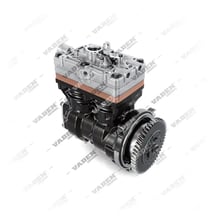
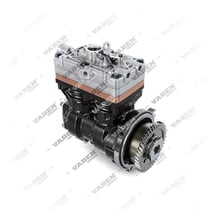
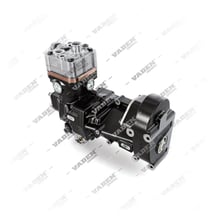
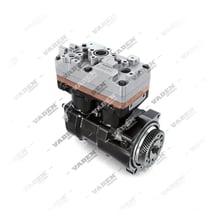
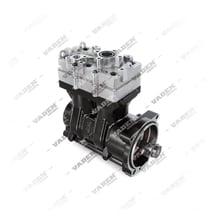
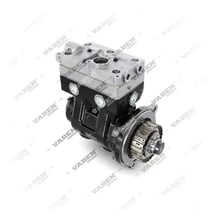
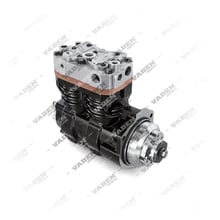
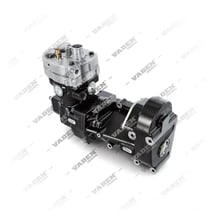
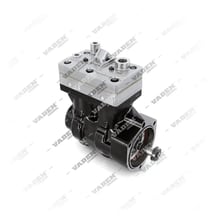
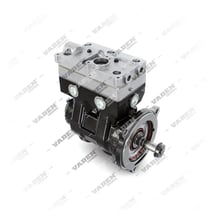
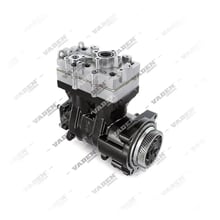
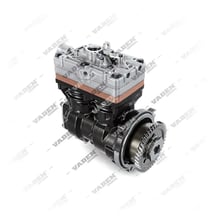
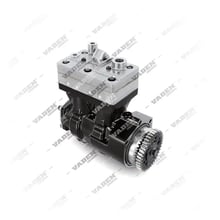
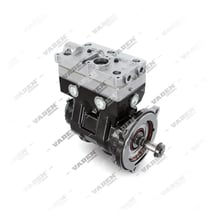
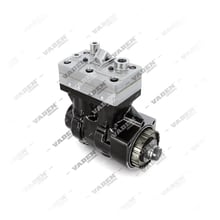
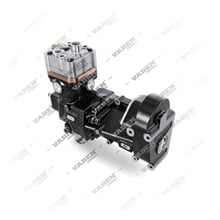
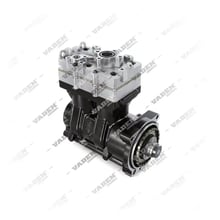
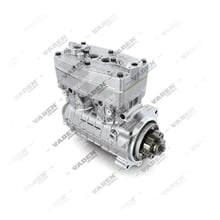
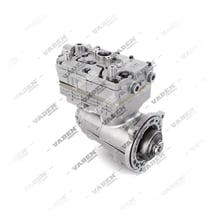
What Is a Compressor with Clutch?
The compressor clutch is the mechanical power-transmission assembly in heavy commercial vehicles that connects the air brake compressor to the engine drive and disengages it when required. It consists of the clutch housing, clutch disc/shoe set, drive flange, spring pack, and connecting hardware, transmitting rotation to the compressor crankshaft. In the field it is also called the compressor coupling or drive clutch. Unlike continuously-driven compressors, clutch-equipped assemblies mechanically cut the drive flow once the air reservoir is full, reducing unnecessary engine load. This assembly is common on Mercedes-Benz, MAN, Scania, Volvo, DAF, Iveco, and Renault Trucks heavy trucks and buses, particularly on Wabco and Knorr-Bremse compressor series. The compressor clutch is a critical component that directly affects brake reliability; wear can cause insufficient air pressure and engine noise.
How Does a Compressor with Clutch Work?
The compressor clutch transmits rotation from the engine drive gear or belt pulley to the compressor shaft through the clutch plates or shoe set. The system typically operates via a spring-loaded or air/vacuum-controlled mechanism; when reservoir pressure reaches the upper limit, the regulator engages, disengaging the clutch and letting the compressor idle or stop. When pressure drops to the lower level, the clutch re-engages and the compressor resumes its compression stroke. This intermittent principle saves engine power and reduces unnecessary mechanical wear. Clean, unworn clutch surfaces are essential for slip-free power transmission; if engagement is incomplete, compressor speed drops and the brake circuit cannot reach the required pressure.
Compressor with Clutch Technical Specifications
Compressor clutch assemblies consist of clutch shoes made from cast steel or sintered-metal friction material, heat-resistant spring steel, and precision-tolerance drive flanges. Clutch disc diameter, tooth count, and connecting flange size vary by compressor model; the model code and OEM reference number must always be verified before ordering. For torque capacity, tolerance values, and engagement pressure, use general ranges rather than exact figures, and always treat the vehicle manufacturer's current service manual as the reference.
- Friction Material: A heat-treated, special composition that withstands repeated engagement-disengagement cycles.
- Control Signal: Can be triggered by air pressure, vacuum, or an electronic solenoid valve.
- Flange and Tooth Size: Manufactured to millimeter precision, specific to the compressor model.
- Operating Temperature: Designed to minimize performance loss under high engine-bay temperatures.
Compressor with Clutch Types and Subassemblies
- Spring-Loaded Mechanical Clutch: A classic drive assembly that engages by spring force and activates automatically when pressure drops.
- Air-Controlled Clutch Assembly: An air piston operated by the regulator signal opens and closes the clutch according to pressure.
- Electromagnetic Clutch Unit: Receives electronic control via a solenoid valve and integrates with modern engine management systems.
- Clutch Disc and Shoe Set: The friction-surface component group that wears most frequently and requires replacement.
- Drive Flange and Connection Assembly: The part group that fixes the clutch to the compressor shaft and provides alignment and centering.
- Spring Pack and Return Mechanism: Elastic elements that ensure the clutch returns smoothly at the moment of disengagement.
How to Choose the Right Compressor with Clutch?
When choosing the right compressor clutch assembly, the vehicle's compressor brand, model, and drive type (gear-driven, belt-driven, or flange-mounted) must be identified first. The clutch control type (mechanical spring, air-controlled, or electromagnetic) being compatible with the existing system prevents failure risk after installation. The table below summarizes the selection criteria.
Compressor Clutch Selection Criteria| Criterion | Point to Check |
|---|
| Compressor Brand/Model | Exact match with the Wabco or Knorr-Bremse compressor code number |
| Clutch Control Type | Compatibility with mechanical spring, air-controlled, or electromagnetic systems |
| Drive Connection Type | Gear, belt pulley, or direct flange connection |
| Flange and Tooth Dimensions | Millimeter-precision verification against the OEM reference number |
| Vehicle Application | Position on the drive assembly of trucks, tractor units, buses, or trailers |
| Quality Level | OEM-equivalent material and heat-treatment standard |
Compressor with Clutch Maintenance and Points to Consider
- Keep Surfaces Free of Oil and Dirt: Oil contamination on friction surfaces reduces engagement force and causes slippage.
- Check the Control Pressure: Periodically verify that the air or electronic control signal is operating within the correct range.
- Inspect the Spring Pack: Weakened springs cause incomplete disengagement or delayed engagement of the clutch.
- Verify Flange Alignment: A misaligned flange causes vibration and premature wear; follow the specified torque values during installation.
- Replace the Friction Disc on Time: When the wear margin decreases, clutch force drops; renew the disc and shoe set.
- Use Parts with Original Dimensions: For long service life, always choose OEM-equivalent VADEN ORIGINAL components.
Common Compressor with Clutch Failures and Solutions
- Compressor Fails to Engage: Worn shoes or weak spring force; replace the clutch disc and spring pack.
- Clutch Stays Permanently Engaged: The disengagement mechanism is stuck; check the control line and return spring.
- Knocking Noise During Engagement: Flange misalignment or a loose connection; readjust alignment and tightening torques.
- Air Pressure Remains Insufficient: Speed drops due to clutch slippage; clean the friction surfaces or renew the disc.
- Overheating and a Burning Smell: Heat builds up due to continuous slippage; replace the worn clutch set.
- Vibration and Abnormal Noise: Loss of centering or bearing wear; inspect and renew the flange and connection assembly.
Why Choose VADEN ORIGINAL Compressor with Clutch?
- Manufactured to OE Dimensions: Flange, tooth, and friction-surface dimensions match original compressor drive assemblies exactly.
- Extensive OEM Coverage: Offers comprehensive reference cross-matching for Wabco and Knorr-Bremse compressor series.
- Durable Friction Material: Heat-treated spring steel and friction sets withstand repeated engagement cycles.
- Reliable Air Pressure: Slip-free power transmission ensures uninterrupted generation of the air pressure the brake circuit requires.
- Exported to More Than 100 Countries: Manufactured to international quality standards, delivering proven performance across diverse fleets and climate conditions.
Conclusion
The compressor clutch is a critical power-transmission assembly that safely engages and disengages the air brake compressor from the engine drive, ensuring it generates sufficient air pressure. A worn clutch disc, a weakened spring pack, or a misaligned drive flange can lead to insufficient air pressure and premature compressor failure. With VADEN ORIGINAL compressor clutch assemblies manufactured to OEM dimensions, you can safeguard your brake safety and extend compressor service life.
Frequently Asked Questions (FAQ)
What does a compressor clutch do?
A compressor clutch is the mechanical assembly that connects the air brake compressor to the engine drive system and disengages the drive power, placing the compressor in idle mode once the air reservoir is full. This way the compressor operates only when needed, reducing unnecessary load on the engine.
What symptoms appear when a compressor clutch fails?
The most common symptoms include insufficient air pressure, a knocking noise during engagement, overheating, a burning smell, and the compressor failing to engage at all. Any of these symptoms warrants inspection of the clutch disc, spring pack, and drive flange.
What determines the service life of a compressor clutch assembly?
The service life of the clutch assembly depends on the cleanliness of the friction surfaces, correct control pressure settings, flange alignment, and the material quality of the parts used. Regular inspection and the use of OEM-equivalent parts noticeably extend service life.
Which vehicles are VADEN ORIGINAL compressor clutches compatible with?
VADEN ORIGINAL compressor clutch assemblies are compatible with the Wabco and Knorr-Bremse compressor series used on Mercedes-Benz, MAN, Scania, Volvo, DAF, Iveco, and Renault Trucks heavy trucks and buses. Verifying the compressor model code before ordering is recommended.
When does a compressor clutch need to be replaced?
Replacement is required when the friction disc drops below its wear margin, when the clutch slips continuously, or when the engagement mechanism fails to disengage fully. Delaying replacement can lead to insufficient air pressure and a safety risk in the brake system.
Related technical guide: Clutched Air Brake Compressor: Faults, Replacement, Care