What is a Triple Cylinder Compressor?
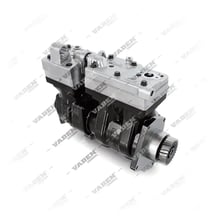
The Three-Cylinder Air Brake Compressor in the VADEN range is manufactured to original flow and pressure values, ensuring reliable supply to the brake system and pneumatic equipment.
What are the functions of the Triple Cylinder Compressor?
As the lifeline of the vehicle's pneumatic system, this compressor performs several critical tasks.
- Generating compressed air: Continuously supplies compressed air for the brake circuit, air suspension, and other pneumatic consumers.
- Providing high flow rate: Its three-cylinder design fills the air tanks in less time than standard compressors.
- Pressure balance: Works together with the pressure regulator to maintain a stable, safe pressure range in the system.
- Supporting multiple consumers: Meets the demand of additional pneumatic equipment such as door systems, retarders, and air suspension.
- Safety redundancy: Sufficient air flow ensures the circuit recovers quickly even in emergency braking situations.
What are the symptoms of Triple Cylinder Compressor failure?
Since compressor failures directly affect brake safety, the symptoms must be taken seriously.
- Slow air pressure buildup: When compressor efficiency drops, the pressure gauge needle rises slowly.
- Low pressure warning: When the system cannot reach adequate pressure, a dashboard warning may appear and the brake circuit can even lock.
- Abnormal noise/knocking: Wear of cylinder, piston, or valves can cause a metallic knocking sound.
- Oil or air leakage: Wear of seals can cause oil mixing or air leaks.
- Overheating: A blockage or internal fault in the water cooling circuit can cause the compressor to overheat.
How is the Triple Cylinder Compressor inspected?
Inspection should combine both static checks and tests performed with the engine running.
- Pressure buildup time test: With the engine at idle, compare tank fill-up time against manufacturer values.
- Visual inspection: Check the compressor body, hose connections, and gasket surfaces for leak traces.
- Noise check: Listen for abnormal knocking or ticking during operation.
- Oil analysis: Check engine oil for signs of fuel/air mixing that could originate from the compressor.
- Cooling circuit check: On the water-cooled body, confirm hose connections and sealing.
What should be considered during replacement?
Since replacing the compressor directly concerns brake safety, it should be carried out carefully by a qualified technician.
- Correct reference: Select the original compressor matching engine type, drive connection, and flow/pressure values.
- Lubrication line: Connect the engine oil supply and return lines cleanly and leak-free.
- Cooling connections: Install water cooling hoses without air pockets, sealed properly.
- Torque values: Tighten connection bolts to manufacturer torque; the vehicle's current OE service manual governs the exact value.
- Commissioning test: Confirm after installation that air pressure reaches the target value within the specified time and the regulator cuts off correctly.
- Leak check: On first start-up, check all connection points for air and oil leaks.
How to choose the right Triple Cylinder Compressor?
Selection should consider vehicle type, air system size, and additional pneumatic consumers.
Three-Cylinder Air Brake Compressor selection criteria| Criterion | Description |
|---|
| Engine compatibility | Must fully match drive mechanism and engine model |
| Air flow rate | Must be sufficient for tank volume and number of pneumatic consumers |
| Cooling type | Compatible with water-cooled body connections |
| Pressure range | Must meet OE pressure values together with the regulator |
| Application area | Suited to bus, tractor, or multi-axle truck use |
Maintenance and service life
Since the Three-Cylinder Air Brake Compressor is connected to the engine's lubrication and cooling systems, the health of those systems directly affects compressor life. Timely oil and filter changes, and regular air dryer maintenance, prevent the compressor from being overloaded. Periodic checking of water cooling hoses prevents overheating. With proper maintenance, these compressors can operate reliably to high mileage; however, if performance loss is noticed, inspection should not be delayed for brake safety reasons.
VADEN Triple Cylinder Compressor
VADEN manufactures the three-cylinder air brake compressor to original flow and pressure values for heavy commercial vehicles. Its reliable air generation supports uninterrupted operation of the brake system and pneumatic equipment for fleets running long routes and mountainous terrain, and correct compressor selection is a worthwhile investment that reduces overall service brake costs.
Frequently Asked Questions (FAQ)
What does a Three-Cylinder Air Brake Compressor do?
It generates the compressed air needed by the brake system and pneumatic equipment, enabling rapid filling of the air tanks.
What happens when the compressor fails?
Air pressure builds slowly, a pressure warning may appear on the dashboard, and a safety risk can arise in the brake system.
What is the difference between a three-cylinder and single-cylinder compressor?
It delivers a higher air flow rate, making it preferable on multi-axle vehicles or those with additional pneumatic consumers.
What should be considered when replacing the compressor?
Lubrication and cooling lines must be connected leak-free, torque values applied per the manufacturer's manual, and a pressure test performed after installation.
What extends compressor life?
Timely oil/filter changes, air dryer maintenance, and regular checking of cooling hoses extend compressor life.
Related technical guide: Single vs Twin-Cylinder Air Compressor: Choice & Fitment