
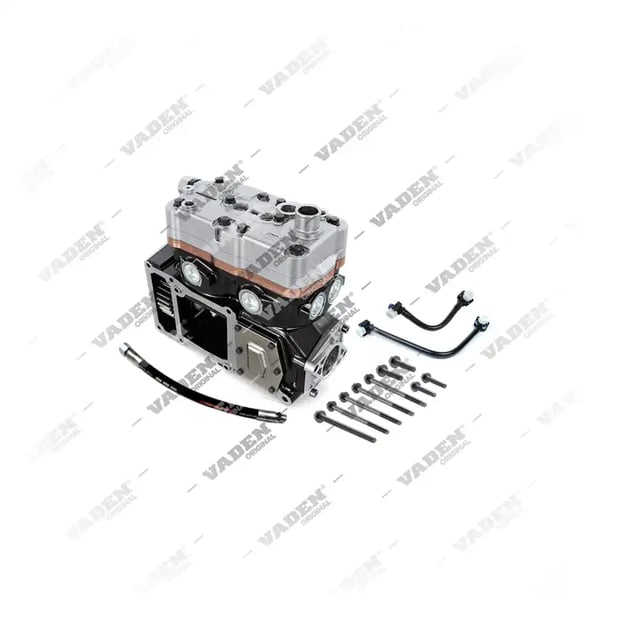
1200 019 020 Compatible Twin Cylinder Compressor
1200 019 020
Summary
This twin cylinder air compressor is an engine-driven unit designed for heavy commercial vehicle air brake systems. Weighing 38.1 KG, it utilizes two piston-cylinder assemblies to provide higher air output than single-cylinder alternatives, ensuring efficient pressure maintenance for high-demand applications.
| EAN Code | 8699031062648 |
|---|
Ready to Order
Description
This twin cylinder air compressor functions as a vital engine-driven component within the air brake system of heavy commercial vehicles. By utilizing two piston-cylinder assemblies, the unit generates compressed air through dual compression strokes per crankshaft revolution, ensuring the pneumatic system maintains optimal pressure levels even under high demand.
These units are specifically engineered for heavy commercial vehicle applications that require high air output, such as multi-axle tractor units, touring coaches, tipper trucks, and concrete mixers. Because they fill reservoirs faster than single-cylinder types, they are ideal for vehicles with high pneumatic consumption.
For proper installation and maintenance, technicians should verify the mounting interface and connection points to ensure a secure fit. Given the 38.1 KG weight of this component, ensure all mounting hardware is inspected and tightened according to standard workshop procedures to prevent vibration-related issues.
Consult your authorized distributor.
Technical Specifications
| Weight | 38,1 KG |
|---|
Related Products
Repair Kits
FAQ
What is the main advantage of a twin cylinder compressor?
A twin cylinder compressor produces two compression strokes per crankshaft revolution, delivering higher air output than single-cylinder types to fill reservoirs faster.
Which vehicle types require this type of compressor?
They are preferred for high-air-demand vehicles like multi-axle tractor units, touring coaches, tipper trucks, and concrete mixers.
How can I identify if a replacement is needed?
Technicians should look for symptoms such as slow reservoir filling or insufficient pressure in the pneumatic system during braking tests.
What should I check during installation?
It is essential to verify the mounting interface and ensure the unit is securely fastened to withstand engine vibrations.