In trucks and buses that run for long hours at high engine speed under heavy load, the cooling circuit is subjected to considerably heavier thermal and mechanical stress than in passenger cars, which is why pipe material quality and correct sizing matter so much. For fleet operators, even a small weak point in the coolant line can turn into a roadside breakdown and unplanned repair cost.
What are the functions of Radiator Cooling Pipe?
The functions of the coolant pipe are defined by the pressure and temperature conditions it must safely operate under.
- Fluid transfer: Carries coolant heated by the engine to the radiator, and cooled coolant from the radiator back to the engine.
- Pressure resistance: Operates without swelling or cracking under the circuit's working pressure (typically in the 1-2 bar range, varying by vehicle).
- Sealing: The clamp connection surfaces at each end prevent air ingress and fluid loss from the circuit.
- Vibration damping: Flexes to absorb relative movement between the engine and chassis, protecting rigid connection points.
- Routing: Directs coolant along the correct path through the tight engine bay without contacting other components.
- Circuit integrity: Keeps the circuit sealed, preventing air pocket ingress and reducing the risk of cavitation.
What are the symptoms of Radiator Cooling Pipe failure?
A failure in the coolant pipe usually shows itself through visible and performance-related symptoms.
- Fluid leakage: Wet marks, dripping, or dried, whitened antifreeze residue on the pipe or at the clamp connection points.
- Rising engine temperature: The temperature gauge climbing above normal or a warning light coming on.
- Dropping coolant level: Repeated level loss in the expansion tank is direct evidence of a leak.
- Visible deformation: Swelling, cracking, hardening, or discoloration of the pipe body.
- Steam or foam emission: Steam visible from under the hood while the engine is running signals a serious leak or boiling.
- Reduced cabin heater performance: A drop in cabin heating performance can indicate an airlock or leak in the circuit.
How is Radiator Cooling Pipe checked?
Inspection should be carried out with the engine cold and the system unpressurized.
- Visual inspection: Check the pipe body for cracks, swelling, hardening, or discoloration.
- Hand squeeze test: Gently squeeze the pipe while cold; excessive stiffness or sponginess indicates material fatigue.
- Clamp check: Verify the connection clamps are tight to the correct torque and free of corrosion.
- Pressure test: Use a cooling system pressure tester to confirm the circuit holds the specified pressure without leaking.
- Fluid analysis: Check antifreeze concentration and color for clues about internal surface wear.
What should be considered during replacement?
Correct installation greatly reduces the risk of a repeat failure.
- Draining the cooling system: Drain the system completely before replacement; never work on a hot system.
- Cleaning connection surfaces: Remove dirt and old gasket residue from the radiator- and engine-side connection ports.
- Correct clamp torque: Tighten clamps to the manufacturer's specified torque; over-tightening damages the pipe, under-tightening causes leaks.
- Routing and clearance: Position the pipe so it does not contact moving parts or hot surfaces (exhaust, turbo).
- Filling and bleeding the system: Fill with the correct antifreeze mixture, fully bleed trapped air, then check for leaks.
How should Radiator Cooling Pipe be selected?
Selection should be based on the correct size and material determined by the chassis number and engine code.
Radiator coolant pipe selection criteria| Criterion | Description |
|---|
| Inner diameter and length | Must fit the radiator and engine connection ports exactly; size deviation causes leaks |
| Material | Heat-resistant reinforced rubber or steel/aluminum body |
| Pressure class | Must match the vehicle's cooling system working pressure |
| Connection type | Clamp or flange connection geometry must match the original |
| Application | Confirm against the vehicle manufacturer's compatibility list by chassis/engine code |
Maintenance and service life
The coolant pipe should be visually checked during regular periodic maintenance. Renewing the antifreeze mixture at the intervals specified by the manufacturer slows chemical wear on the pipe's inner surface. Pipes located close to excessive heat sources in the engine bay can harden prematurely, so these areas should be inspected more frequently. For long-haul fleets, reviewing the entire coolant line during scheduled maintenance intervals helps prevent unplanned downtime. For exact pressure and torque values, the vehicle's current OE service manual is authoritative.
VADEN Radiator Coolant Pipe
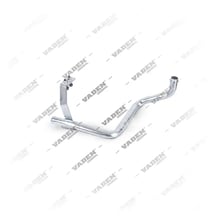
VADEN offers OE-compatible radiator coolant pipes for heavy commercial vehicle cooling systems. Manufactured with correct sizing, material, and connection geometry, these parts support a leak-free, reliable cooling circuit.
Frequently Asked Questions (FAQ)
When should a radiator coolant pipe be replaced?
Replacement is needed when leaks, swelling, hardening, or cracks appear, or when the coolant level drops without explanation. Visual inspection during periodic maintenance should not be skipped.
What happens if a coolant pipe bursts?
The system rapidly loses pressure and fluid, and the engine can overheat within minutes. Stop the vehicle in a safe location and do not run the engine again until it has cooled.
Should clamps always be renewed at replacement?
Corroded, deformed clamps or clamps that no longer hold torque should be renewed. Sound clamps can be reused at the correct torque, but the general practice is to fit new clamps.
What happens if the wrong pipe size is used?
A pipe that does not seat correctly on the connection surface will eventually leak, and incorrect strain can cause premature fatigue and cracking of the pipe material.
What fluid should be used when replacing the coolant pipe?
Use the antifreeze type and mixture ratio specified by the vehicle manufacturer; mixing different fluid types can cause corrosion and degrade gasket and pipe material.
Related technical guide: Engine Overheating in Heavy-Duty Trucks: Causes & Fixes