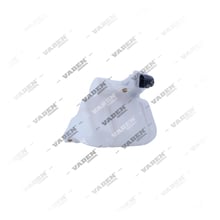
What Is a Washer Fluid Reservoir?
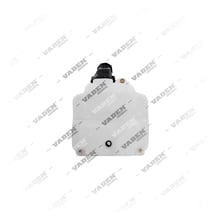
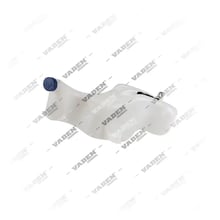
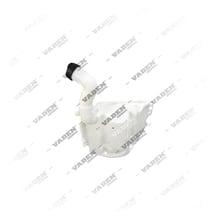
The radiator washer fluid reservoir is the plastic tank on heavy commercial vehicles that stores windscreen washer fluid and feeds it to the wiper nozzles on demand. This reservoir is mounted in a suitable spot within the bodywork of the engine compartment, usually close to the radiator and other cooling system components. In the field it is also known as the "washer fluid tank," "washer bottle," or "wiper fluid reservoir." It should not be confused with the coolant reservoir (expansion tank); although the two look similar, they serve entirely separate circuits. The radiator washer fluid reservoir carries the fluid volume needed to keep the windscreen clear and the driver's view safe, making it a support-system component that should never be overlooked for safety.
How Does a Washer Fluid Reservoir Work?
The washer fluid inside the reservoir is drawn out by an electric pump mounted on the base or side wall of the tank and pushed through the hose line to the front (and, on some vehicles, rear) wiper nozzles. Because of its position next to the radiator, the reservoir's mounting brackets and fixing points are engineered to withstand engine vibration and heat exposure.
- Fluid Storage: The reservoir holds washer fluid inside an enclosed tank, shielded from outside contamination.
- Pump Activation: When the driver operates the stalk switch, the electric pump engages and draws in the fluid.
- Pressurized Delivery: The fluid is pushed under pressure through the hose line to the nozzle jets.
- Level Monitoring: A float or sensor built into the housing sends a warning to the dashboard when the fluid level runs low.
Washer Fluid Reservoir Technical Specifications
Reservoirs are typically made from high-density polyethylene (HDPE) or polypropylene, chosen for their resistance to impact and chemical solvents so they are not degraded by the alcohol and detergent content of washer fluid. Capacity varies by vehicle segment, but on heavy commercial vehicles it generally ranges from a few litres up to around ten litres. The reservoir features a pump housing, a filler neck, a port for the level sensor, and bracket holes for mounting to the chassis. Connection diameters and mounting points are model-specific, so compatibility should be confirmed against the chassis number or OEM part code before ordering. For exact dimensions and pressure values, refer to the vehicle's current service manual.
Types and Subgroups of Washer Fluid Reservoirs
- Single-Circuit (Windscreen-Only) Reservoir: The standard type with a single pump housing that feeds only the front wiper circuit.
- Dual-Circuit Reservoir: Fitted with a second pump housing, this type feeds the front and rear wiper or headlamp washer system at the same time.
- Sensor-Equipped Reservoir: Features an integrated level float in the housing that alerts the dashboard when the fluid level drops low.
- Complete Pump-Mounted Assembly: A full replacement kit sold with the reservoir, pump, seal, and filler cap together.
- Bracketed / Bracketless Reservoir: On some models the mounting bracket is integrated into the reservoir, while on others it is ordered as a separate part.
How to Choose the Right Washer Fluid Reservoir
The priority when selecting a reservoir is confirming an exact match with the vehicle's chassis number or OEM part code, since capacity, connection diameter, and pump housing position all vary from model to model. The table below summarizes the key criteria to weigh during selection.
Radiator Washer Fluid Reservoir Selection Criteria| Criterion | Why It Matters |
|---|
| Capacity (Litres) | Must match the vehicle's original capacity; the wrong volume may not fit the mounting space. |
| Number of Pump Housings | Must match a single- or dual-circuit system, otherwise the headlamp washer or rear circuit will not work. |
| Level Sensor | If the original has a sensor, the replacement reservoir must also have a sensor port. |
| Bracket and Mounting Points | Must seat exactly onto the chassis fixing holes without play under vibration. |
| Material Quality | Plastic with poor UV and chemical resistance cracks and leaks over time. |
| OEM / Chassis Number Match | Visual similarity is not enough — connection dimensions can differ by a few millimetres. |
Washer Fluid Reservoir Maintenance and Points to Watch
- Check the Fluid Level Regularly: Especially in winter, use frost-resistant washer fluid to protect the reservoir and pump from freezing.
- Close the Filler Cap Tightly: A loose cap lets dust and dirt from the engine compartment into the reservoir, clogging the pump and nozzles.
- Inspect the Bracket and Fixings: Given its position near the radiator, periodically check the brackets for loosening from vibration and heat.
- Watch for Signs of Leakage: Dampness, cracking, or a loose fitting under the reservoir can be an early warning sign.
- Use OEM-Dimension Parts: A reservoir with the wrong capacity or connection geometry can be strained during fitting and crack prematurely.
Common Faults and Their Solutions
- No Washer Fluid at the Nozzles: Likely causes are an empty reservoir, a faulty pump, or a blocked nozzle; check the fluid level, test the pump, and clean the nozzles.
- Fluid Leaking from Underneath the Reservoir: Usually caused by a cracked reservoir body or a loose pump seal; inspect the reservoir and seal and replace as needed.
- Level Warning Light Stays On: Points to a faulty level sensor or a break in the sensor wiring; check the sensor's cable connection and the sensor itself.
- Fluid Freezes in Winter and the Pump Won't Run: Caused by fluid with a high water content and low frost resistance; drain the reservoir and refill with properly concentrated winter-grade washer fluid.
- Pump Runs But Pressure Is Weak: May be due to a partially blocked hose line or a worn pump rotor; clean the hose line and replace the pump if necessary.
Why Choose VADEN ORIGINAL?
VADEN ORIGINAL radiator washer fluid reservoirs are manufactured true to the vehicle maker's original dimensions and connection geometry, making them suitable for direct installation without extra labour or modification.
- Built to OEM Dimensions: Original connection geometry and mounting points deliver a direct bolt-on fit.
- Durable Materials: A polymer construction resistant to the heat and vibration of the engine compartment reduces the risk of cracking.
- Broad OEM Coverage: Compatible options are available for Mercedes-Benz, MAN, Scania, Volvo, DAF, Iveco, and Renault Trucks models, among others.
- International Quality: Produced under certified manufacturing processes and exported to more than 100 countries as a trusted spare parts source.
Conclusion
Although the radiator washer fluid reservoir may seem like a minor component, it makes a direct contribution to driving safety by keeping the windscreen clear. Choosing the correct capacity, the right connection geometry, and durable materials determines trouble-free, long-lasting performance. With VADEN ORIGINAL-quality washer fluid reservoirs, you can keep your vehicle's washer system running reliably.
Frequently Asked Questions (FAQ)
What does a radiator washer fluid reservoir do?
A radiator washer fluid reservoir is the plastic tank that stores windscreen washer fluid and delivers it to the wiper nozzles via an electric pump. When the driver operates the stalk switch, the pump engages and sprays fluid onto the windscreen under pressure through the nozzles, keeping the driver's view clear.
Is the radiator washer fluid reservoir the same part as the expansion tank?
No, the two serve entirely separate circuits. The expansion tank stores the engine's coolant, while the radiator washer fluid reservoir carries only windscreen washer fluid. Although they sit close together in the engine compartment, their connections and functions are different.
If no fluid comes out of the nozzles, what could be causing it?
The most common causes are an empty reservoir, a faulty pump, or a blocked nozzle. First check the fluid level, then listen for the pump running, and clean the nozzles to clear any blockage.
Why does washer fluid freeze in winter?
Using fluid with a high water content and low frost resistance causes the reservoir and pump to freeze. The reservoir should be drained and refilled with a properly concentrated winter-grade washer fluid, otherwise the pump and hose line can be damaged.
Which vehicles are VADEN ORIGINAL radiator washer fluid reservoirs compatible with?
VADEN ORIGINAL reservoirs offer compatible options for heavy trucks, tractor units, and buses from manufacturers such as Mercedes-Benz, MAN, Scania, Volvo, DAF, Iveco, and Renault Trucks. Confirming compatibility via the chassis number or OEM part code before ordering is recommended.
Related technical guide: Engine Overheating in Heavy-Duty Trucks: Causes & Fixes