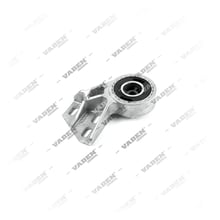
What Is a Radiator Wedge?
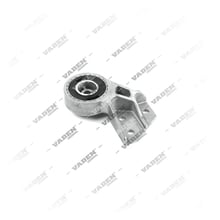
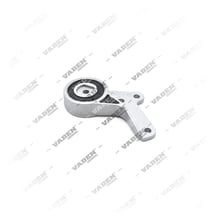
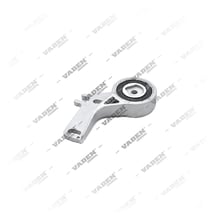
A radiator mount is a rubber-based vibration isolation component that secures the radiator to the chassis or cab structure of heavy commercial vehicles. Positioned beneath or alongside the radiator within the cooling system, it keeps vibrations from the engine and the road from reaching the radiator housing directly. In the field, it is also known as a "radiator rubber mount," "radiator bracket bushing," or "radiator cushion." A cooling system running without a mount, or with one that has hardened or cracked, is set up for premature cracking and leaks in the radiator housing. Though a relatively small part, the Radiator Mount directly affects the radiator's positional stability and the cooling system's overall integrity, so periodic inspection should never be skipped.
Function and Working Principle of the Radiator Wedge in the System
The radiator is not bolted directly to the engine block or chassis; the mounts in between hold it in place with a defined degree of flexibility, damping the engine's operating vibrations, road shocks, and differences in thermal expansion, and reducing the mechanical load on the radiator core and its connection points. The mount also breaks metal-to-metal contact between the radiator and the chassis, limiting galvanic corrosion and noise transmission, and keeps the radiator correctly aligned with the fan shroud and hose connections; misalignment can trigger secondary faults such as contact with the fan blades or strain on the hoses.
- Vibration Damping: Absorbs shocks generated by the engine and the road, reducing the mechanical load carried by the radiator housing.
- Positional Fixing: Keeps the radiator correctly aligned relative to the fan shroud and hose connections.
- Corrosion and Noise Isolation: Breaks metal-to-metal contact, limiting galvanic corrosion and vibration noise.
Technical Specifications of the Radiator Wedge
Radiator mounts are typically manufactured from rubber compounds resistant to high temperature and oil exposure, with some applications using metal-reinforced rubber-polyurethane blends. Hardness (Shore value) determines both damping performance and load-bearing capacity; too soft a mount allows excessive movement, while too hard a mount provides insufficient isolation. Dimensions and mounting geometry vary by vehicle model, so chassis type, cab, and engine pairing must always be verified when selecting a radiator mount. For exact torque, preload, and tolerance values, the vehicle's current service manual is the authoritative source; a single fixed figure outside a general range would be misleading.
Types and Subcategories of Radiator Wedges
- Lower Support Mount: Located at the radiator's main load-bearing point on the chassis, it carries the greater part of the weight.
- Upper Fixing Mount: Limits lateral movement between the radiator's upper bracket and the cab or chassis.
- Side Support Bushing: Prevents the radiator from shifting sideways, improving stability especially in corners and on uneven ground.
- Metal-Reinforced Mount: Uses a rubber body reinforced with a steel sleeve for higher load-bearing capacity in heavy-duty vehicles.
- Vibration-Damping Block Mount: Manufactured with a specialized rubber profile designed to absorb the frequency difference between the engine and the chassis.
How to Choose the Right Radiator Wedge
Choosing the correct radiator mount starts with verifying the OEM reference number against the vehicle's make, model, and chassis number. Visually similar mounts can differ in hardness grade, inner diameter, outer diameter, and height; the wrong size throws off the radiator's alignment and increases the risk of fan contact. The table below summarizes the key selection criteria.
Radiator Mount Selection and Application Criteria| Criterion | Description |
|---|
| Material Composition | Oil- and heat-resistant rubber or metal-reinforced rubber-polyurethane blend |
| Mounting Position | Classified as lower support, upper fixing, or side support point |
| Hardness (Shore) Value | Determines the balance between vibration damping and load-bearing capacity |
| Vehicle Compatibility | Heavy-duty applications for Mercedes-Benz, MAN, Scania, Volvo, DAF, Iveco, Renault Trucks |
| Dimensional Verification | Confirming inner/outer diameter and height against the OEM reference for the chassis number |
| Quality Standard | OEM-equivalent manufacturing by VADEN ORIGINAL |
Radiator Wedge Maintenance and Points to Watch
- Visual Crack Inspection: During routine maintenance, the mount's surface should be visually checked for cracking, hardening, or deformation.
- Avoid Overtightening During Installation: Overtorquing the mount bolts can cause the rubber to deform prematurely; the torque values in the vehicle's service manual should always be followed.
- Verify Radiator Alignment: After replacing the mount, check the radiator's alignment relative to the fan shroud and hose connections.
- Avoid Contact with Oil and Chemicals: Exposure to leaking engine oil or solvents can shorten the rubber's service life; the source of any leak should also be addressed.
- Replace as a Set: Since mounts at the same position tend to wear together, symmetrical replacement is recommended for dual-sided installations.
Common Faults and Their Solutions
- Vibration-Related Noise from the Radiator: A hardened or cracked mount has lost its damping properties; after a visual inspection, the mount should be replaced with a new one.
- Premature Cracking or Leaks in the Radiator Housing: Insufficient vibration isolation places continuous mechanical load on the radiator core; the radiator housing should be inspected alongside the mount replacement.
- Contact Noise from the Fan Blades: A worn or torn mount may have shifted the radiator's position; alignment and mount replacement should be carried out together.
- Strain or Leaks at Hose Connections: A radiator that has lost its fixed position places extra load on the hoses; hose clamps should be re-checked once the mount has been renewed.
Why Choose a VADEN ORIGINAL Radiator Wedge?
- Manufactured to OE Dimensions: VADEN ORIGINAL radiator mounts are produced in strict adherence to original equipment dimensions and hardness values.
- Broad OEM Coverage: Compatible with a wide range of vehicles, led by Mercedes-Benz, MAN, Scania, Volvo, DAF, Iveco, and Renault Trucks.
- Heat- and Oil-Resistant Compound: Formulated with a rubber compound built to withstand the demanding conditions of the engine bay.
- Exported to More Than 100 Countries: VADEN ORIGINAL is a supplier trusted by fleet operators and service centers worldwide.
Conclusion
The radiator mount is a small part with an outsized role in the cooling system's mechanical stability. Timely inspection and replacement prevents cracking and leaks in the radiator housing and eliminates unnecessary strain on the fan and hose connections. Choosing an OE-quality Radiator Mount in the correct size and hardness safeguards the cooling system's long-term reliability.
Frequently Asked Questions (FAQ)
What does a radiator mount do?
A radiator mount is a rubber-based isolation component that connects the radiator to the chassis or cab. It prevents vibrations from the engine and the road from being transmitted to the radiator housing, keeping the radiator positionally stable.
When should a radiator mount be replaced?
It should be replaced when cracking, hardening, or deformation appears on the mount, or when vibration-related noise or abnormal movement is noticed at the radiator. A visual check during routine maintenance is recommended.
What problems can a worn radiator mount cause?
A worn mount can lead to premature cracking and leaks in the radiator housing, contact with the fan blades, and strain at the hose connections. This reduces the overall reliability of the cooling system.
Which vehicles are VADEN ORIGINAL radiator mounts compatible with?
VADEN ORIGINAL radiator mounts are manufactured for heavy commercial vehicles from Mercedes-Benz, MAN, Scania, Volvo, DAF, Iveco, and Renault Trucks. Verifying the OEM reference against the chassis number before ordering is recommended.
What should be considered when replacing a radiator mount?
The mounting bolts should not be overtightened; the torque values in the vehicle's service manual should be followed. After replacement, the radiator's alignment relative to the fan shroud and hose connections must be checked.
Related technical guide: Engine Overheating in Heavy-Duty Trucks: Causes & Fixes