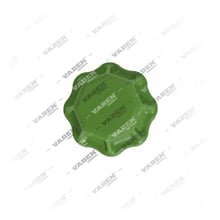
What is Radiator Expansion Tank Cover?
This two-way valve mechanism raises the boiling point of the coolant, keeping it liquid even at high temperatures, and plays a direct role in protecting the engine from overheating. The pressure value (in bar) is usually stamped on the cap, and caps with different pressure ratings can be used depending on the vehicle/engine. Small but critical to the safety of the cooling system, this part requires periodic replacement as the spring loses tension or the gasket hardens over time. Although it may seem like an insignificant cap, it is actually the single point that determines the operating pressure of the entire cooling system; a cap that has lost spring tension causes the system to run at a lower pressure than required and the coolant to start boiling at a lower temperature, making it one of the most commonly overlooked causes of sudden overheating incidents during summer months.
What are the functions of Radiator Expansion Tank Cover?
- Pressure regulation: Keeps cooling system pressure constant at the value specified by the manufacturer.
- Overpressure relief: Diverts excess pressure to the overflow line once the pressure threshold is exceeded.
- Vacuum balancing: Balances the negative pressure that forms as the engine cools, preventing hose collapse.
- Raising boiling point: Keeps the system pressurized to raise the boiling temperature of the coolant.
- Sealing: Seals the expansion tank opening to prevent fluid loss.
- System safety: Prevents radiator and hose rupture through controlled pressure relief in overheating situations.
What are the symptoms of a failed Radiator Expansion Tank Cap?
Cap failures usually appear as pressure loss in the cooling system or overheating.
- Fluid loss: Leakage around the cap, unexplained drop in coolant level.
- Overheating: Unexpected rise in engine temperature when the cap fails to maintain pressure properly.
- Hose collapse: Hoses collapsing inward as the engine cools, when the vacuum valve fails to work.
- Steam/foam discharge: Fluid or steam leaking from the cap, foaming in the overflow reservoir.
- Visible deterioration: Hardening or cracking of the cap gasket, corrosion in the spring mechanism.
How is Radiator Expansion Tank Cover checked?
Inspection is carried out with the engine cold, through visual examination and a functional test using a pressure tester.
- The cap is removed and the gasket surface and spring mechanism are visually inspected for cracks or corrosion.
- Using a pressure test pump, the cap is tested up to the pressure value stamped on it, checking whether it opens at the specified value.
- The expansion tank opening is cleaned and checked for damage on the cap seating surface.
- The system is pressurized to scan for leaks at hose and radiator connections.
- After the engine cools, the hoses are observed for signs of inward collapse.
What should be considered when replacing it?
- The new cap's pressure rating (bar) must exactly match the vehicle's original value; a differently rated cap compromises system safety.
- Clean the expansion tank opening and gasket seat before fitting the cap.
- Never open the cap on a hot engine; due to the burn risk, inspection/replacement must be done after the engine has cooled.
- After installation, confirm sealing with a system pressure test.
- Coolant level must be topped up to the manufacturer's specified min-max range.
How to choose Radiator Expansion Tank Cover?
Selection is determined by vehicle/engine model, cap pressure rating, and tank opening diameter.
Radiator Expansion Tank Cap selection criteria| Criterion | Description |
|---|
| Pressure rating | The bar value on the cap must exactly match the vehicle's original specification |
| Opening diameter | The cap must seat fully in the expansion tank opening to ensure sealing |
| Gasket material | A high-temperature-resistant elastomer gasket should be preferred |
| Valve mechanism | The pressure and vacuum valves must both be present and working properly |
| Compatibility | Vehicle/engine fit must be confirmed via the OE cross-reference number |
Maintenance and lifespan
Since it contains a rubber gasket and spring mechanism, the radiator expansion tank cap is a part that wears over time; a pressure test during periodic cooling system maintenance, with replacement when necessary, is recommended. Because it is continuously exposed to a temperature cycle, renewing it every few years depending on vehicle usage intensity is beneficial for system safety.
VADEN Radiator Expansion Tank Cap
VADEN offers expansion tank caps for heavy commercial vehicle cooling systems matching the original pressure rating and dimensions, manufactured to OE-referenced standards for correct pressure regulation and sealing.
Frequently Asked Questions (FAQ)
Why does the expansion tank cap's pressure rating matter
The cap's pressure rating determines the coolant's boiling point; an incorrectly rated cap can cause engine overheating or premature boiling in the system.
How is a cap failure noticed
It is usually noticed through an unexplained drop in coolant level, an unexpected rise in engine temperature, or hose collapse.
Can the cap be opened on a hot engine
No, since the system is pressurized, opening the cap on a hot engine carries a serious burn risk; it should only be done after the engine has cooled.
Can a cap with a different pressure rating be used
Not recommended, a different pressure rating disrupts the system's designed operating conditions and creates a safety risk.
How often should the cap be replaced
Rather than a fixed interval, a pressure test during periodic cooling system maintenance is recommended, with replacement when gasket/spring wear is found.
Related technical guide: Truck Radiator & Expansion Tank: Faults, Replacement & Care