Air Brake Caliper: Air Disc Brake Systems Explained
Fixed and floating air disc brake calipers on trucks and trailers: how each turns air pressure into clamping force, core parts and why fade resistance matters.
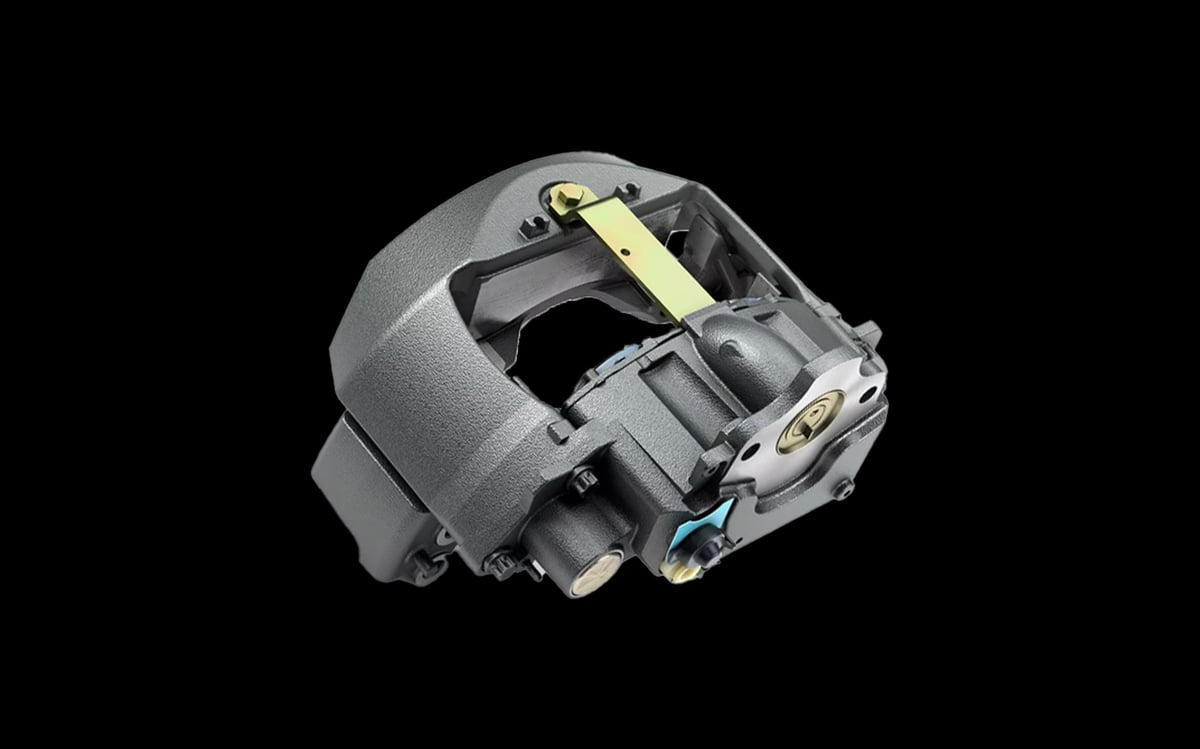
Detailed Analysis of Air Disc Brake Caliper Systems
In heavy commercial vehicles, safety comes before everything else. When a truck, bus or tow truck is carrying tonnes of weight, how well its braking system works affects more than that one vehicle; it has a direct bearing on the safety of everyone else on the road as well. This is where air disc brake caliper systems come in, the most advanced form of modern heavy-duty braking technology. Compared with traditional drum brakes they give better performance, more durability and more control, and that is why today's fleets cannot do without them.
So what exactly are these systems, and which details let them hold up so well under heavy loads? The sections below go through them one by one.
When a seal or boot has to be renewed during maintenance, the article on brake caliper repair kits explains what a kit covers and when a rebuild is the right call.
When the caliper's components are listed, the bridge and plate holding the pads in their pocket are easy to overlook; they are covered in the caliper pad retainer and pad plate guide.
What Is an Air Disc Brake Caliper System and Why Is It So Important?
In its simplest terms, an air disc brake caliper system is a mechanism that applies pressure to a vehicle's brake disc using compressed air, slowing or stopping the vehicle through friction. The primary reason for its use in heavy commercial vehicles is its ability to quickly and safely convert high kinetic energy into thermal energy.
Heavy vehicles require much more energy to stop than passenger vehicles. When travelling at high speeds or on sloped terrain with heavy loads, it is vital that the brake system performs instantly and consistently. Air disc brakes minimise the risk of fade even under these challenging conditions, providing consistent and powerful braking.
Basic Components of the System
There is more to an air disc brake system than the caliper. Each of its main components has its own function.
- The brake disc, or rotor, is a round part made of cast iron or special alloys that turns with the wheel. It is the surface the brake pads press against when the brakes are applied, and it has a major part to play in dissipating heat.
- The brake pads sit inside the caliper and are made of composite materials with a high friction coefficient. During braking they press against both faces of the disc, and they are the main consumable in the system, the part that wears out.
- The brake caliper is the main body of the system. It holds the brake pads and passes the braking force on to the disc, and it is typically built as one of two main types.
- A fixed caliper does not move during braking. It carries several pistons, usually on both sides of the disc, and those pistons push the pads towards the disc.
- A floating caliper has one or two pistons on one side of the disc only. As the pistons push the inner pad against the disc, the caliper body moves on its sliding pins, which lets the outer pad press on the disc as well. Both types can be used on heavy-duty vehicles, although the floating type may be the more common of the two.
- The caliper pistons take the mechanical force coming from the air brake actuator and push the brake pads towards the disc with it. Air-hydraulic systems, where air pressure is converted into hydraulic pressure, may also have hydraulic pistons, but in a pure air system the pistons work as direct mechanical actuators.
- The air brake actuator, also called the chamber, is the air-operated part of the brake system. Pressing the brake pedal lets pressurised air from the brake valve fill it, and the diaphragm or piston inside turns that air pressure into a mechanical thrust force that is passed on to the caliper mechanism.
- The connecting elements and mechanisms carry the force from the air brake actuator across to the caliper pistons, and they may be arms, shafts or direct thrust mechanisms. What you find here may vary with the design of the caliper, for example direct thrust or lever thrust, unlike the S-cam system.
- Behind all of this sits the air system, the main system made up of the compressor, air tanks, regulators, brake valves and air lines, which supplies the pressurised air needed for braking.
Operation: The Power of Pressurised Air
In principle the air disc brake works in a simple way, yet the details behind each step are a fine piece of engineering.
- Brake Request: When the driver presses the brake pedal, this movement is transmitted to the brake valve.
- Air Flow: The brake valve allows high-pressure air stored in the air tanks to flow to the air brake actuators on the wheels.
- Mechanical Force Generation: The pressurised air entering the actuator moves the diaphragm or piston inside it. This movement is transmitted to the caliper pistons via the connected mechanism (rod or lever).
- Brake Pad Contact: The caliper pistons squeeze the brake pads against the brake disc using the force transmitted to them. If it is a floating caliper, while the piston pushes one pad, the caliper body also slides, allowing the other pad to approach the disc.
- Friction and Deceleration: The high friction force generated between the brake pads and the disc surface slows down the rotating disc, causing the wheel and therefore the vehicle to slow down or stop. During this process, kinetic energy is converted into heat energy.
- Release: When the driver removes their foot from the brake pedal, the brake valve cuts off the air flow to the actuators and allows the air inside the actuator to escape. As the air pressure drops, the pistons retract and the pads separate from the disc, ending the friction.
Standards and further reading
This subject is governed by the equipment rules for air-braked commercial vehicles. In the United States the federal air brake standard, FMVSS 121 (49 CFR 571.121) defines the reservoirs, protection and timing a compliant system must provide, and Europe applies the equivalent limits of UNECE Regulation No. 13. For further detail, see the illustrated reference guide at airbrakecompressor.com. Always confirm specific figures against the current regulation and the vehicle manufacturer service data.
Outside the United States the equivalent duties sit in national law. In the United Kingdom, regulation 18 of the Road Vehicles (Construction and Use) Regulations 1986 requires every part of the braking system to be maintained in good working order. In Canada, air brake systems fall under the Motor Vehicle Safety Regulations, which contain CMVSS 121.
Advantages of Air Disc Brake Calipers: Why Are They Preferred?
Air disc brake systems have spread across heavy commercial vehicles for a set of strong reasons, and the first is braking performance and consistency. Because the disc has an open structure and the pads bear on it more directly, heat is distributed much more effectively, which dramatically reduces the risk of brake fade, especially during prolonged or intense braking. Braking force is less affected by temperature fluctuations, so stopping distances come out shorter and safer. The open design also lets heat dissipate quickly into the surrounding air, and some discs go further with special cooling channels (vented discs) that dissipate heat faster still. Handling heat better in this way extends pad and disc life and keeps braking efficiency where it should be.
Maintenance is lighter and service easier as well. There are fewer moving parts than on a drum brake, which has components such as the S-cam, springs and adjusters. Brake pad wear can usually be checked easily through the caliper, either visually or with electronic sensors, and changing pads is generally faster and more practical than with drum brakes. Automatic adjustment systems also do away with the manual adjustment needed in drum brakes. On average the service life is longer too. Better heat management gives more balanced pad wear, and with proper maintenance the simpler design can reduce the potential for malfunctions.
Last comes control. An air disc brake gives a more linear response to the pressure applied to the brake pedal, which offers the driver more precise control. These brakes are fully compatible with Electronic Brake Systems (EBS) and Anti-Lock Braking Systems (ABS), preventing wheel lockup and helping maintain vehicle stability even in challenging road conditions, and they also serve as the foundation for Modern Emergency Braking Systems (AEBS).
Potential Disadvantages and Considerations
Like any system, air disc brakes come with some challenges. The first is the initial investment. They typically cost more to install than a traditional drum brake system, and the precise manufacturing processes and materials used add to that cost.
Spare part prices and the expertise required are the other issue. Caliper components such as pistons, seals and special greases, and the discs too, may be more expensive than drum brake components. Diagnosing, repairing and maintaining these systems calls for specialised knowledge and experience with air systems and caliper mechanisms, and improper installation or the use of low-quality parts can pose serious safety risks.
Maintenance and Usage Tips: Extend the Life of Your System
An air disc brake system only keeps performing at its best if it is maintained regularly. Before each trip, look the discs over for visible damage such as cracks or excessive scratches, check the pads for excessive wear, and watch for anything abnormal around the calipers, like the sound of an air leak or oil or grease leaking out. Periodically measure whether the brake pads and discs have reached the minimum wear limits specified by the manufacturer. Keep an eye on the wear indicators, and replace any part that exceeds its limit.
On the caliper mechanism, make sure the caliper moves freely if it is a floating type, or that the pistons move forward and backward without sticking, and look for corrosion, dirt build-up or damage. Check that the seals and gaskets around the air brake actuators and caliper pistons are intact and free of air leaks, because leaks reduce braking power. The air system needs checking as well. The compressor should be working properly, the air tanks should hold sufficient pressure and there should be no air leaks in the lines or at the connection points, and the brake valves should be checked to see that they function.
Use the appropriate type of lubricant, if applicable, at the locations and intervals the manufacturer specifies; lubricating incorrectly, or not at all, can cause the caliper mechanism to seize. Drain the moisture from the air tanks regularly, since moisture in the air can freeze in winter or cause corrosion over time, damaging the brake system either way. For periodic maintenance, and whenever there is a malfunction, always go to an authorised service centre that specialises in air brake systems. Correct diagnosis, original or equivalent quality parts and proper installation make all the difference.
Safety, Regulations, and Future Outlook
Air disc brake systems are a basic building block of the safety standards for modern heavy commercial vehicles. Many international regulations, for example the European ECE R13 regulation, encourage or mandate disc brakes for specific vehicle categories and weights, and these systems give active safety systems such as ABS and EBS an ideal platform on which to work to their full potential.
Looking ahead, driverless vehicle technologies and more advanced emergency braking systems will come into wider use, and as they do the precision, speed and dependability of air disc brakes will count for even more. For fleet owners and operators, investing in air disc brake systems therefore helps them meet current safety standards and is also a strategic step towards the future.
Conclusion
Air disc brake caliper systems have transformed the braking performance and safety of heavy commercial vehicles. Set against the initial investment cost, the superior stopping power, heat resistance, low maintenance requirements and advanced control they offer add up to significant advantages over the long term.
For operators of heavy-duty vehicles, understanding these systems properly and keeping them under regular, professional maintenance improves operational efficiency and gives maximum safety on the roads. Modern transport cannot do without air disc brakes; they keep journeys safe even under heavy loads.
Explore the full range of air disc brake calipers from VADEN ORIGINAL, engineered for heavy commercial vehicles.
Shop this part: Air Disc Brake Caliper
Main guide: Air Disc Brake Caliper: Faults, Replacement & Maintenance Guide
Tags
Frequently Asked Questions
- How does an air disc brake caliper system work?
- When the driver presses the brake pedal, the brake valve releases compressed air stored in the air tanks to flow to the air brake chambers (actuators) at each wheel. The diaphragm or piston inside the chamber converts this air pressure into mechanical force, which is transmitted to the caliper pistons, pressing the brake pads against the disc. The friction between the pads and the disc converts kinetic energy into heat, slowing the vehicle down.
- What are the main components of an air disc brake system?
- The system consists of five core components: the brake disc (rotor), brake pads, brake caliper, caliper pistons, and the air brake chamber (actuator). In addition, the linkage mechanisms that transfer force from the chamber to the caliper pistons, along with the air system made up of the compressor, air tanks, regulators, and brake valves, are essential parts of the process.
- What is the difference between a fixed caliper and a floating caliper?
- A fixed caliper does not move during braking; it has multiple pistons on both sides of the disc that push the pads directly against it. A floating caliper, on the other hand, has one or two pistons on a single side — the piston pushes the inner pad against the disc, while the caliper body slides on guide pins so the outer pad is also pressed against the disc. Both types are used on heavy commercial vehicles, but the floating type is more common.
- Why are air disc brakes more advantageous than drum brakes?
- The open design of discs allows heat to dissipate far more effectively, greatly reducing the risk of brake fade during prolonged or heavy braking. Braking force is less affected by temperature fluctuations, resulting in shorter and safer stopping distances. In addition, the ventilated cooling channels found in some discs improve heat management, extending the service life of both pads and discs.
- Why is brake fade such an important risk, and how do air disc systems prevent it?
- Heavy-duty vehicles generate a large amount of kinetic energy when traveling at high speed or on sloped terrain, and this energy must continuously be converted into heat; if that heat isn't dissipated properly, braking performance drops — this is brake fade. In air disc caliper systems, the open, air-exposed design of the discs combined with the effective heat management of VADEN ORIGINAL quality components minimizes this fade risk, delivering consistent and powerful braking.
- Why do air disc brakes cost more to install and maintain than drum brakes?
- The initial installation cost is typically higher than a traditional drum system because of the precise manufacturing processes and the materials involved. Caliper components such as pistons, seals and special greases, along with the discs, can also be more expensive than drum brake parts. Diagnosis, repair and maintenance require specialised knowledge of air systems and caliper mechanisms; improper installation or low-quality parts pose serious safety risks.
- How do air disc brakes work together with ABS and EBS?
- They respond more linearly to the pressure applied at the brake pedal, so the electronics can meter braking force precisely. ABS prevents wheel lockup and EBS helps keep the vehicle stable even in challenging road conditions; modern emergency braking systems are built on the same platform. For the driver this means more precise control and shorter, safer stopping distances.
- Which standards govern air disc brake systems?
- Air-braked commercial vehicles fall under equipment rules. In the United States, FMVSS 121, or 49 CFR 571.121, defines the reservoirs, protection and timing a compliant system must provide, while Europe applies the equivalent limits of UNECE Regulation No. 13. ECE R13 also encourages or mandates disc brakes for specific vehicle categories and weights. Always confirm specific figures against the current regulation and the vehicle manufacturer service data.
- How often should pad and disc wear be checked?
- Inspect visually before every trip: look for visible damage on the discs such as cracks or excessive scoring, excessive pad wear, and abnormal conditions around the caliper such as air leak noise or oil and grease leakage. Measure pad and disc thickness periodically against the minimum wear limits specified by the manufacturer and monitor the wear indicators. Replace any part that exceeds its limit.
- What makes a caliper mechanism seize, and how can it be prevented?
- The usual causes are corrosion, dirt build-up, damage and incorrect or missing lubrication. Check regularly that a floating caliper moves freely on its sliding pins and that the pistons travel in and out without sticking. Use the lubricant type specified by the manufacturer at the stated points and intervals. Also drain moisture from the air tanks regularly, since it can freeze in winter or cause corrosion over time.
Related Articles
Brake Caliper Repair Kits: Bringing Heavy Vehicle Brake Systems Back to Life
Which brake caliper repair kit level fits a given fault, when repair is banned, and how a heavy truck workshop proves it afterward.
Air Brake Compressor Duty Cycle & Efficiency Guide
Heavy-duty compressor efficiency and duty cycle: how much time it runs loaded, how to measure build-up time, what drives high duty cycle, and fleet logging.
ECAS Solenoid Valves: The Precision Control Point for Heavy-Duty Air Suspension
What is ECAS on trucks and trailers and how does it work? Components, the solenoid valve role, the difference from a mechanical leveling valve, fault diagnosis.