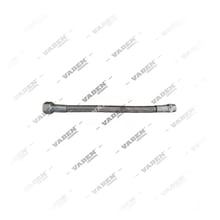
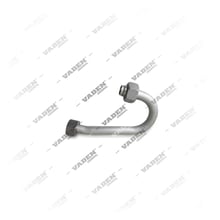
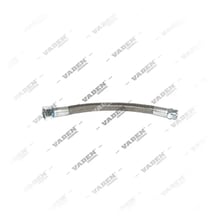
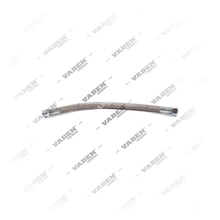
What Is a Compressor Air Pressure Pipe?
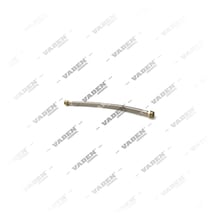
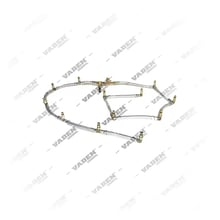
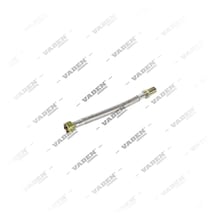
The Compressor Parts Air Pressure Pipe is the metal tube that forms the pressurized air line between the air brake compressor's discharge outlet and the air dryer. Because the air leaving the compressor is both high-pressure and high-temperature, this line is never built from rubber hose; it is made from heat- and vibration-resistant steel or copper-alloy tubing instead. In the field it is also known as the compressor discharge pipe or delivery pipe. Checking this pipe is standard practice during any compressor overhaul.
How Does a Compressor Air Pressure Pipe Work?
This pipe operates in the most demanding section of the pneumatic brake circuit. When the compressor completes its discharge stroke, air enters the pipe in hot, pulsing surges; as the pipe carries this air onward, it cools it down. A correctly designed line leaves enough cooling distance for moisture to separate more easily once it reaches the dryer.
- Conveying pressurized air: Carries the air the compressor produces to the dryer and the air reservoirs without loss.
- Heat dissipation: Its metal body acts like a pre-cooler, lowering discharge temperature and protecting the dryer's desiccant.
- Vibration management: Its formed bends absorb engine vibration and thermal expansion, keeping the connections from being overstressed.
- Leak-tight connection: Attaches to the compressor cover without leaks via a union nut, tapered sleeve, or flange gasket.
- Limiting oil carryover: A properly sized bore slows the condensation and buildup of oil vapor inside the line.
Compressor Air Pressure Pipe Technical Specifications
This group is evaluated by material and dimensional logic. The pipe body is typically manufactured from steel, stainless steel, or copper alloy, with a zinc- or phosphate-based coating on the outer surface. On heavy commercial vehicles the outer diameter usually ranges from 10 mm to 22 mm; pipe length can run anywhere from a few tens of centimeters to a full meter, depending on where the compressor sits. The line is selected for a strength rating above both the working pressure and momentary pressure spikes. These ranges are for general guidance only; for exact values, the vehicle manufacturer's current service manual is authoritative.
Compressor Air Pressure Pipe Types and Subgroups
The compressor's type, cooling method, and position within the engine bay determine which pipe design is required. The main variants found in this category are listed below.
- Straight discharge pipe: A standard, largely unbent pipe used where the distance between compressor and dryer is short.
- Coiled cooling pipe: Its helical shape increases the heat-dissipation surface; preferred on tractor units and buses with high air demand.
- Finned pressure pipe: Cooling fins bring the discharge temperature down faster, making it effective in heavy-duty applications.
- Fitted pipe assemblies: Installation-ready kits that come with a union nut and tapered sleeve already fitted at the ends.
- Flange-connected pipes: Bolted to the cylinder head with a gasket on twin-cylinder, high-output compressors.
- Connection and fixing components: Complementary parts such as unions, nipples, elbows, clamps, and vibration mounts.
How to Choose the Right Compressor Air Pressure Pipe
The most reliable selection method is working from the OE number on the original part removed from the vehicle. If the number cannot be read, matching is done by compressor type, cylinder count, and connection style. The table below summarizes the criteria to check.
Compressor Parts Air Pressure Pipe selection and compatibility criteria| Criterion | What to Check | Why It Matters |
|---|
| OE reference number | The number on the removed pipe | The most precise way to match |
| Connection type | Union, nipple, or flange | Must match the compressor outlet exactly |
| Thread size | Metric or pipe thread, wrench size | The wrong thread causes leaks and surface damage |
| Outer and inner diameter | Roughly 10-22 mm outer diameter | A narrow bore slows pressure build-up |
| Length and shape | Bend angles, coiled or finned body | Must sit along the routing without strain |
| Compressor type | Single/twin-cylinder, air- or water-cooled | Determines the required cooling form |
| Vehicle application | Mercedes-Benz, MAN, Scania, Volvo, DAF, Iveco | Shape can vary by engine option |
Compressor Air Pressure Pipe Maintenance and Key Considerations
The pressure pipe may look like a part that can be left unattended, but a significant share of compressor failures actually trace back to clogging and leaks in this line. Checking the line during periodic maintenance is a far cheaper precaution than an overhaul.
- Clean it at every compressor replacement: Accumulated carbon and oil residue raise discharge temperature and cause the dryer to saturate early.
- Tighten the union to spec: Overtightening crushes the sleeve and cracks the pipe end; the service manual is authoritative for the torque value.
- Do not reuse the gasket or sleeve: The flange gasket and tapered sleeve you remove are single-use; refitting them causes leaks.
- Fit every clamp: A pipe left unsupported fatigues under vibration and typically cracks at the base of a bend.
- Do not force the routing: Bending the pipe to make it fit leaves stress in the material and leads to premature failure.
- Keep it away from hot surfaces: A pipe touching the exhaust manifold poses a risk to nearby wiring and hoses.
Common Failures and Their Solutions
Problems originating in the air pressure pipe are often mistaken for a compressor fault. Reading the symptom correctly prevents an unnecessary compressor replacement.
- Slow pressure build-up: Carbon buildup inside the pipe; remove the line and clean it, or replace it if it cannot be cleaned.
- Hissing and air leak at the connection: A loosened union or a fatigued sleeve; replace the sealing components.
- Cracked pipe and sudden pressure loss: Vibration fatigue or a missing clamp; replace the pipe and complete the fixing.
- Dryer saturating early: Air reaching the dryer too hot; use a suitable coiled or finned pipe.
- Oil leakage at the connection: Oil carryover from the compressor; check the piston ring condition and renew the gasket surface.
- Surface corrosion and blistering: Coating damage combined with road salt exposure; replace the pipe once corrosion is advanced.
Why VADEN ORIGINAL?
As a manufacturer specialized in air brake compressors and compressor parts, VADEN produces its air pressure pipes with the same technical discipline. Here the pipe is not treated as a standalone spare part but as a system component engineered around the compressor's actual operating conditions.
- Built to OE dimensions: Diameter, length, bend angles, and thread sizes are manufactured against the original part as reference.
- Broad OEM matching: A cross-reference list covering common compressor types gives fast access to the correct part.
- Integrated coverage: Available in the same product family as the compressor, repair kit, and connection hardware.
- Controlled material and coating: Resistance to vibration fatigue and corrosion is checked during production.
- Exports to over 100 countries: The range is updated using field feedback gathered from a wide range of climates and road conditions.
Conclusion
Although the Compressor Parts Air Pressure Pipe is a small part, it directly affects air-production performance, dryer lifespan, and the reliability of the brake system. When the correct diameter, connection type, and cooling form are chosen, the compressor runs at a lower temperature. On every vehicle undergoing an overhaul, cleaning or renewing this line is, over the long run, the lowest-cost precaution available.
Frequently Asked Questions (FAQ)
What does the compressor air pressure pipe do?
It carries the hot, pressurized air produced by the air brake compressor to the air dryer and onward to the air reservoirs. Its metal body cools the air somewhat during transit, which lets the dryer separate moisture more efficiently and protects the sealing components further down the line.
Why is the air pressure pipe made of metal instead of hose?
The air at the compressor outlet is both high-pressure and high-temperature; a standard hose would degrade quickly under these conditions. Steel, stainless steel, or copper-alloy tubing withstands this heat and also acts as a cooling surface.
What symptoms appear if the pipe becomes clogged?
The most typical symptom is air pressure building up much more slowly than normal. This can be accompanied by compressor overheating and the air dryer saturating prematurely. Before replacing the compressor, the line should be removed to check for carbon buildup on the inner surface.
Should the air pressure pipe be replaced along with the compressor?
If the pipe is sound it doesn't necessarily need replacing, but it must always be cleaned. A line left with carbon and oil residue inside raises the discharge temperature of the new compressor and shortens its life. If there are cracks, crushing, or advanced corrosion, the pipe should be renewed.
How do I choose the correct air pressure pipe?
The most reliable approach is matching the OE reference number on the original pipe removed from the vehicle. If the number cannot be read, compare connection type, thread size, outer diameter, pipe length, and compressor type. For torque values and dimensional tolerances, the vehicle manufacturer's current service manual is authoritative.
Related technical guide: Air Brake Compressor: Faults, Replacement & Maintenance Guide