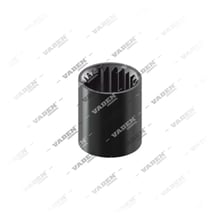
What is Compressor Spline Coupling Sleeve?
It typically consists of a rubber/elastomer body combined with metal hub/jaw pieces; some designs use a fully metal disc coupling instead. For the compressor to run continuously and evenly, and for the air brake system to be fed at the correct pressure without delay, this coupling must be in sound condition. Although a low-stock part, it is a familiar item in service workshops due to the periodic replacement needed from rubber element wear. Since the compressor is directly mechanically linked to the engine, when the coupling loses its function it is not only air production that stops; the sudden load spike in the drive line can also damage the engine's auxiliary drive group. For this reason, the coupling should be regarded as an intermediary element that jointly protects the safety of both the air brake system and the engine drive system.
What are the functions of Compressor Spline Coupling Sleeve?
- Drive transfer: Transmits rotational motion from the engine drive gear to the compressor shaft.
- Vibration damping: Absorbs shock and vibration loads generated during rotation through its elastic structure.
- Misalignment tolerance: Tolerates minor alignment differences between the engine and compressor shaft.
- Overload protection: In cases such as compressor seizure, the coupling element is damaged first, protecting the engine drive system.
- Noise reduction: Prevents metal-to-metal contact, reducing noise from the drive line.
- Continuous operation support: Keeps the compressor rotating in sync with the engine without interruption, supporting continuous air production.
What are the symptoms of a failed Air Brake Compressor Clutch Coupling?
Coupling failures usually show up as breakup of the worn rubber element or excessive flexing.
- Abnormal noise: Knocking, clicking, or squealing from the compressor area while the engine is running.
- Low air pressure: The compressor failing to produce sufficient air, a pressure warning in the brake system.
- Increased vibration: Rising vibration in the compressor area due to coupling wear.
- Visible wear: Cracks, breakup, or excessive deformation in the coupling's rubber element.
- Complete failure: At an advanced stage, the coupling breaks completely, the compressor cannot produce air, and the brake warning light comes on.
How is Compressor Spline Coupling Sleeve checked?
Inspection is done with a listening test while the engine runs and a visual/manual check with the engine stopped.
- The compressor area is listened to while the engine idles, checking for abnormal noise.
- The compressor drive line area is removed and the coupling's rubber element is visually inspected for cracks/breakup.
- The coupling hub is held by hand to check for play and excessive flexing.
- The air brake system pressure gauge is monitored to test whether the compressor produces sufficient pressure within the nominal time.
- The coupling hub/jaw connection bolts are checked with a torque wrench.
What should be considered when replacing it?
- The new coupling's diameter, hub pattern, and rubber hardness (shore value) must match the original.
- Before installation, align the engine and compressor drive shaft axes and make sure there is no excessive misalignment.
- Connection bolts must be tightened in a cross pattern to the manufacturer's specified torque.
- Since the coupling's rubber element can degrade quickly from oil and fuel contact, keep it clean during installation.
- After installation, run the engine to check for vibration and noise, and confirm that air pressure builds within the normal time.
How to choose Compressor Spline Coupling Sleeve?
Selection is determined by compressor model, drive type, and coupling diameter/hub pattern.
Air Brake Compressor Clutch Coupling selection criteria| Criterion | Description |
|---|
| Compressor model | The coupling is specific to the compressor and drive group and should be confirmed with the OE part number |
| Material | The rubber/elastomer body must be an oil- and heat-resistant compound |
| Hub pattern | The jaw/hub count and tooth pattern must fully match the drive shaft |
| Hardness (shore) | The original hardness value must be preserved for vibration damping performance |
| Compatibility | Engine/compressor fit must be confirmed via the OE cross-reference number |
Maintenance and lifespan
Due to its rubber-based structure, the air brake compressor clutch coupling is a wear part that hardens and fatigues over time; visual inspection during periodic engine maintenance is recommended, with immediate replacement if cracking or breakup is found. Oil/fuel contact, excessive heat, and frequent start-stop cycles are the main factors shortening coupling life.
VADEN Air Brake Compressor Clutch Coupling
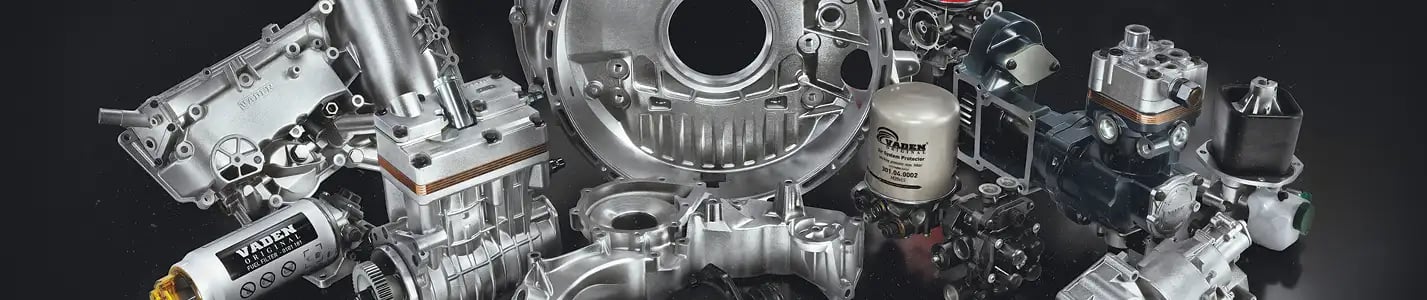
VADEN offers clutch couplings for heavy commercial vehicle air brake compressors matching original dimensions and material specifications, manufactured to OE-referenced standards for correct drive transfer and vibration damping.
Frequently Asked Questions (FAQ)
Does a failed clutch coupling put the brake system at risk
Yes, if the coupling breaks completely the compressor cannot produce air, the air brake system loses pressure, and this poses a serious safety risk.
How is a coupling failure recognized
It is usually noticed through abnormal noise from the compressor area while the engine runs, increased vibration, and a drop in air pressure.
How often should the coupling be replaced
Rather than a fixed interval, visual inspection during periodic engine maintenance is recommended, with replacement if cracking or excessive flexing is found.
Why is alignment important when replacing the coupling
Excessive axial misalignment between the engine and compressor shaft wears the coupling prematurely and causes vibration/noise problems.
Can a coupling with a different hardness be used
Not recommended, a different shore hardness negatively affects vibration damping performance and coupling life.
Vehicle and engine pages that list parts from this category: BMC
Related technical guide: Air Brake Compressor: Faults, Replacement & Maintenance Guide