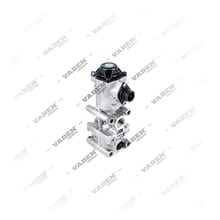
What Is a Retarder?
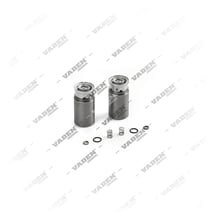
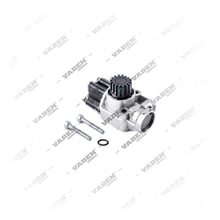
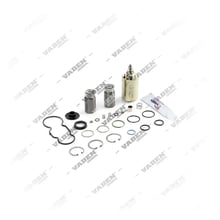
A retarder is an independent auxiliary braking device that supplements a heavy-duty vehicle's service brakes. It works alongside or in addition to engine braking, mounted at the transmission output or integrated into the propshaft, slowing the vehicle down through friction-free or low-friction resistance rather than pad-on-disc contact. This is especially valuable at highway speed, on long downhill grades, and during heavy-load haulage with frequent stops, where it takes a significant amount of load off the service brakes and dramatically cuts pad and disc wear. Common on trucks, tractor units, coaches, and trailers, the retarder is a critical auxiliary braking component that boosts both safety and driving comfort on long hauls.
What Does a Retarder Do?
- Provides Auxiliary Braking: Works alongside the service brakes to bring the vehicle's speed down in a controlled way.
- Reduces Brake Pad and Disc Wear: Takes the load off the main braking components during sustained braking.
- Prevents Brake Fade: Stops the service brakes from overheating and losing stopping power on long descents.
- Improves Driving Safety: Helps maintain controlled speed whether loaded or unloaded, lowering the risk of brake failure.
- Supports Fuel Efficiency: Smoother speed control means fewer throttle-brake transitions and lower fuel consumption.
- Improves Ride Comfort: Electromagnetic retarders in particular offer quiet, vibration-free deceleration.
Retarder Technical Specifications
| Specification | Description |
|---|
| System Type | Hydrodynamic retarder / Electromagnetic retarder |
| Mounting Position | Transmission output (primary/integrated) or propshaft line (secondary) |
| Operating Principle | Hydrodynamic: torque absorption via hydraulic fluid resistance; Electromagnetic: contactless braking via magnetic field |
| Application | Trucks, tractor units, coaches, trailers, and other heavy commercial vehicles |
| Relation to Service Brakes | Operates independently, does not interfere with the main hydraulic/pneumatic brake circuit |
| Control | Electronic control stalk, automatic retarder (ADR) function, or progressive engagement integrated with the brake pedal |
| Compatible Brands | Mercedes-Benz, MAN, Scania, Volvo, DAF, Iveco, Renault, and similar heavy-duty vehicle manufacturers |
Types of Retarders
- Hydrodynamic Retarder: Uses hydraulic fluid to generate resistance against rotation and reduce torque; widely used in coaches and heavy-load trucks.
- Electromagnetic Retarder: Generates a magnetic field to slow the shaft or wheel rotation without contact; low wear, quiet, and efficient, commonly fitted to city buses and commercial vehicles.
- Primary Retarder (Transmission-Integrated): Integrated into the transmission input shaft, positioned close to the engine.
- Secondary Retarder (Propshaft-Mounted): Mounted on the propshaft between the transmission output and the differential; common in heavy-load haulage.
Retarder Maintenance
- Periodic Inspection: Check the retarder's engagement performance at regular intervals.
- Hydraulic Fluid Level: Monitor oil level and condition in hydrodynamic retarders per the manufacturer's service schedule.
- Leak Checks: Inspect fittings and seals for hydraulic fluid leaks.
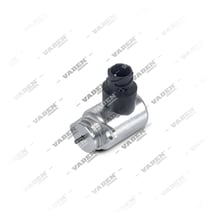
- Electrical Connections: Check cables, connectors, and control stalk wiring on electromagnetic retarders periodically.
- Overheating Checks: Watch for excessive heat build-up after extended use.
- Use Genuine Spare Parts: Choose OEM-standard parts such as VADEN ORIGINAL for repairs and maintenance.
Common Retarder Faults and Fixes
- Reduced Braking Performance: If the vehicle doesn't slow down enough even with the retarder engaged, inspect the system and replace the faulty part if needed.
- Unusual Noise: Excessive noise during operation may indicate a mechanical or electrical fault; have it checked at an authorized service center for early diagnosis.
- Hydraulic Fluid Leak: Fluid leaks in hydrodynamic models cause performance loss; replace seals and fittings as needed.
- Overheating: If the system overheats during extended use, check the cooling circuit and oil level.
- Failure to Engage: A faulty control stalk or electronic connection can prevent electromagnetic retarders from engaging; check cables and connectors.
- Vibration or Shuddering: Balance or mounting issues in propshaft-mounted secondary retarders can cause vibration; inspect the mounting points.
Why Choose VADEN ORIGINAL Retarder Parts?
- OEM-Grade Manufacturing: Built to original equipment design and material standards.
- Broad Vehicle Compatibility: Fits heavy-duty models from Mercedes-Benz, MAN, Scania, Volvo, DAF, Iveco, and other major brands.
- Long Service Life: Durable materials and precision manufacturing deliver reliable, long-term performance.
- Wide Product Range: Covers different retarder types and vehicle models with a broad parts selection.
- Technical Support: Expert guidance for correct part selection, fitting, and maintenance.
- Trusted Brand: Years of experience and customer trust in the heavy commercial vehicle spare parts industry.
Frequently Asked Questions (FAQ)
What does a retarder do on a truck?
A retarder is an auxiliary braking system that works alongside a heavy-duty vehicle's main brakes to slow the vehicle down in a controlled way. It reduces brake pad and disc wear and improves safety, especially on long downhill grades.
What's the difference between a hydrodynamic and an electromagnetic retarder?
A hydrodynamic retarder slows the vehicle using hydraulic fluid resistance, while an electromagnetic retarder creates a magnetic field for contactless braking. The electromagnetic type runs quieter and generally wears less.
Which vehicles use a retarder?
Retarders are commonly fitted to trucks, tractor units, coaches, and trailers, particularly for long-haul routes and mountainous terrain. They're widely used on heavy-duty models from Mercedes-Benz, MAN, Scania, Volvo, DAF, and Iveco.
What are the signs of a failing retarder?
Reduced braking performance, unusual noise during operation, hydraulic fluid leaks on hydrodynamic models, and overheating after extended use are the most common symptoms of a retarder fault.
Does a retarder replace the main brakes?
No. A retarder doesn't replace the service brakes — it's an independent auxiliary system that works alongside them. The main brakes are still required to bring the vehicle to a complete stop.
What should I check when choosing a retarder spare part?
Make sure the part matches your vehicle's make, model, and transmission or propshaft configuration, that its braking capacity suits your typical load, and that it's built from durable, OEM-grade materials. Choosing a trusted brand like VADEN ORIGINAL is essential.
Conclusion
A retarder is a critical auxiliary braking component that improves safety on heavy-duty vehicles. Available in hydrodynamic and electromagnetic designs, it reduces brake pad and disc wear during long downhill descents, heavy-load haulage, and sustained braking, while improving both safety and ride comfort. Choosing the right retarder part and keeping up with regular maintenance protects vehicle performance and safety over the long run while cutting maintenance costs. VADEN ORIGINAL's wide range of retarder parts for Mercedes-Benz, MAN, Scania, Volvo, DAF, and Iveco delivers a reliable, OEM-quality solution for the heavy commercial vehicle industry.
Related technical guide: Truck Retarder · Download PDF
Related articles: What Is a Retarder? How Does It Work and What Does It Do?