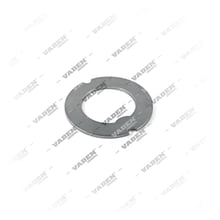
What Is a Wheel Hub Washer?
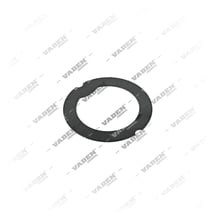
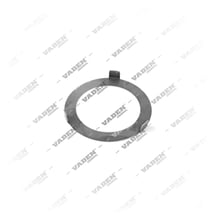
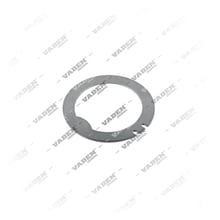
The wheel hub washer is a steel-based flat pressure/adjustment part positioned between the hub nut and the bearing in the wheel hub assembly of heavy commercial vehicles, which distributes load and determines bearing preload/axial clearance. In the field it is also referred to by names such as "hub washer," "hub nut washer," or "bearing thrust washer." The wheel hub consists of the hub body, bearing set, and hub nut system that connect the wheel to the axle shaft and allow it to rotate on the bearings; the washer is positioned between the hub nut and the outer bearing, spreading the tightening load over a wide surface and limiting axial clearance. Although the wheel hub washer goes unnoticed when the wheel hub is operating correctly, it is a critical wear part that carries the majority of the static and dynamic load borne by the axle. The VADEN ORIGINAL wheel hub washer, manufactured to OE dimensions, offers a reliable spare-part solution for the wheel hub assemblies of Mercedes-Benz, MAN, Scania, Volvo, DAF, Iveco, and Renault Trucks heavy-duty vehicles.
How Does a Wheel Hub Washer Work?
The wheel hub washer forms a bearing surface that transfers the clamping force generated when the hub nut is tightened to the inner race of the outer bearing. As the wheel rotates, the entire axle load is transmitted through this nut-washer-bearing chain; the washer spreads the load over a wide surface, preventing direct metal-to-metal contact from causing wear. At the same time, by regulating the axial clearance between the nut and the bearing, it ensures the bearing operates at the correct preload and prevents the wheel from developing play on its axis. On models with lubrication channels, the washer also helps distribute grease flow evenly across the bearing surface. As a result, the wheel hub assembly operates stably even on rough surfaces and under high axle loads, and the wheel is protected from uneven wear.
Wheel Hub Washer Technical Specifications
Wheel hub washers are generally manufactured from hardened steel, bronze alloy, or dual-layer composite material; the material choice varies according to the vehicle's axle load capacity and the design of the wheel hub assembly. The inner and outer diameter dimensions, thickness, and, where applicable, the lubrication-channel geometry must be manufactured to millimetric tolerances, since even a deviation of a few tenths of a millimeter can cause a deviation in bearing preload and premature wear. Compatibility criteria include the axle type, axle-shaft diameter, hub-nut size, and the position where the washer is seated (inner/outer). Pressure resistance and surface hardness should be selected to match the vehicle's gross weight; the vehicle's current service manual should always be consulted for exact torque and seating values.
- Material: Hardened steel, bronze alloy, or composite; varies according to axle load.
- Dimensional Tolerance: Inner/outer diameter and thickness must be manufactured to millimetric precision.
- Compatibility Criteria: Axle type, axle-shaft diameter, hub-nut size, and position (inner/outer) are taken into account.
Wheel Hub Washer Types and Subgroups
- Inner Bearing Washer: Positioned between the inner bearing and the nut inside the hub, used in some dual-nut systems.
- Outer Bearing Washer: Positioned between the hub nut and the outer bearing; the most commonly used wheel hub washer type.
- Bronze Washer: Requires low friction thanks to its self-lubricating property and reduces bearing wear.
- Hardened Steel Washer: Provides heavy-duty durability in trucks and tractor units with high axle loads.
- Shim Washer: Selected in different thicknesses to fine-tune bearing preload and axial clearance.
- Lubrication-Channel Washer: Contains a channel or hole that directs grease flow to the bearing surface.
How to Choose the Correct Wheel Hub Washer?
Choosing the correct wheel hub washer relies on correctly identifying the vehicle's axle type, hub-nut size, and whether the washer will be used with the inner or outer bearing. Installing a washer of the wrong thickness leads to problems such as premature play in the wheel hub assembly, uneven tire wear, and bearing overheating. The table below summarizes the key criteria to consider during selection.
Wheel Hub Washer Selection Criteria| Criterion | Point to Consider |
|---|
| Axle Type and Vehicle | Wheel hub assembly dimensions vary by axle manufacturer and model |
| Position (Inner/Outer) | Inner and outer washers can differ in thickness and sometimes in diameter, and must not be mixed up |
| Inner/Outer Diameter | Must fully match the axle-shaft and bearing dimensions; millimetric tolerance is important |
| Material | Bronze, steel, or composite; the material should suit the axle load |
| Lubrication Channel | If the original design has a channel, a part with the same feature should be chosen |
| Thickness Tolerance | The correct shim thickness should be determined for bearing preload adjustment |
Wheel Hub Washer Maintenance and Points to Consider
- Periodic Grease Maintenance: Grease the wheel hub assembly at regular intervals and make sure the channels are not clogged.
- Clearance Check: Check the bearing preload/play during periodic maintenance, and replace the washer and bearing together if the clearance is excessive.
- Correct Installation Order: Install the inner and outer washers in the correct position and orientation; reversed installation leads to premature wear.
- Axle Alignment: Have the front-end alignment checked after washer replacement; incorrect alignment shortens tire life.
- Use of Original-Dimension Parts: Avoid using a washer of uncertain thickness or non-standard dimensions; prefer VADEN ORIGINAL parts.
Common Failures and Their Solutions
- Vibration in the Wheel: A worn or thinned wheel hub washer; renew the washer and bearing assembly together.
- Uneven Tire Wear: Increased wheel hub clearance; check the washer thickness and adjust the clearance with the appropriate shim.
- Squeaking Noise While Driving: Insufficient lubrication or a dry washer surface; perform grease maintenance and switch to a lubrication-channel washer if necessary.
- Stiffness in Wheel Rotation: A washer of the wrong thickness or a jammed washer; replace it with an OE-equivalent part of the correct dimension.
- Premature Bearing Wear: The washer failing to perform its function, causing the axial load to bear directly on the bearing; renew the washer in time.
Why VADEN ORIGINAL?
- Manufactured to OE Dimensions: Wheel hub washers are manufactured to exactly match original hub tolerances.
- Wide OEM Match: Compatible with the wheel hub assemblies of Mercedes-Benz, MAN, Scania, Volvo, DAF, Iveco, and Renault Trucks.
- Durable Material Selection: Offers the hardness and wear resistance needed to withstand high axle loads.
- Exports to More Than 100 Countries: Supply backed by a broad dealer network at global quality standards.
Conclusion
The wheel hub washer, despite its small size, is a critical component for the bearing preload and load-carrying safety of the wheel hub. A wheel hub washer selected in the correct thickness and material, and properly maintained, prevents bearing overheating and vibration, extends tire life, and improves the overall service life of the wheel hub assembly. The VADEN ORIGINAL wheel hub washer, manufactured to OE dimensions with wide vehicle compatibility, offers a reliable choice for heavy commercial vehicle fleets.
Frequently Asked Questions (FAQ)
What does a wheel hub washer do?
The wheel hub washer is positioned between the hub nut and the bearing in the wheel hub, carrying the clamping load and regulating the axial clearance needed for the bearing to operate at the correct preload. This preserves the precision of wheel rotation and prevents uneven wear.
What happens when the wheel hub washer wears out?
A worn or thinned wheel hub washer causes a deviation in bearing preload, vibration in the wheel, and uneven tire wear. In advanced stages, the axial load can become unevenly distributed, leading to premature wear of the bearing as well.
Are the inner and outer wheel hub washers the same?
No, in most hub designs the inner and outer wheel hub washers are manufactured in different thicknesses and sometimes different diameters. These two parts must not be mixed up and must be installed in the correct position.
Which vehicles is the wheel hub washer used in?
The wheel hub washer is used in heavy commercial vehicles, trucks, and tractor units that have a bearing and hub nut in the wheel hub. VADEN ORIGINAL wheel hub washers are manufactured to suit Mercedes-Benz, MAN, Scania, Volvo, DAF, Iveco, and Renault Trucks applications.
When should the wheel hub washer be replaced?
The washer should be renewed together with the bearing when the bearing preload exceeds the tolerance measured during periodic maintenance, when vibration or squeaking is noticed in the wheel, or during a wheel hub bearing replacement. Early replacement prevents wear of the bearing and nut.
Related technical guide: Truck Wheel Hub: Faults, Replacement and Maintenance Guide