What Is a Wheel Hub Lock Washer?
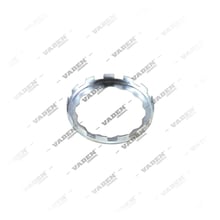
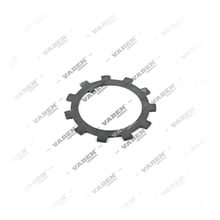
The wheel hub lock washer is a special washer used in the wheel hub assembly of heavy commercial vehicles to axially secure the hub nut, featuring a locking tab, wing, or tooth profile. In the field it is sometimes also called a "hub nut lock washer" or "wheel hub nut safety washer." This part eliminates the axial clearance between the hub nut at the end of the axle shaft and the bearing, preventing the nut from shifting, rotating, or loosening during operation. Unlike a plain washer, the wheel hub lock washer has a tab or tang that seats into a slot or hole on the nut or axle-shaft surface, providing mechanical locking. It is a standard component of wheel hub overhaul kits in the wheel hub assemblies of Mercedes-Benz, MAN, Scania, Volvo, DAF, Iveco, and Renault Trucks heavy-duty vehicles. An installation performed without a wheel hub lock washer can, over time, lead to axial clearance developing at the hub nut and to dangerous play in the wheel hub.
How Does a Wheel Hub Lock Washer Work?
The wheel hub assembly consists of the hub body, bearing set, and hub nut system that connect the wheel to the axle shaft and allow it to rotate on the bearings. The hub nut is tightened to a specific torque to apply preload to the bearings and secure the wheel to the axle shaft; during this tightening, the nut also carries a certain axial load. The wheel hub lock washer is placed onto the slot at the end of the axle shaft or into the toothing on the nut; its tab or tang locks into a specific slot on the axle shaft or the nut. This way, even when the vehicle is exposed to shocks, vibration, and rotational loads, the nut is prevented from loosening on its own. At the same time, the washer helps distribute the load evenly by compensating for the axial clearance between the hub nut and the bearing. As a result, the necessary tightness and bearing preload in the wheel hub is maintained, and uncontrolled play in the wheel is prevented.
Wheel Hub Lock Washer Technical Specifications
Wheel hub lock washers are generally manufactured from hardened steel or spring steel, allowing them to maintain their locking function without permanent deformation under repeated loading. The inner diameter, outer diameter, and thickness are determined with millimetric precision according to the relevant vehicle's axle-shaft diameter and hub-nut profile, so selecting the correct dimension for the specific vehicle model and axle group is critically important. The number and angular position of the tabs or wings must fully match the locking slots on the nut or axle shaft; otherwise the washer cannot perform its function. The surface is protected against corrosion with phosphating or zinc plating. Torque and tightening values vary from vehicle to vehicle; therefore the vehicle's current service manual should be the reference for nut tightening torque and washer installation direction.
Wheel Hub Lock Washer Selection and Application Table| Criterion | Description |
|---|
| Product Type | Wheel hub nut axial locking washer |
| Material | Hardened spring steel, corrosion-protective surface coating |
| Locking Type | Tab, wing, or toothed profile; seats into a slot on the nut/axle shaft |
| Installation Location | Between the hub nut and the bearing/axle-shaft end |
| Vehicle Compatibility | Mercedes-Benz, MAN, Scania, Volvo, DAF, Iveco, Renault Trucks heavy-duty vehicles |
| Installation Note | Single-use; a removed washer must not be reused |
Wheel Hub Lock Washer Types and Subgroups
- Tab-Type Lock Washer: The most commonly used type of wheel hub nut lock washer, bent to seat into the recess on the nut surface.
- Wing (Star) Lock Washer: A type that provides multi-point locking, preferred in high-vibration applications.
- Toothed Safety Washer: A version with micro-teeth on the outer edge that provides an additional friction-based locking effect.
- Shim-Type Adjustment Washer: Manufactured in different thicknesses for fine-tuning bearing preload and axial clearance tolerance.
- Washer Included in the Complete Wheel Hub Repair Kit: Supplied as part of the overhaul set together with the bearing, seal, and nut.
How to Choose the Correct Wheel Hub Lock Washer?
Evaluating the following criteria in order when selecting the correct wheel hub lock washer directly affects both installation safety and system service life. Every step, from dimensional and profile match to material quality, is decisive for the integrity of the hub nut connection.
- Dimension and Profile Verification: Based on the vehicle's chassis number and axle type, the inner diameter, outer diameter, and tab position must match the nut exactly.
- Overhaul Kit Compatibility: Choosing a washer from a kit compatible with the bearing, seal, and nut set it will work alongside prevents premature wear.
- Material Quality: Washers made from low-quality steel can crack or have their locking tab break under repeated loading.
- OE-Sourced Supply: Washers sourced from suppliers manufacturing to OE dimensions, such as VADEN ORIGINAL, preserve the original installation tolerances and system integrity.
Wheel Hub Lock Washer Maintenance and Points to Consider
- Use a New Washer at Every Disassembly: The wheel hub lock washer is a single-use safety element; a removed washer must never be reinstalled.
- Apply Nut Torque According to the Manual: Under- or over-tightening can disable the washer's locking effect.
- Seat the Tab in the Correct Slot: The washer must seat fully into the corresponding recess on the nut or axle shaft, without being forced or bent.
- Replace Together with the Bearing and Seal During a Wheel Hub Overhaul: Using a complete repair kit instead of replacing the washer alone extends system service life.
- Perform Visual Inspection During Periodic Wheel Maintenance: A washer showing rust, cracking, or deformation must be replaced immediately.
Common Failures and Their Solutions
- Vibration or Looseness in the Wheel: The lock washer losing its function and the nut loosening axially; the wheel hub assembly should be disassembled to check the washer and nut, and replaced with a new repair kit if necessary.
- Metallic Knocking Sound from the Wheel: A worn bearing combined with a washer that has lost its locking function; the bearing, nut, and washer should be renewed together.
- Uneven Tire Wear: Increased axial clearance at the hub nut; it should be checked whether the lock washer is intact and correctly positioned.
- Re-Loosening After Installation: Use of an incorrect dimension or low-quality washer; replacement with a new washer of the correct OE dimension should be carried out.
Why VADEN ORIGINAL?
- Manufactured to OE Dimensions: Wheel hub lock washers are manufactured in dimensions and profiles that exactly match original equipment tolerances.
- Wide OEM Match: Directly compatible with the wheel hub assemblies of Mercedes-Benz, MAN, Scania, Volvo, DAF, Iveco, and Renault Trucks.
- Durable Material: The hardened steel construction provides long service life against repeated loading and vibration.
- Complete Kit Compatibility: Offers full system compatibility together with the bearing, seal, and nut, improving overhaul quality.
- Exports to More Than 100 Countries: Quality and supply reliability trusted by global fleet operators.
Conclusion
The wheel hub lock washer, despite its small size, is a critical safety element for the security of the wheel hub. A wheel hub lock washer of the correct dimension, made from sound material, and installed with the correct torque preserves the hub nut's bearing preload and the precision of wheel rotation, preventing unexpected loosening. VADEN ORIGINAL wheel hub lock washers, manufactured to OE quality, offer a safe and long-lasting overhaul solution for heavy commercial vehicle fleets.
Frequently Asked Questions (FAQ)
What does a wheel hub lock washer do?
The wheel hub lock washer axially secures the hub nut in the wheel hub and prevents it from loosening on its own under vibration or shock. This preserves the bearing preload and the tightness of wheel rotation.
Are the wheel hub lock washer and the wheel hub washer the same part?
No, the two have different functions. The washer is a flat washer used for load distribution and surface protection, while the lock washer is a separate safety element that mechanically locks the nut using its tab or wing profile.
Can a wheel hub lock washer be reused?
No, the wheel hub lock washer is a single-use part. Because the tabs bend or deform during removal, a new lock washer must always be installed at every wheel hub overhaul.
What symptoms does a worn wheel hub lock washer show?
Vibration in the wheel, a feeling of looseness, a metallic knocking sound from the hub, and uneven tire wear can all indicate that the lock washer has lost its function. If these symptoms occur, the wheel hub assembly should be inspected.
Which vehicles is the VADEN ORIGINAL wheel hub lock washer suitable for?
VADEN ORIGINAL wheel hub lock washers are compatible with the wheel hub assemblies of heavy commercial vehicle brands such as Mercedes-Benz, MAN, Scania, Volvo, DAF, Iveco, and Renault Trucks. Verification with the chassis number is recommended before ordering.
Related technical guide: Truck Wheel Hub: Faults, Replacement and Maintenance Guide