What Is a Thermostat?
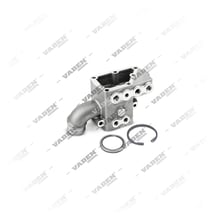
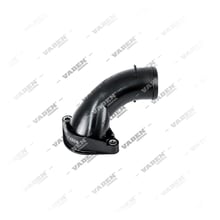
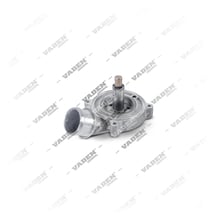
A thermostat is a temperature-sensitive valve mounted in the engine's cooling circuit that controls when coolant is allowed to flow to the radiator. When the engine is cold, the thermostat stays closed and routes coolant through a bypass circuit, helping the engine reach operating temperature faster. Once the engine hits its target temperature, the valve opens and directs coolant to the radiator to shed excess heat. In heavy-duty applications, this simple mechanism has a direct impact on fuel consumption, emissions control, cabin heating and long-term engine durability.
What Does a Thermostat Do?
- Regulates Coolant Flow: Opens and closes in response to engine temperature, directing coolant to the radiator or through the bypass circuit as needed.
- Speeds Up Warm-Up: Stays closed while the engine is cold, letting coolant circulate within the block so the engine reaches operating temperature quickly.
- Prevents Overheating: Opens once coolant exceeds the set operating temperature, allowing the radiator to cool the hot coolant.
- Supports Fuel Efficiency: Keeps the engine at its ideal operating temperature, improving combustion efficiency and stabilizing fuel consumption.
- Protects Engine Life: Minimizes temperature swings that would otherwise accelerate wear and thermal stress on engine components.
Thermostat Specifications
| Specification | Details |
|---|
| Location | Coolant line between the engine block and radiator, housed inside the thermostat housing |
| Operating Principle | Temperature-sensitive valve (wax-element or bypass type) that opens and closes with coolant temperature |
| Vehicle Types | Trucks, tractor units, buses, trailers/semi-trailers and towing units |
| Compatibility | Heavy commercial vehicles including Mercedes-Benz, MAN, Scania, Volvo, DAF, Iveco, Renault, BMC and Ford |
| Material | Durable metal housing with corrosion-resistant valve and sealing components |
| OE-Match Approach | Manufactured to match original opening temperature and housing geometry |
| Maintenance Interval | Visual and functional check during routine cooling system service |
Types of Thermostats
- Mechanical (Wax-Pellet) Thermostats: Operate via a spring and valve mechanism; simple, robust and widely used across heavy-duty applications.
- Electronic (Map-Controlled) Thermostats: Managed by the engine control unit for precise, dynamic temperature regulation; common on modern heavy-duty vehicles.
- Bypass Thermostats: Provide flexible coolant routing, suited to high-performance engines with demanding cooling requirements.
- Single-Valve and Dual-Valve Thermostats: Manage the coolant circuit with either one or two valve mechanisms depending on engine cooling design.
Thermostat Maintenance Tips
- Routine Inspection: Check the thermostat's opening/closing function and housing gasket during every cooling system service.
- Coolant Level and Condition: Low or contaminated coolant can cause the thermostat to malfunction and lead to unstable engine temperature.
- Use the Right Replacement Part: Always fit a quality replacement matching the original opening temperature and housing geometry.
- Professional Installation: Fit the thermostat and housing gasket in the correct orientation; incorrect installation can cause leaks or air lock.
- Check Radiator Hoses and Connections: Inspect hoses and fittings alongside the thermostat, as pressure integrity affects overall cooling performance.
Common Thermostat Faults and Fixes
- Engine Overheating: A thermostat stuck closed blocks coolant from reaching the radiator; the faulty unit should be replaced immediately.
- Engine Not Reaching Temperature: A thermostat stuck open lets coolant circulate constantly, preventing the engine from reaching optimal temperature and raising fuel consumption.
- Increased Fuel Consumption: A cold-running engine reduces combustion efficiency; check the thermostat's opening temperature and function.
- Poor Coolant Circulation: Debris or scale buildup in the valve restricts flow; the thermostat should be cleaned or replaced.
- Irregular Pressure in Radiator Hoses: Erratic opening and closing of the thermostat causes pressure fluctuations in the hoses; inspect the full cooling system.
Why Choose a VADEN ORIGINAL Thermostat?
- Built to OE Standards: Manufactured to match original opening temperature, housing geometry and gasket dimensions precisely.
- Durable Materials: Corrosion- and thermal-fatigue-resistant materials deliver long service life and reliable operation.
- Broad Vehicle Coverage: A comprehensive range fitting trucks, tractor units, buses and trailers.
- Precise Temperature Control: Accurate opening temperature keeps the engine within its ideal operating range.
- Technical Support: Expert guidance available for correct part selection and installation.
Frequently Asked Questions (FAQ)
What does a thermostat do in a truck engine?
The thermostat is a valve in the cooling system that controls when coolant flows to the radiator based on engine temperature. It helps the engine warm up quickly and then keeps it running at its ideal operating temperature.
What happens when a thermostat fails?
A thermostat stuck closed causes the engine to overheat, while one stuck open prevents the engine from reaching full operating temperature and increases fuel consumption. Both failure modes hurt engine performance.
How do you know if a thermostat is bad?
Common warning signs include engine overheating or running too cold, rising fuel consumption, poor coolant circulation, and irregular pressure in the radiator hoses.
Which heavy-duty vehicles use this thermostat?
It fits the cooling systems of trucks, tractor units, buses and trailers from brands such as Mercedes-Benz, MAN, Scania, Volvo, DAF, Iveco, Renault, BMC and Ford.
How often should a truck thermostat be checked or replaced?
Check the thermostat during every routine cooling system service, and replace it promptly if the opening/closing function shows any sign of wear or malfunction.
What is the difference between a mechanical and an electronic thermostat?
A mechanical thermostat relies on a spring and valve for simple, durable operation, while an electronic thermostat is managed by the engine control unit for more precise, dynamic temperature regulation, and is common on modern heavy-duty vehicles.
Conclusion
The thermostat is a small part with an outsized role in keeping a heavy-duty engine at its ideal operating temperature and the cooling system running efficiently. Choosing a durable thermostat with the correct opening temperature is a direct factor in engine performance and fuel efficiency. For reliable, OE-spec thermostats you can trust, choose VADEN ORIGINAL.
Related technical guide: Engine Coolant Thermostat · Download PDF
Related articles: Thermostat Failure Symptoms: Why Does the Engine Warm Up Slowly or Overheat?