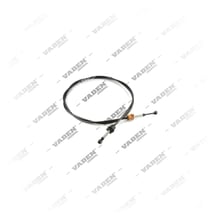
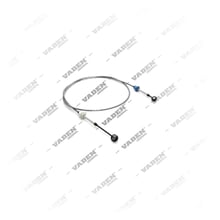
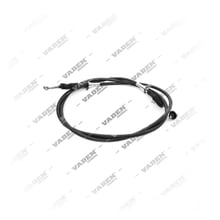
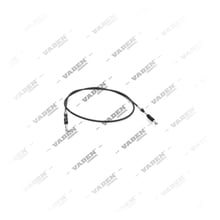
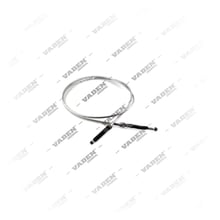
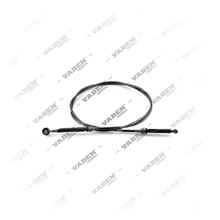
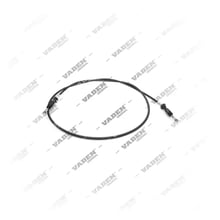
What Is a Gear Control Cable?
The control cylinder gear control cable is a sheathed, steel-braided transmission element that carries mechanical motion, in heavy commercial vehicle transmissions, from the gear lever to the control cylinder and, from there, onward to the gear-selection and gear-engagement forks. As the control cylinder mounted on the gearbox housing converts in-cab gear lever movement into fork motion with pneumatic assistance, the gear control cable is the starting point of that entire conversion. On the shop floor it is also known as the "shift wire" or "gear pull cable." The cable has a two-layer construction consisting of an inner steel wire and an outer protective sheath; this design transmits push-pull force while shielding the inner mechanism from road debris, dust, and moisture. When the control cylinder gear control cable fails, gear changes become stiff, delayed, or impossible altogether.
How Does a Gear Control Cable Work?
When the driver moves the gear lever, this motion is transferred through the linkage mechanism beneath the cab to the control cylinder gear control cable. The cable's inner wire slides inside the outer sheath to generate a pulling or pushing force, which it then delivers to the control cylinder mounted on the gearbox. The control cylinder boosts this incoming mechanical signal with pneumatic assistance and converts it into gear-selection and gear-shifting movement. The cable's end fittings connect to the control arm and to the cylinder's piston rod through bushed pins or ball joints, and the amount of play at these points directly affects shift precision. Along its chassis routing, the cable sheath is supported by retaining clips and vibration-isolating bushings.
Gear Control Cable Technical Specifications
The control cylinder gear control cable is produced in lengths and stroke values that vary by transmission type, so verifying the vehicle's chassis number or original part code before ordering is essential. The inner wire is typically made of galvanized braided steel, while the outer sheath is manufactured from a wear-resistant polymer; this combination delivers both mechanical strength and corrosion resistance. The end fittings (tie-rod ends, ball joints, or clip-type connectors) vary by vehicle model and must match the original geometry for correct installation. Stroke distance and pre-tension setting should be kept within the tolerance range specified by the manufacturer; for exact temperature and load values, the vehicle's current service manual should be taken as the reference.
Gear Control Cable Types and Subgroups
- Selection Cable: Transmits the gear lever's lateral movement to the selection mode on the control cylinder, ensuring the correct gear line is chosen.
- Shifting Cable: Transmits the forward-backward movement within the selected gear line, engaging the gear teeth.
- Control Cylinder Connecting Arm: The mechanical arm-and-pin assembly that links the cable end to the cylinder's piston rod.
- Cable Sheath Mounting Brackets: Clips and support brackets that hold the cable route fixed along the chassis.
- Vibration-Isolating Bushing and Fitting Sets: Rubber or polyurethane components that reduce play and vibration transfer at the cable ends.
- Adjuster Nut and Tensioning Kit: Connecting parts used to set the cable's pre-tension to factory tolerance.
- Ball Joint and Tie-Rod End Group: Connecting elements that provide precise angular movement between the cable end and the control arm.
How to Choose the Right Gear Control Cable
When choosing the right part, first verify it against the vehicle's chassis number or original part code, and confirm both the control cylinder type and the transmission model. Cables that look identical can differ critically in length, end-fitting geometry, and stroke distance; picking the wrong one degrades shift quality or makes installation impossible altogether.
Control Cylinder Gear Control Cable Selection Criteria| Criterion | Why It Matters |
|---|
| Chassis Number / OEM Code Match | Cable length and connector type are model-specific; a mismatch prevents installation |
| Control Cylinder Type | Pneumatically assisted systems require different stroke and pre-tension values |
| End-Fitting Geometry | Tie-rod ends, ball joints, and clip-type connectors are not interchangeable |
| Sheath Material and Heat Resistance | Routes near the engine bay require a sheath rated for high temperatures |
| Cable Length and Routing | Incorrect length creates excess tension or slack, leading to premature wear |
| Transmission Type Compatibility | Manual and semi-automatic (servo-shift) transmissions use different control logic |
Gear Control Cable Maintenance and Key Considerations
- Inspect the Cable Route Regularly: Check the sheath for cracks or wear, and check the mounting brackets for looseness.
- Lubricate the End Connections: Periodically grease the tie-rod ends and joints with the recommended grease.
- Verify the Pre-Tension Setting: Confirm the tensioning adjustment is within factory tolerance; a cable that is too tight or too slack disrupts gear changes.
- Examine the Vibration-Isolating Bushings: Replace hardened or cracked bushings promptly to limit vibration transfer.
- Preserve the Original Geometry During Installation: When replacing the cable, set the connecting arm angle and stroke distance to match the manufacturer's specifications.
Common Faults and Solutions
- Stiffness During Gear Changes: Increased internal friction or rust inside the sheath; replace the cable and check the mounting points.
- Gear Slipping or Engaging the Wrong Gear: Loss of pre-tension or a worn end pin; readjust the adjuster nut to factory tolerance.
- Harsh or Sudden Kickback in the Gear Lever: The inner wire is partially broken or binding inside the sheath; replace the cable completely and check the routing for kinks.
- Excessive Play in the Gear Lever: Hardened vibration-isolating bushings or play at the connecting arm; renew the bushings and pins.
- Gear Won't Engage or Locks Up: A broken cable or a disconnected control cylinder link; replace the cable and the mounting bracket together.
Why VADEN ORIGINAL?
- Manufactured to OE Dimensions: Cable length, end-fitting geometry, and sheath construction are produced to match original-part tolerances exactly.
- Broad OEM Coverage: The range is compatible with the transmission control systems of Mercedes-Benz, MAN, Scania, Volvo, DAF, and Iveco.
- Durable Material Selection: Corrosion- and wear-resistant wire and sheath materials are chosen with long service life in mind.
- Extensive Export Network: VADEN ORIGINAL parts are exported to more than 100 countries, ensuring uninterrupted supply for fleet operators.
Conclusion
The control cylinder gear control cable is a small part, but a functionally critical one, providing the mechanical link between the gear lever and the control cylinder in the transmission's control chain. A cable selected through correct chassis and OEM code matching, and properly maintained, substantially reduces the risk of stiff gear changes, gear slipping, and sudden failure. VADEN ORIGINAL control cylinder gear control cable products offer a reliable supply option, built to OE dimensions and with broad vehicle compatibility.
Frequently Asked Questions (FAQ)
What does the control cylinder gear control cable do?
This cable transmits the mechanical motion from the gear lever to the control cylinder on the transmission. The control cylinder then boosts that signal with pneumatic assistance and converts it into gear-selection and gear-shifting movement, ensuring correct gear engagement.
What symptoms appear when the gear control cable fails?
Stiffness during gear changes, gear slipping, harsh kickback at the gear lever, a feeling of excessive play, or the gear not engaging at all are the typical symptoms. If any of these appear, the cable and its connection points should be checked.
How often should the control cylinder gear control cable be replaced?
There is no fixed replacement interval; the cable reaches the end of its service life depending on wear and routing conditions. It should be replaced when cracks appear in the sheath, the inner wire develops slack, or gear changes noticeably deteriorate.
Which vehicles are VADEN ORIGINAL gear control cables compatible with?
VADEN ORIGINAL cables are compatible with the transmission control systems of heavy commercial vehicles such as Mercedes-Benz, MAN, Scania, Volvo, DAF, and Iveco. It is recommended to verify compatibility using the chassis number or OEM code before ordering.
What should be considered when replacing the gear control cable?
The new cable's length, end-fitting geometry, and stroke distance must match the original part exactly. After installation, the pre-tension should be set to factory tolerance and gear changes should be tested.
Related technical guide: Transmission Shift Cylinders: Failure, Replacement & Care