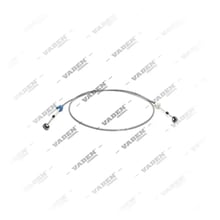
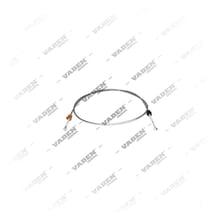
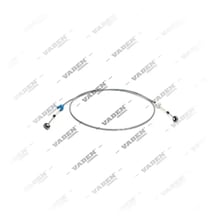
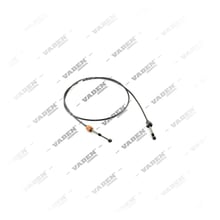
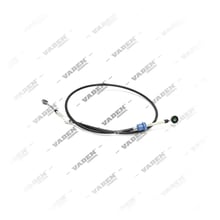
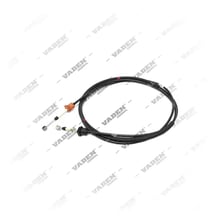
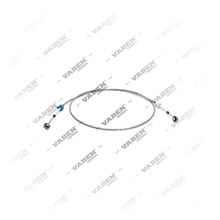
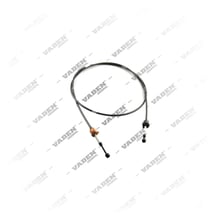
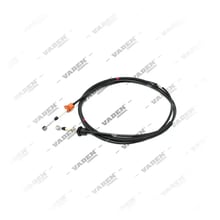
What Is a Split Cylinder Gear Lever Cable?
The control cylinder gear shift cable is the flexible connecting element that transmits motion between the gearbox's control cylinder and the gear-selection mechanism linked to the gear lever inside the cab. In heavy commercial vehicles, gear changes are not sent directly from the driver's lever movement to the gearbox fork; instead, the motion first travels through this cable to the control cylinder, then on—with pneumatic or hydraulic assistance—to the select-shift shaft inside the gearbox. In the field, this part is also known as the "gearshift teleflex cable," "shift control cable," or "transmission selector cable." How accurately the control cylinder responds depends largely on this cable being sound and correctly adjusted.
Functions Split Cylinder Gear Lever Cable
The primary role of this cable is to deliver the direction and position input from the gear lever to the control cylinder without mechanical loss. The inner steel wire slides within the outer sheath, transmitting motion in both push and pull directions; this compensates for the distance and vibration differences between the gear lever and the gearbox.
- Motion Transmission: Carries the selection and gear-engagement movement from the gear lever to the control cylinder without loss.
- Vibration Isolation: Reduces the direct transfer of engine and gearbox vibration to the gear lever inside the cab.
- Positional Accuracy: Enables the control cylinder to sense the correct gear position and apply pneumatic assistance in the right direction.
- Flexible Connection: Provides uninterrupted motion transfer despite the angle and distance differences between the cab and the chassis.
Technical Specifications Split Cylinder Gear Lever Cable
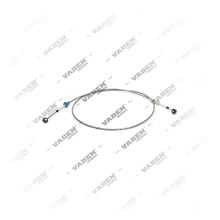
The cable consists of a steel wire core surrounded by a wear-resistant outer sheath. The end fittings are typically ball-joint or clip-type sockets, designed to seat on the control cylinder and gear lever bracket without play. Cable length and end-fitting geometry vary by vehicle model, so the chassis type and gearbox model must always be confirmed before ordering.
The outer sheath is manufactured from a polymer material resistant to road salt, oil, and temperature fluctuations, while the inner wire is made of corrosion-coated steel. The adjustment mechanism allows the cable to be brought into correct gear alignment after installation. For clearance tolerances and tensioning values, the manufacturer's current service manual should be taken as the reference.
- Inner Wire Core: Made of corrosion-coated steel, transmitting pulling and pushing force without loss.
- Outer Sheath: Manufactured from a polymer resistant to road salt, oil, and temperature fluctuations.
- End Fitting: Ball-joint or clip-socket type, designed to seat on the bracket without play.
- Adjustment Mechanism: Allows precise setting of cable tension and gear alignment after installation.
Types and Subgroups Split Cylinder Gear Lever Cable
- Selector Cable: Transmits the lateral movement of the gear lever—i.e., gear-line selection—to the control cylinder.
- Shift Cable: Carries the forward-backward movement of the gear lever—i.e., the command to engage a gear on the selected line.
- Cables with Adjustable Ends: Feature threaded adjustment mechanisms at the end fittings to compensate for play.
- Cables with Fixed Ends: Manufactured to factory tolerance, with non-adjustable, direct-mount end fittings.
- Cables with Bracket and Guide Sets: Supplied together with brackets and guide components that keep the cable on a fixed route through the cab transition.
How to Choose the Right Split Cylinder Gear Lever Cable
Selecting the correct cable requires evaluating the vehicle's chassis number, gearbox model, and control cylinder type together. Different gearbox variants within the same vehicle model may require different cable lengths and end-fitting geometries. The table below summarizes the key criteria to consider during selection.
Control Cylinder Gear Shift Cable Selection Criteria| Criterion | Description |
|---|
| Gearbox Model | Cable length and end-fitting type vary by gearbox version |
| Cable Type | Must be clarified whether it is a selector cable or a shift cable |
| End-Fitting Geometry | Ball joint, clip socket, or threaded adjustable end |
| Sheath Material | Polymer coating resistant to road salt, oil, and temperature |
| Adjustment Mechanism | Whether it offers play compensation after installation |
| Vehicle Compatibility | Mercedes-Benz, MAN, Scania, Volvo, DAF, and Iveco chassis applications |
Maintenance and Points to Watch for the Split Cylinder Gear Lever Cable
- Set the Adjustment Correctly During Installation: Adjust the mechanism at the cable end to the tolerance specified by the manufacturer; leave no play.
- Visually Inspect the Sheath: Replace the cable if the outer sheath shows cracks, wear, or abrasion; a damaged sheath lets in moisture and dirt.
- Secure Brackets and Guides: Loose brackets cause the cable to rub against vibration and wear prematurely.
- Check the End Fittings: Excessive play in the ball joint or clip socket can cause gear changes to be sensed incorrectly.
- Perform Periodic Gear-Precision Tests: Regularly verify that shifting on every gear line is clean and free of resistance.
Common Faults and Their Solutions
- Stiffness or Sticking During Gear Changes: Caused by the internal wire binding or the sheath deforming; remove the cable to inspect and replace if necessary.
- Engaging the Wrong Gear: The selector cable's adjustment clearance may have shifted; readjust the mechanism to the manufacturer's tolerance.
- Play Felt in the Gear Lever: Caused by wear in the end-fitting joint; replace the end fitting or the complete cable.
- Delayed Response from the Control Cylinder: Friction is slowing cable movement; clean dirt and rust from inside the sheath, or renew the cable if needed.
- Mismatch Between Gear Lever and Gearbox: Caused by an incorrect cable length or model mismatch; verify the correct part number against the chassis number.
Why VADEN ORIGINAL?
VADEN ORIGINAL control cylinder gear shift cables are manufactured to OE dimensions and provide direct compatibility with the gearbox control systems of brands such as Mercedes-Benz, MAN, Scania, Volvo, DAF, and Iveco. The wear-resistant sheath material and corrosion-coated steel wire construction deliver a long service life and consistent shift precision. Broad OEM cross-reference coverage and export experience to more than 100 countries make it easy for fleet operators and service points to source the correct cable quickly.
Conclusion
The control cylinder gear shift cable is a small but critical connecting part that directly determines the accuracy of gear changes. Regular visual inspection, correct adjustment, and timely replacement prevent problems such as harsh gear changes, engaging the wrong gear, and delayed response from the control cylinder. With VADEN ORIGINAL-quality cables, you can preserve the long-term reliability of the gearbox control system.
Frequently Asked Questions (FAQ)
What does a control cylinder gear shift cable do?
It transmits the selection and gear-engagement movement from the gear lever to the gearbox's control cylinder, converting the driver's lever movement into a pneumatically or hydraulically assisted gear change.
What symptoms appear when the cable fails?
Stiffness during gear changes, engaging the wrong gear, a feeling of play in the gear lever, and delayed response from the control cylinder are the most common symptoms. In these cases, the cable and its end fittings should be inspected.
How often should the cable be replaced?
There is no fixed replacement interval; it is recommended to replace the cable when cracks appear in the outer sheath, play develops at the end fitting, or gear changes become noticeably stiff. Periodic visual inspection extends service life.
Which vehicles is the control cylinder gear shift cable compatible with?
VADEN ORIGINAL cables are compatible with the gearbox control systems of heavy commercial vehicles from brands such as Mercedes-Benz, MAN, Scania, Volvo, DAF, and Iveco. The chassis number and gearbox model should be confirmed before ordering.
What should be considered when installing the cable?
The adjustment mechanism should be set to the tolerance specified by the manufacturer, brackets and guides should be firmly secured, and the sheath should be checked for kinks. Incorrect adjustment can cause the wrong gear to be engaged.
Related technical guide: Transmission Shift Cylinders: Failure, Replacement & Care