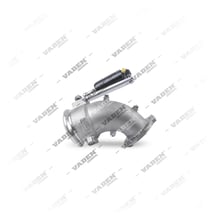
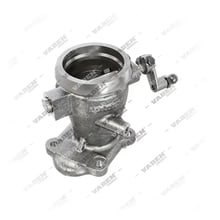
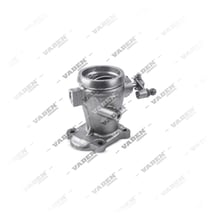
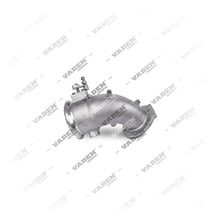
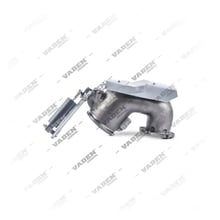
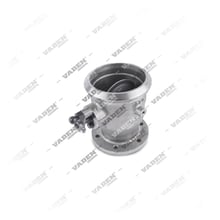
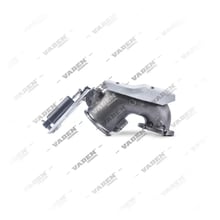
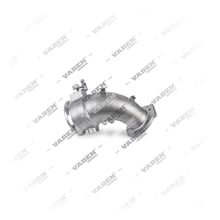
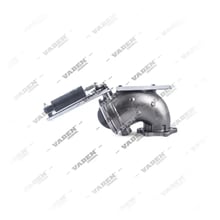
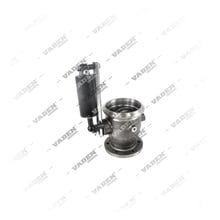
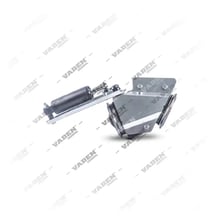
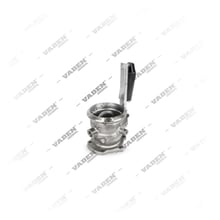
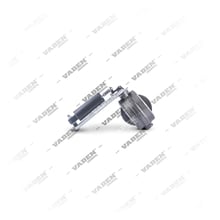
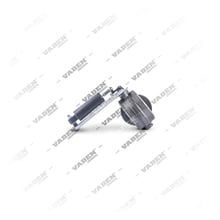
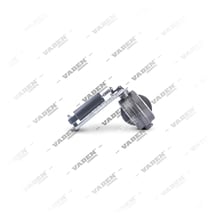
What Is an Exhaust Gas Flap?
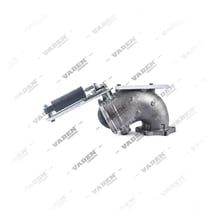
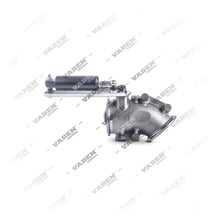
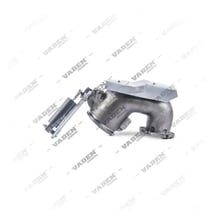
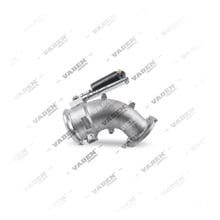
The Exhaust Brake Butterfly Valve is the complete valve unit at the heart of the engine brake (exhaust brake) system on heavy commercial vehicles. Mounted close to the exhaust manifold or turbocharger outlet, it partially closes off the exhaust gas outlet when the driver releases the accelerator pedal, building back-pressure inside the engine. In the field it also goes by names such as "engine brake valve," "exhaust flap," or "Motorbremse valve." This subcategory covers the complete assembly - housing, valve disc, and actuator - rather than individual parts like gaskets or springs, targeting a true OE-equivalent replacement of the part originally fitted. On long downhill routes and in stop-and-go city traffic, this unit is a critical safety component for reducing brake pad and disc wear.
How Does an Exhaust Gas Flap Work?
When the driver activates the exhaust brake switch or releases the accelerator pedal, a pneumatic or electro-pneumatic actuator moves the valve disc toward the closed position. The disc never closes fully; it lets exhaust gas flow through under controlled resistance. This resistance forces the engine pistons to do extra work on the exhaust stroke, reducing the power delivered to the wheels and turning the engine itself into a brake. The valve assembly works in sync with speed sensor and engine control unit signals to prevent overspeeding and sudden torque spikes.
- Activation: The driver switches on the exhaust brake or releases the accelerator pedal.
- Closing: The actuator moves the valve disc to a partially closed position, generating back-pressure.
- Fuel Cutoff: The engine control unit typically cuts fuel supply at the same time.
- Engine Braking Effect: The engine dissipates the energy coming from the wheels through compression resistance.
Exhaust Gas Flap Technical Specifications
Exhaust Brake Butterfly Valve housings are made from cast iron or stainless steel alloys able to withstand high exhaust temperatures, generally in the 500-750°C range depending on engine type. The valve disc is machined from stainless steel to tolerances that keep axial play to a minimum. The actuator side may be a pneumatic cylinder, an electro-pneumatic valve block, or a diaphragm-type unit; flange size and bolt pattern vary by vehicle and engine module. Rather than quoting a single fixed pressure or torque figure, always follow the values in the vehicle's original service manual.
Exhaust Gas Flap Types and Subgroups
- Pneumatically Actuated Complete Unit: A housing-and-actuator assembly driven by compressed air, widely used on classic truck and bus engines.
- Electro-Pneumatic Complete Unit: A solenoid-valve model triggered by an electrical signal from the engine control unit, offering more precise control.
- Turbo-Integrated Exhaust Brake Assembly: On some engines the valve is a single piece with the turbocharger housing.
- Standard Flanged Housings: Variants that bolt directly to the manifold outlet, in different diameters and bolt-hole patterns.
- Sensor / Position-Switch Equipped Sets: Advanced assemblies with a micro switch or sensor reporting valve position to the engine control unit.
Complete Unit or Repair Kit? How to Choose the Right Exhaust Gas Flap
This category covers complete replacement units for the Exhaust Brake Butterfly Valve; individual parts such as gaskets, springs, or diaphragms belong to a different category. First identify the root cause: a housing crack, valve disc deformation, or actuator wear calls for a complete unit, which is both safer and more economical long term. For a localized issue such as a leaking gasket, a repair kit can be considered if the manufacturer offers one. Either way, verify the part against the OEM stock code or chassis/engine number, comparing flange size and actuator type with the original.
Complete Unit vs. Repair Kit Comparison| Criterion | Complete Unit Replacement | Localized Repair / Kit |
|---|
| When It Applies | Housing crack, disc deformation, actuator failure | Single gasket/spring/seal leak |
| Installation Time | One-time, with dimensional check | Longer, repeated disassembly risk |
| Warranty Coverage | Single warranty for the whole unit | Only for the replaced part |
| OE-Equivalent Verification | Exact match via stock code / chassis number | Risk of partial match on dimensions only |
| Long-Term Cost | Generally fewer repeat failures | Complete replacement may be needed later |
Exhaust Gas Flap Maintenance and What to Watch For
- Check the Flange Before Installation: Confirm the flange diameter, bolt-hole count, and bolt pattern match the original exactly.
- Test the Air Connections for Leaks: After installation, make sure the pneumatic lines and connectors do not leak air.
- Check Actuator Cable and Sensor Connections: On electro-pneumatic models, verify connectors are fully seated and free of corrosion.
- Verify Valve Movement by Hand: Check that the disc moves freely between fully open and fully closed positions.
- Set an Inspection Interval by Duty Cycle: Vehicles that regularly run long downhill routes should inspect the assembly at shorter intervals.
Common Faults and Their Solutions
- Engine Brake Does Not Engage: The air or electrical signal to the actuator may be interrupted; check the lines and connectors, replacing the unit if necessary.
- Valve Disc Does Not Close Fully or Sticks: Likely carbon buildup or housing deformation; if the housing cannot be cleaned, replace the complete unit.
- Exhaust Brake Stays Engaged Continuously: The actuator return spring or solenoid valve may have failed; test and replace the unit if faulty.
- Abnormal Noise or Vibration at Engine Speed: Wear on the valve disc or shaft bearing may be the cause; a complete unit is recommended if housing integrity is compromised.
- Fault Code / Warning Light On: May point to a position sensor or wiring harness fault; on sensor-equipped models, verify the electrical connection first.
Why Choose VADEN ORIGINAL?
- Manufactured to OE Dimensions: Housing, flange, and disc dimensions match original part tolerances, requiring no extra machining.
- Broad OEM Coverage: Stock-code-based matches for Mercedes-Benz, MAN, Scania, Volvo, DAF, Iveco, and Renault Trucks engines.
- Verified Material Quality: High-temperature-resistant alloys reduce the risk of housing cracks and premature deformation.
- Exported to More Than 100 Countries: A wide product range and deep stock across engine generations ensure uninterrupted supply.
Conclusion
The Exhaust Brake Butterfly Valve is a complete unit that directly affects engine braking performance and, by extension, overall braking system safety. The right choice depends on identifying whether the fault calls for a complete unit or a localized repair, and on verifying the flange and actuator type against the OE-equivalent part. With VADEN ORIGINAL Exhaust Brake Butterfly Valve units, you can keep your vehicle's engine brake system running reliably for the long term.
Frequently Asked Questions (FAQ)
What does an Exhaust Brake Butterfly Valve do?
The Exhaust Brake Butterfly Valve partially closes off the exhaust gas outlet to build back-pressure inside the engine, letting the engine itself act as a brake. This reduces the load on the brake pads and discs, especially on long downhill routes, so the braking system keeps working without overheating.
What happens when the Exhaust Brake Butterfly Valve fails?
With a faulty valve assembly, the engine brake may fail to engage, stay engaged continuously, or cause abnormal noise and vibration at engine speed. These symptoms call for checking the actuator, the valve disc, and the sensor connections.
Should I buy a complete unit, or is a repair kit enough?
If there is a housing crack, disc deformation, or actuator failure, replacing the complete unit is both the safer option and more economical in the long run. For an isolated fault such as a single gasket or spring, a separate repair kit can be considered if the manufacturer offers one.
Which vehicles is the VADEN ORIGINAL Exhaust Brake Butterfly Valve compatible with?
VADEN ORIGINAL units are compatible with the pneumatic and electro-pneumatic exhaust brake systems on Mercedes-Benz, MAN, Scania, Volvo, DAF, Iveco, and Renault Trucks heavy commercial vehicles. Before ordering, the match should be verified using the OEM stock code or the chassis/engine number.
What should be checked when installing an Exhaust Brake Butterfly Valve?
Before installation, confirm that the flange size and bolt pattern match the original exactly, test the air connections for leaks, and check the sensor connectors on electro-pneumatic models. After installation, also verify that the valve moves freely between the fully open and fully closed positions.
Related technical guide: Exhaust / Engine Brake: Faults, Replacement & Maintenance Guide