
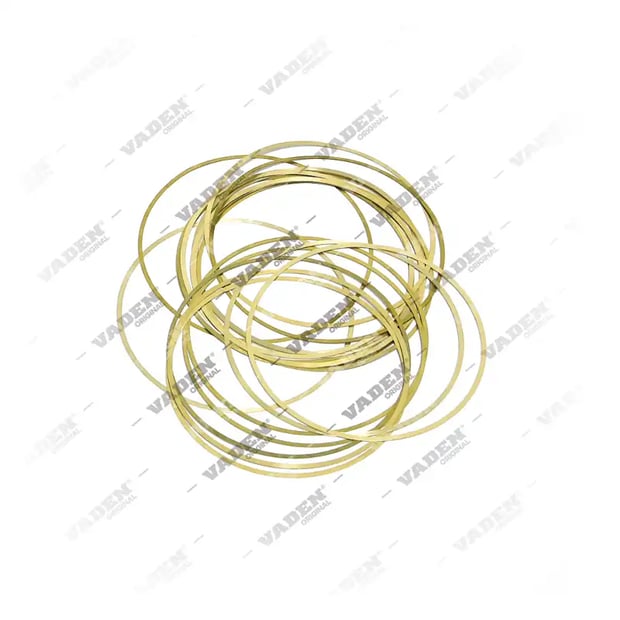
1100 02 008 0.50 mm Piston & Liner Shim
1100 02 008
Summary
This 0.50 mm thickness piston and liner shim features an outside diameter of 151.80 mm and an inside diameter of 145.10 mm. Designed for heavy-duty engine applications to ensure precise liner protrusion and seating.
| EAN Code | 8699031003245 |
|---|
Ready to Order
Description
This piston and liner shim is a critical component used to adjust the liner protrusion within heavy-duty diesel engines. By compensating for manufacturing tolerances or block wear, it ensures the cylinder liner seats correctly against the block surface, allowing the head gasket to maintain a balanced clamping load.
This specific component is designed for heavy commercial vehicle engines where precise clearance is vital. It features an outside diameter of 151.80 mm, an inside diameter of 145.10 mm, and a thickness of 0.50 mm, making it suitable for applications involving a Ø 125 specification.
For professional technicians, it is essential to clean all surfaces thoroughly before installation to avoid incorrect protrusion readings. Always use a single shim of the correct grade rather than stacking multiple thin pieces, and ensure all bolts are torqued according to the engine manufacturer's specific sequence and values.
Consult your authorized distributor to check the compatibility list.
This specific component is designed for heavy commercial vehicle engines where precise clearance is vital. It features an outside diameter of 151.80 mm, an inside diameter of 145.10 mm, and a thickness of 0.50 mm, making it suitable for applications involving a Ø 125 specification.
For professional technicians, it is essential to clean all surfaces thoroughly before installation to avoid incorrect protrusion readings. Always use a single shim of the correct grade rather than stacking multiple thin pieces, and ensure all bolts are torqued according to the engine manufacturer's specific sequence and values.
Consult your authorized distributor to check the compatibility list.
Technical Specifications
| Outside Diameter (D) | 151,80 mm |
|---|---|
| Inside Diameter (d) | 145,10 mm |
| Thickness (s) | 0,50 mm |
| Number of Packages | 10 |
| Application | Ø 125 |
Related Products
Used In
FAQ
What is the function of a piston and liner shim?
A liner shim is used to set the correct liner protrusion in heavy-duty diesel engines, ensuring the head gasket receives the proper clamping load.
Why is thickness accuracy important for this part?
The shim must match the required protrusion tolerance; even small deviations can lead to gas leaks or repeat head gasket failures.
Can I stack multiple thin shims together?
No, it is recommended to use a single shim of the correct thickness grade rather than stacking two thin ones to ensure stability.
What should I check before installing a new shim?
Ensure all surfaces are free of gasket residue or corrosion, and inspect the shim for any bends or deformations before fitting.