Truck Air Compressor by Engine & Make: DD15, Cummins, PACCAR, Mack & More
DD15, Cummins ISX, PACCAR MX, Mack & Freightliner air compressors explained: how they feed the brake system, failure symptoms & VADEN OE-quality replacements.
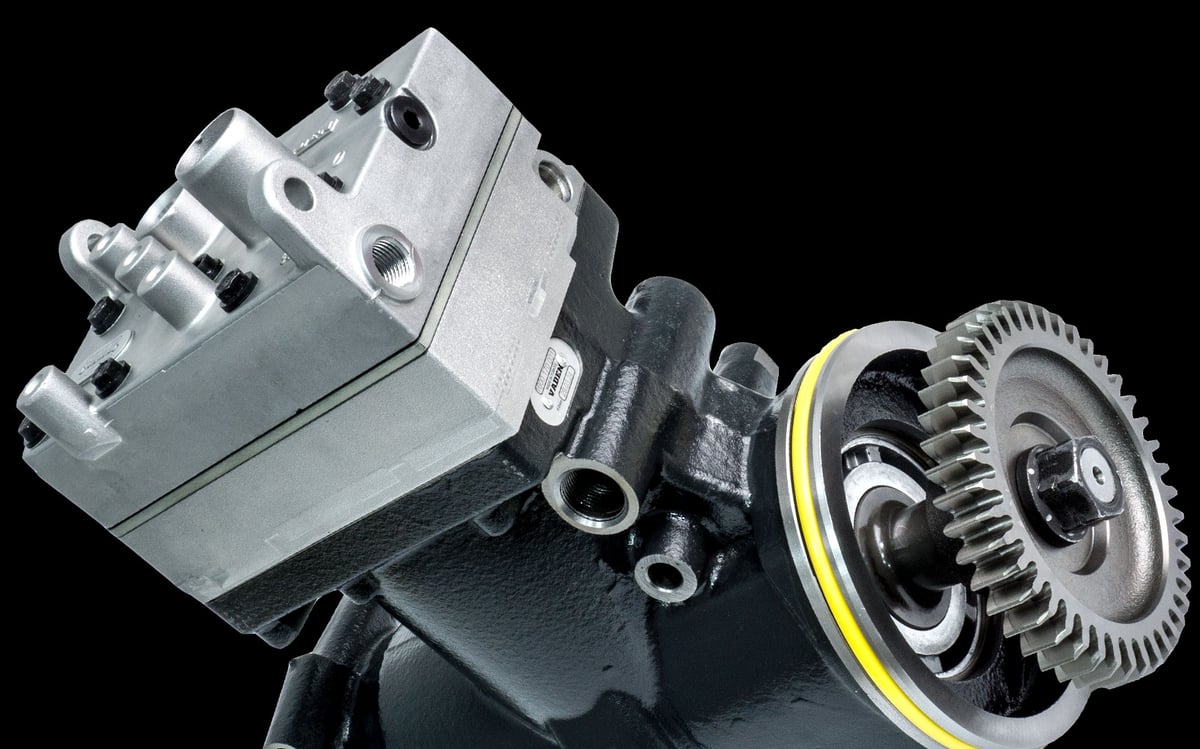
The truck air compressor is the heart of every heavy-vehicle air brake system. Whether you run a Detroit DD15, a Cummins ISX, a PACCAR MX or a Mack MP engine, the compressor is what builds the compressed air that stops 40 tonnes of tractor and trailer. This guide breaks the air compressor down by engine and make, explains how it feeds the brake system, lists the symptoms of a failing unit, and shows where OE-quality VADEN ORIGINAL replacements fit each application.
How the Air Compressor Feeds the Air Brake System
An air brake compressor is an engine-driven, piston-type pump. It is gear- or belt-driven off the engine and runs continuously, but only pumps air into the system when the governor calls for it. Here is the flow:
- Compressor draws filtered air (or boosted air from the turbo) and compresses it.
- Governor monitors reservoir pressure and cycles the compressor between "load" (pumping, typically to ~120-130 psi cut-out) and "unload" (idling at ~100-110 psi cut-in).
- Air dryer removes moisture and oil before air reaches the tanks.
- Reservoirs (wet + service tanks) store air for the foundation brakes, parking/spring brakes and auxiliary systems.
Because the compressor lubricates and cools using engine oil and coolant, a worn unit does more than starve the brakes — it can pump oil downstream, flood the air dryer and contaminate valves. That is why a healthy compressor matters to the whole vehicle, not just braking performance.
The compressor also runs far more than most drivers realise. Even when a truck is parked with the engine idling, the compressor spins with the engine and cycles under governor control every time reservoir pressure drops. Over a million-mile service life that is an enormous number of load cycles, which is exactly why the compressor is treated as a scheduled wear item on well-run fleets rather than a fit-and-forget component.
Symptoms of a Failing Truck Air Compressor
Across every engine make, the warning signs are broadly the same. Use this checklist:
| Symptom | Likely Cause |
|---|---|
| Slow air build-up / long pressure recovery | Worn rings, valve plate leakage, restricted inlet |
| Air pressure warning buzzer at idle | Compressor not keeping up with demand |
| Excess oil at the air dryer or in the tanks ("oil passing") | Worn compressor rings/cylinder, failed seals |
| Constant cycling of the air dryer purge | Compressor not unloading, governor or discharge issue |
| Knocking or metallic noise from the compressor | Bearing, connecting rod or crank wear |
| Coolant or oil leak at the compressor | Failed head gasket, base gasket or shaft seal |
A truck that cannot build air to cut-out pressure is not roadworthy. If air build time from ~85 to 100 psi exceeds roughly 40 seconds at governed rpm, the compressor and its plumbing need inspection.
Single-Cylinder vs. Twin-Cylinder Compressors
Heavy-truck air compressors come in two basic displacements, and picking the wrong one leads to poor air recovery or premature wear:
| Type | Typical Output | Best For |
|---|---|---|
| Single-cylinder | ~13-18 CFM | Standard line-haul tractors, single-trailer duty |
| Twin-cylinder | ~30+ CFM | Heavy-haul, vocational, multi-trailer, high air-demand bodies |
When a truck pulls doubles, runs air-suspension dumps, or operates PTO-driven bodies, a single-cylinder unit may never keep up — the compressor runs loaded almost constantly and wears out early. Always replace like-for-like unless the OE spec itself calls for an uprated unit.
Detroit DD15 Air Compressor
The Detroit DD15 — the workhorse in Freightliner Cascadia tractors — uses a gear-driven, engine-mounted air compressor. It is a single- or twin-cylinder piston unit sized for line-haul duty cycles. Because DD15 fleets rack up huge mileage, the compressor is a known wear item: oil passing into the air system and slow build-up are the classic DD15 complaints. A DD15 air compressor replacement should match the OE displacement and mounting so governor cut-in/cut-out timing stays correct. VADEN supplies OE-equivalent Detroit compressors that bolt in without modification.
Cummins ISX / X15 Air Compressor
The Cummins ISX (and its X15 successor) is one of the most common heavy engines in North America and appears in Kenworth, Peterbilt, Freightliner and International chassis. The ISX air compressor is typically a single-cylinder gear-driven unit, with higher-output twin-cylinder versions on heavy-haul and vocational applications. Because the ISX runs high duty cycles, watch for oil carry-over and reduced output as rings wear. When sourcing a Cummins air compressor, confirm single vs. twin cylinder and the correct discharge port orientation for your chassis plumbing.
PACCAR MX Air Compressor (Kenworth & Peterbilt)
The PACCAR MX-13 powers many current Kenworth and Peterbilt trucks. Its air compressor is engine-mounted and gear-driven, integrated tightly with the MX cooling and lubrication circuits. A failing PACCAR air compressor often shows up first as excessive oil at the air dryer or a dryer that purges too frequently. Match the MX-specific mounting flange and gear when replacing — VADEN offers OE-quality PACCAR-pattern compressors as a cost-effective alternative to dealer units.
Mack MP Air Compressor
Mack MP7 and MP8 engines (shared architecture with Volvo D11/D13) use a gear-driven piston compressor. On vocational Mack trucks — dump, mixer, refuse — the compressor sees aggressive stop-start duty, so bearing wear and knocking noises appear earlier than in line-haul. A correct Mack air compressor replacement keeps parking-brake and body-air functions reliable. VADEN's Mack/Volvo-pattern range covers these applications.
International & Detroit in International Chassis
International trucks run a mix of powertrains — Cummins ISX/X15, International A26 and older MaxxForce engines. The International air compressor therefore depends on the installed engine, so always identify the engine before ordering. The same rule applies to any Detroit air compressor fitted outside a Freightliner: match the engine family (Series 60 legacy vs. DD-series) rather than the truck badge.
Truck Make Quick Reference: Freightliner, Kenworth, Peterbilt
Buyers often search by truck make rather than engine. Because the compressor is bolted to the engine, the make search always resolves back to the powertrain:
| Truck | Common Engine | Compressor Basis |
|---|---|---|
| Freightliner Cascadia | Detroit DD15 / DD13 | Detroit gear-driven piston |
| Kenworth T680 / W990 | PACCAR MX-13 or Cummins X15 | PACCAR or Cummins pattern |
| Peterbilt 579 / 389 | PACCAR MX-13 or Cummins X15 | PACCAR or Cummins pattern |
| Mack Anthem / Granite | Mack MP7 / MP8 | Mack/Volvo pattern |
| International LT / HX | Cummins X15 or A26 | Cummins or International pattern |
So a Freightliner air compressor is, in practice, a Detroit DD-series compressor; a Kenworth or Peterbilt unit is usually a PACCAR MX or Cummins X15 compressor. Identify the engine, then match the OE compressor.
Replacement Guidance: Doing the Job Once
A compressor is not a stand-alone swap — it lives inside a moisture- and oil-sensitive circuit. When you replace an air compressor truck unit, protect the new part and the whole system:
- Replace the air dryer cartridge at the same time. A compressor that was passing oil has already loaded the dryer; a saturated desiccant cartridge will send contamination straight back downstream.
- Flush or inspect the discharge line. Coked (carbonised) oil in the discharge line restricts flow and raises head temperature, which kills the replacement compressor.
- Check the governor and unloader. A compressor that will not unload runs continuously and overheats — confirm correct cut-in/cut-out before blaming the pump.
- Verify oil and coolant feeds. Restricted lubrication or cooling is a common cause of repeat failures; use new gaskets and correct torque on the head and base.
- Confirm the drive. Match the drive gear, spline or belt pulley and the mounting flange exactly — a close-but-wrong unit will not time correctly.
Doing these steps together is what turns a compressor replacement into a lasting repair rather than a return visit.
VADEN ORIGINAL: OE-Quality Air Compressors for Every Make
VADEN ORIGINAL manufactures air brake compressors and air system components as birebir OE muadili — one-to-one OE equivalents — for heavy commercial vehicles. Each unit is dimensionally matched to the original (mounting flange, drive gear, displacement and port orientation) so it fits and performs like the factory part, while cutting cost against dealer pricing.
- OE-equivalent fit: correct mounting and drive for DD15, Cummins ISX/X15, PACCAR MX, Mack MP and Volvo applications.
- Tested output: compressors are performance- and leak-tested to hold governor cut-out pressure and resist oil passing.
- Full air-system coverage: beyond compressors, VADEN supplies air dryers, unloader and repair kits, and valves to service the whole circuit.
Browse the VADEN air compressor range to match your engine, explore VADEN air brake components for dryers and valves, or enquire about VADEN OE-quality equivalents for your fleet's specific part numbers. For DD15 and Freightliner operators in particular, VADEN is a proven, in-stock alternative to OE.
Bottom line: the compressor you need is defined by your engine, not just your truck badge. Identify the engine — DD15, ISX/X15, PACCAR MX, Mack MP — match the OE-equivalent VADEN compressor, and keep the air brake system building pressure the way it should.
Shop this part: Air Compressor
Tags
Frequently Asked Questions
- What air compressor does a DD15 use?
- The Detroit DD15 uses a gear-driven, engine-mounted piston air compressor sized for line-haul duty. Replacements must match the OE displacement, mounting flange and drive gear so governor cut-in/cut-out timing stays correct. VADEN ORIGINAL offers OE-equivalent DD15 compressors that bolt in without modification.
- Is the Freightliner air compressor the same as the Detroit compressor?
- In practice, yes. A Freightliner Cascadia is powered by a Detroit DD15 or DD13 engine, and the compressor bolts to that engine. So a 'Freightliner air compressor' is a Detroit DD-series compressor. Always identify the engine, then match the OE compressor.
- What are the first signs of a failing truck air compressor?
- The earliest signs are slow air build-up (long pressure recovery), an air pressure warning buzzer at idle, and excess oil showing up at the air dryer or in the tanks. Knocking noise or a coolant/oil leak at the compressor indicate more advanced wear.
- Does the Kenworth or Peterbilt air compressor differ from Cummins or PACCAR?
- Kenworth and Peterbilt trucks run either a PACCAR MX-13 or a Cummins X15 engine, and the compressor matches whichever engine is installed. So the compressor is a PACCAR-pattern or Cummins-pattern unit — identify the engine before ordering.
- Are VADEN OE-quality air compressors a direct replacement for OE?
- Yes. VADEN ORIGINAL compressors are birebir OE muadili — one-to-one OE equivalents — dimensionally matched to the original mounting, drive and displacement for DD15, Cummins ISX/X15, PACCAR MX, Mack and Volvo applications. They are performance- and leak-tested and priced below dealer units.
Related Articles
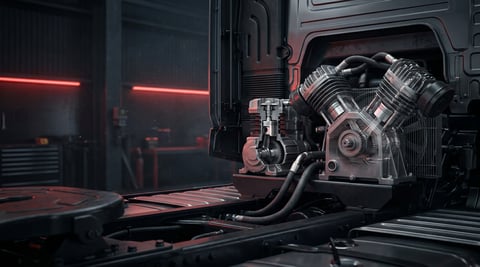
Single vs Twin-Cylinder Air Compressor: Choice & Fitment
Learn how to match single or twin-cylinder air brake compressors to your truck: flow demand, drive and cooling interfaces, fault diagnosis, replacement steps.
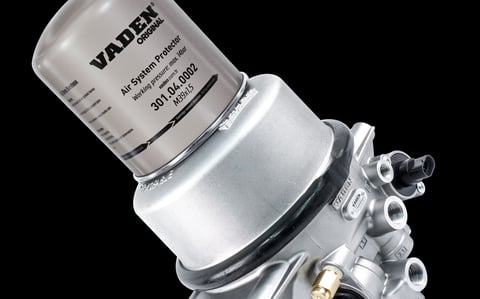
Heavy-Duty Truck Air Dryer: Bendix, WABCO & When to Replace the Cartridge
How truck air dryers work, Bendix AD-9/AD-IP & WABCO systems, cartridge replacement intervals, failure symptoms, and OE-quality VADEN ORIGINAL parts.
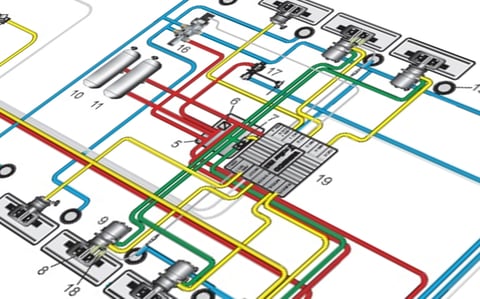
Air Brake System: How It Works on Heavy Commercial Vehicles
How an air brake system works on trucks and buses: compressor, dryer, valves, brake chambers and ABS/EBS explained, plus OE-quality VADEN parts.