What are the functions of the Suspension Check Valve?
The check valve performs several important functions in the air suspension circuit:
- One-way flow: Allows air to flow only toward the bellows and completely blocks reverse flow.
- Pressure retention: Keeps bellows pressurized even when the compressor is off.
- Ride height stability: Prevents sudden chassis height drop while the vehicle is parked, preserving level stability.
- System protection: Prevents sudden pressure drops from damaging other pneumatic components.
- Back-pressure blocking: Prevents back-pressure from being transmitted to other parts of the system in case of compressor or line failure.
What are the symptoms of a failed Suspension Check Valve?
A leaking or improperly sealing check valve is usually noticed through vehicle ride height:
- Vehicle sagging over time: A parked vehicle noticeably drops on one side or overall within a few hours.
- Frequent compressor cycling: As the system continually loses pressure, the compressor engages more often than normal.
- Audible air leak: A hissing or leaking sound may be heard from the valve area.
- Unstable ride feel: Pressure imbalance between bellows disrupts ride comfort and the vehicle may lean to one side.
- Mistaken for leveling valve failure: Check valve failure is often confused with a leveling valve problem, making correct diagnosis important.
How is the Suspension Check Valve inspected?
Inspection uses both static observation and a pressure test:
- Sag test: Park the vehicle on level ground and re-measure chassis height after a set period.
- Soapy water test: With the system under pressure, apply soapy water to the valve body and connections to check for bubbles.
- Reverse flow check: Disconnect the line on the bellows side to check whether the valve passes air in the reverse direction.
- Visual inspection: Check the valve body for cracks, dirt buildup, or wear at the seal area.
What should be considered when replacing it?
Check valve replacement looks simple but correct installation preserves system reliability:
- Correct flow direction: The valve must be installed in the direction indicated by the arrow on the body; reversed installation makes the system completely non-functional.
- Connection cleanliness: Fitting threads and o-ring seats must be cleaned before installation.
- Correct tightening torque: Over-tightening cracks the body, under-tightening causes leaks.
- System test: After installation, pressurize the system and test both flow direction and sealing.
- Filter and dryer check: Check air dryer condition too, to prevent premature failure caused by contaminated air.
How to choose the right Suspension Check Valve?
Pressure class, connection size, and flow capacity are the deciding factors when choosing the correct check valve.
Suspension Check Valve selection criteria| Criterion | Description |
|---|
| Working pressure | Must match the vehicle's air suspension system nominal pressure |
| Connection size | Must exactly match the line and fitting diameter |
| Flow capacity | Must be sufficient for bellows volume and fill rate |
| Material | Corrosion-resistant body and flexible internal seal |
| Application | Verify OEM reference against chassis and suspension type |
Maintenance and service life
The check valve's service life depends directly on air quality and the moisture/oil ratio in the system. Regular air dryer maintenance delays premature hardening and cracking of the rubber seal inside the valve. Performing a sag test at scheduled service catches valve failure at an early stage. The vehicle's current service manual is the authority for exact pressure values.
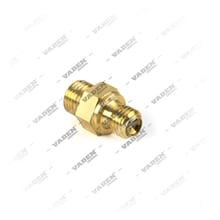
VADEN Suspension Check Valve
VADEN supplies OE-quality check valves matched to the correct pressure and flow values for the air suspension systems of heavy commercial vehicles. These parts help preserve bellows pressure and ride height stability.
Frequently Asked Questions (FAQ)
What does the suspension check valve do?
It prevents air filling the air bellows from flowing back out, preserving system pressure.
Why does the vehicle sag when the check valve fails?
When the valve cannot seal fully, air in the bellows leaks back over time and chassis height drops.
How is check valve failure distinguished from leveling valve failure?
A sag test and a reverse flow check clearly identify which component is leaking.
What is the most critical point when installing a check valve?
Installing it in the correct flow direction as indicated by the arrow on the body.
What extends the life of a check valve?
Regular air dryer maintenance and keeping the moisture/oil ratio in the system low extend valve life.
Related technical guide: Heavy-Duty Air Suspension Failures: Air Springs, Leveling Valves and ECAS