What is Rocker Swing Arm?
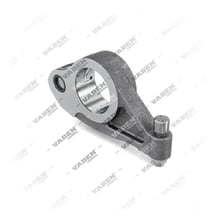
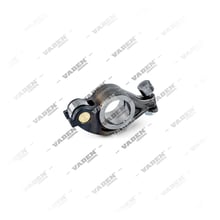
This part is a mechanical lever mounted on the cylinder head in the engine's valve train, converting the rotary motion of the camshaft into the linear opening-closing motion of the valves. Each valve has its own rocker arm, and the arms are arranged along a common rocker shaft. At the end of the arm that contacts the valve, there is an adjusting screw or contact pad that reduces wear and allows valve clearance adjustment. A correctly functioning rocker arm directly determines the precision of engine timing and the consistency of valve opening amount.
What are the functions of Rocker Swing Arm?
The rocker arm serves as a critical mechanical bridge in the engine's gas exchange system.
- Motion transfer: Transfers the lift motion coming from the camshaft or push rod to the valve stem.
- Lever ratio: The arm's geometry converts the motion from the cam profile into the desired valve opening amount.
- Valve clearance adjustment: The adjusting screw at the end allows setting the correct clearance to compensate for thermal expansion.
- Load distribution: The bearing on the rocker shaft absorbs repeated impact load evenly, reducing wear.
- Timing consistency: The arm's rigidity keeps valve opening-closing moments constant regardless of engine speed.
What are the symptoms of Rocker Swing Arm failure?
When wear or breakage begins in the rocker arm, distinct changes appear in engine noise and performance. A metallic tapping sound coming from the cylinder head, especially increasing at idle and changing character with speed, is typically a sign of degraded adjustment clearance or bearing wear. If the arm breaks, sudden power loss, engine vibration, and rough running are felt in the affected cylinder. Wear left unaddressed for a long time causes additional damage to the cam surface and valve stem, raising repair cost. In some cases, broken arm fragments can enter the oil passage, causing blockage in the oil pump or filter.
How is Rocker Swing Arm checked?
For inspection, the valve cover is removed and the rocker shaft assembly is visually examined for cracks, excessive wear marks, or discoloration (a sign of overheating). The clearance between the arm and shaft is measured with a caliper or bore micrometer and compared against the manufacturer's tolerance value. If the contact surface of the adjusting screw against the valve stem shows pitting or uneven wear, the arm's lever geometry has been compromised. Irregular tapping noise from the valve train while the engine is running should be verified using a stethoscope or listening rod to identify the affected cylinder.
What should be considered during replacement?
When replacing a rocker arm, all arms on the rocker shaft should first be checked as a set; even if only one arm is replaced, the wear condition of neighboring arms should be inspected. During installation, attention must be paid to lubrication channel alignment, as an arm installed in the wrong orientation cuts off oil flow and causes premature failure. Valve clearance must be set to the manufacturer's specified value with the engine cold, following the correct cylinder firing order. The adjusting screw lock nut must be tightened to the specified torque; if left loose, the clearance can shift on its own during operation.
Rocker Arm technical reference values| Parameter | General range | Note |
|---|
| Valve clearance (intake) | 0.20 - 0.40 mm | Refer to the vehicle's current OE service manual |
| Valve clearance (exhaust) | 0.40 - 0.60 mm | Varies by engine |
| Adjusting screw lock nut torque | 20 - 30 Nm | Check in cross-tightening sequence |
| Shaft-to-bushing clearance tolerance | 0.02 - 0.08 mm | Compare against original dimension |
How to choose Rocker Swing Arm?
The first requirement in selection is exact fit to the engine type and cylinder head layout; intake and exhaust rocker arms usually have different geometry and must not be mixed up. The material being forged steel or hardened cast iron is decisive for resistance to repeated impact load. Contact surfaces being machined to factory tolerance and the surface hardening coating matching the original directly affects wear life. Parts that exactly match the OE reference number and carry traceable quality documentation should be preferred over competing aftermarket brands.
Maintenance and service life
Rocker arm service life is closely tied to engine oil cleanliness and the continuity of lubrication pressure; dirty or delayed oil changes cause premature wear on the bearing surface. Valve clearance should be checked and, if necessary, adjusted at every periodic service; regular inspection significantly extends the life of both the arm and the cam surface. Under proper maintenance conditions, the rocker arm can generally run trouble-free up to the engine's general overhaul interval, i.e. in the 300,000 - 500,000 km range.
VADEN Rocker Swing Arm
VADEN applies a manufacturing standard exactly matching OE geometry and material hardness for rocker arms produced for heavy-duty commercial vehicle engines. The product range covers intake and exhaust arms specific to different engine families, offering workshops a reliable and long-lasting solution.
Frequently Asked Questions (FAQ)
What does a rocker arm do?
It is a mechanical lever that transfers the lift motion from the camshaft to the valve stem, ensuring the valve opens and closes at the right time and by the right amount.
What happens if a rocker arm breaks?
Sudden power loss, engine vibration, and rough running occur in the affected cylinder; broken fragments can enter the oil passage and block the oil pump or filter.
Does a tapping noise always come from the rocker arm?
No, but irregular metallic tapping from the valve train is a common symptom; a stethoscope check or visual inspection after removing the valve cover is needed for a definite diagnosis.
Should only one arm be checked or the whole set?
Even if only one arm is replaced, the wear condition of neighboring arms on the same shaft should be checked, as they operate under similar load conditions.
When should valve clearance be adjusted after replacement?
Immediately after installation with the engine cold, set to the value specified by the manufacturer and in the correct cylinder order; refer to the vehicle's current OE service manual.
Related technical guide: Rocker Arm & Shaft Set: Faults, Replacement and Maintenance