What Is a Retarder Valve?
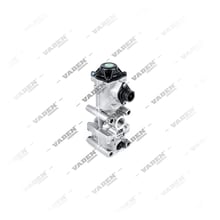
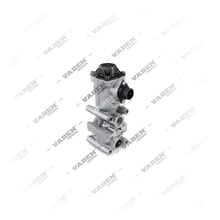
A retarder valve is the control component that manages oil or air flow inside the retarder unit built into the transmission housing of heavy commercial vehicles, engaging braking torque and releasing it in controlled stages. Within the Transmission > Retarder > Valve chain, this group covers the valve body, the spool/piston mechanism and its mounting hardware, not the system's overall operating principle. It is also known in the field as the "retarder control valve." This category focuses on the VADEN ORIGINAL retarder valve groups under part numbers 303.11.0121 and 303.11.0127; for general retarder operating logic, see the parent retarder control unit category.
Choosing the correct part number determines whether the valve fits the mounting bores, matches the connection line diameter, and pairs with the actuation mechanism. A valve ordered under the wrong number either cannot be installed or leaves the retarder circuit unable to seal.
How Does a Retarder Valve Work?
The valve houses a spool or piston that opens and closes the oil line feeding the retarder circuit. When the driver selects a retarder stage, or the electronic control unit detects a braking request, the mechanism inside the valve body shifts position and directs oil into the rotor chamber. Because flow opens gradually, braking torque builds up in stages rather than all at once, giving controlled deceleration without loading the wheel brakes.
- Flow Direction: The valve body routes oil into the rotor chamber or to the drain line, setting the braking torque accordingly.
- Progressive Engagement: The spool/piston shifts in steps tracking the selected retarder stage, preventing sudden torque spikes.
- Pressure Balancing: Internal springs and seals keep line pressure stable on the transmission side.
- Electronic or Mechanical Actuation: Depending on the model, the valve is moved by an electro-pneumatic solenoid or a mechanical control lever.
- Drain Function: Once disengaged, the valve rapidly discharges remaining oil to cut off drag torque.
Retarder Valve Technical Specifications
Retarder valve groups are produced in different body dimensions and connection standards depending on the transmission manufacturer and retarder type. The housing is typically a pressure-rated aluminum alloy or cast steel, machined internally for smooth oil flow. Gasket and O-ring sets use elastomers rated for transmission oil temperature swings.
Connection interfaces can be flanged ports, threaded fittings, or a surface mount bolted directly to the housing. The three criteria deciding the correct part number are the mounting pattern, port diameter/thread standard, and whether actuation is electronic or mechanical. Since pressure and torque figures vary by model, the manufacturer's current service manual is the reference for exact setting values.
Retarder Valve Types and Subgroups
- 303.11.0121 Retarder Valve Group: Matched to a specific transmission housing type with a single-port layout; the more common, earlier application number.
- 303.11.0127 Retarder Valve Group: An alternative group with a different connection pattern or revised housing dimensions, matching later production series.
- Valve Body: The main cast component housing the spool/piston mechanism and oil passages.
- Spool/Piston Assembly: The moving internal component that directs oil flow.
- Gasket and O-Ring Set: Seals the connection surfaces between the valve body and transmission.
- Mounting Bolts and Flange Kit: Hardware securing the valve group to the transmission housing.
How to Choose the Right Retarder Valve
Selecting the correct retarder valve starts with reading the casting number on the existing valve. Part numbers 303.11.0121 and 303.11.0127 can look similar at a glance, yet may differ in bore spacing, port diameter, or control interface, so visual resemblance alone is not enough.
Retarder Valve Groups — Comparison and Selection Criteria| Criterion | 303.11.0121 | 303.11.0127 |
|---|
| Application | Specific transmission housing series, single-port layout | Revised housing dimensions, alternative connection pattern |
| Actuation Type | Mechanical/electro-pneumatic (model-dependent) | Mechanical/electro-pneumatic (model-dependent) |
| Sealing | Dedicated gasket/O-ring set | Dedicated gasket/O-ring set |
| Mounting Surface | Direct flanged mounting to transmission housing | Direct flanged mounting to transmission housing |
| Verification Method | Casting number and OEM reference cross-check | Casting number and OEM reference cross-check |
Cross-referencing against the OE numbers of Wabco, Knorr-Bremse, ZF and Voith is the most reliable way to confirm the part. For groups used on Mercedes-Benz, MAN, Scania, Volvo and DAF transmissions, verify this match before ordering.
Retarder Valve Maintenance and Key Considerations
- Check the Transmission Oil Level: Low or contaminated oil hampers spool/piston movement.
- Verify Gasket Condition Periodically: Any valve showing leakage needs its sealing set replaced without delay.
- Follow the Mounting Torque: Tightening flange bolts to the specified value prevents housing distortion.
- Inspect Electro-Pneumatic Connections: Loose or corroded solenoid wiring delays the retarder's response.
- Record the Removed Part's Number: Noting the old casting number speeds up the next service.
Common Faults and Solutions
- Retarder Does Not Engage: Usually a stuck spool or a control signal not reaching the valve; remove the group to inspect and replace if needed.
- Oil Leaking from the Transmission Housing: A worn gasket/O-ring set is the typical cause; replace the sealing kit and clean the flange surface.
- Retarder Engages Late or Without Progressive Stages: Points to partially blocked oil passages; check the oil and filter, and clean the valve body.
- Retarder Won't Disengage / Drag Persists: A blocked drain line or a spool that fails to return; replace the group and check the oil line.
- Fitment Mismatch After Installation: Usually the wrong part number; re-verify the casting number and reorder via OE cross-reference.
Why VADEN ORIGINAL?
- Manufactured to OE Dimensions: The 303.11.0121 and 303.11.0127 groups are produced to original housing dimensions and tolerances.
- Extensive OEM Cross-Reference: Verified compatibility against Wabco, Knorr-Bremse, ZF and Voith references.
- Sealing-Focused Material Selection: Gasket and O-ring components withstand transmission oil temperature swings.
- Exported to More Than 100 Countries: A quality-controlled standard trusted by fleet operators worldwide.
- The Right Part for the Right Application: Detailed OE cross-reference support ensures an exact match.
Conclusion
The retarder valve sits at the heart of the transmission-integrated retarder system, controlling exactly when and how braking torque engages. Choosing correctly between the 303.11.0121 and 303.11.0127 groups comes down to verifying the casting number against OE references. Built to OE dimensions with broad compatibility, VADEN ORIGINAL retarder valve groups keep the retarder system running reliably.
Frequently Asked Questions (FAQ)
Is a retarder valve the same part as the retarder control unit?
The retarder control unit refers to the overall control assembly of the transmission-integrated retarder system, while the retarder valve covers the specific valve groups within that system, particularly the components listed under part numbers 303.11.0121 and 303.11.0127. For the general operating principle, see the parent category; for the correct part number and application, refer to this page.
What is the difference between the 303.11.0121 and 303.11.0127 valve groups?
Both groups manage retarder oil flow, but they can differ in mounting bore spacing, port diameter, or control interface. Choosing correctly requires reading the casting number on the existing valve and confirming it against OE cross-reference data.
What symptoms appear when a retarder valve fails?
The most common symptoms are the retarder failing to engage, engaging late or without progressive stages, oil leaking from the transmission housing, and drag continuing after the retarder should have disengaged. In these cases, remove the valve group to inspect the internal mechanism and gasket condition.
Which OEM brands' compatibility should be checked when replacing a retarder valve?
Depending on the transmission and retarder type, OE numbers from Wabco, Knorr-Bremse, ZF or Voith serve as the cross-reference. For retarder valve groups fitted on Mercedes-Benz, MAN, Scania, Volvo and DAF transmissions, this match must be confirmed before ordering.
What should be checked during retarder valve installation?
Flange bolts should be tightened to the torque value specified by the manufacturer, the gasket/O-ring set should always be replaced, and electro-pneumatic wiring connections should be inspected where applicable. Recording the casting number of the removed part makes future servicing easier.
Related technical guide: What Is a Retarder? How Does It Work and What Does It Do?