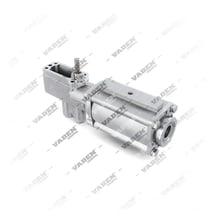
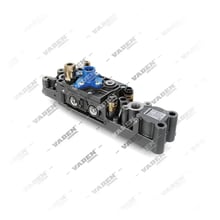
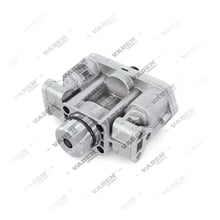
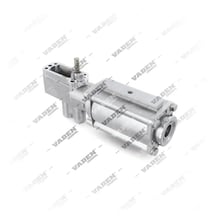
What Is a Range Change Valve (Splitter Valve)?
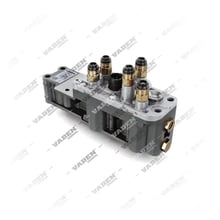
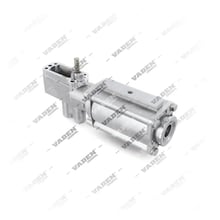
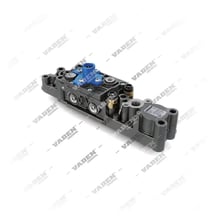
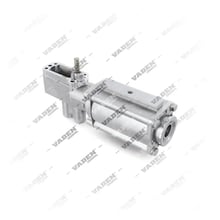
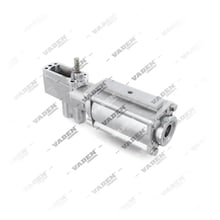
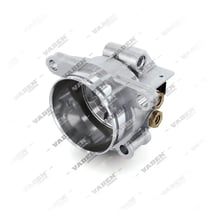
The range change valve is the main product of the Transmission > Range Change Valves (Splitter Valve) category, and is a complete part made up of a housing, electro-pneumatic spool, solenoid, and electrical connector. In multi-stage manual or semi-automatic transmissions, it shifts the low/high range group that exists in addition to the main gear group. This page covers the unit itself; for an economical renewal option consisting of internal sealing elements, you can review the Range Change Valve Repair Kit category.
How Does the Range Change Valve Work?
- Receiving the signal: The signal from the range-change switch or the electronic gear control unit reaches the unit's solenoid.
- Spool movement: The solenoid moves the internal pilot spool, opening one of the air channels.
- Air routing: Compressed air is sent through the open channel to the range cylinder in the transmission.
- Group shift: The cylinder piston moves, and the shift fork engages the low or high range.
What Are the Failure Symptoms?
- Failure to engage gear: Because the range group does not shift, some gears cannot be engaged at all.
- Delayed or harsh shifting: Wear or contamination on the spool surface extends the shifting time.
- Continuous air leak: A hissing sound from the housing indicates that the spool seal or o-ring has failed.
- Solenoid failure: If the unit does not respond even though the electrical connection is intact, the solenoid winding may have burned out.
- Random shifting: The range changing without driver input indicates a spool or electronic fault.
Range Change Valve Technical Specifications
Range change valve technical data| Specification | Description |
|---|
| Construction | Complete unit consisting of housing, spool, solenoid, and connector |
| Supply voltage | 12 V or 24 V, depending on the vehicle electrical system |
| Mounting position | On the transmission housing, close to the range cylinder |
| Compatibility criterion | OE number, transmission model, and type code |
Replacement and Maintenance
- Depressurize the system: Before removal, bleed the relevant air circuit and disconnect the electrical connection.
- Mark the lines: Label the air port connections before disconnecting them to prevent mix-ups.
- Correct torque: Tighten the mounting screws to the value specified by the manufacturer; over-tightening can crack the housing.
- Test it: After installation, test every range shift individually with the engine running.
Torque and pressure values vary by transmission model; for exact values, the vehicle's current OE service manual is authoritative.
How to Choose the Correct Unit?
Selection should be based on the OE number from the transmission manufacturer (ZF, Eaton, Mercedes-Benz, MAN, Scania, Volvo, DAF, Iveco). If the sealing elements are worn, a more economical renewal can be made with the repair kit as long as the housing and spool are sound; a complete unit is required in case of housing or solenoid failure.
Frequently Asked Questions (FAQ)
What does the range change valve do?
Based on the signal from the range-change switch, it directs compressed air to the range cylinder, enabling shifts between the transmission's low and high gear groups.
How can you tell it is faulty?
Some gears cannot be engaged, shifts become delayed or harsh, a hissing sound comes from the housing, or the range changes on its own.
Is the repair kit enough, or should the unit be replaced?
If only the sealing elements are worn, the repair kit is sufficient. In case of a cracked housing, solenoid failure, or spool wear, the complete unit must be replaced.
How do I choose the correct unit?
Reference the transmission manufacturer's OE number together with the chassis number, and compare port count and electrical connector type.
What should be checked after replacement?
With the engine running, test every range shift individually and verify there are no leaks at the air connections.
Related technical guide: Heavy-Duty Truck Gearbox: Faults, Replacement & Maintenance