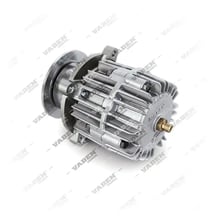
What Is a Pressure Regulator (Exhaust Brake)?
The pressure regulator is the pneumatic control component in the engine exhaust brake system that sets the pressure coming from the air reservoir to the level required for the exhaust brake cylinder to operate. It is in the same Engine > Exhaust Brake category as the Exhaust Brake Cylinder and works directly together with it: while the cylinder produces the motion that closes the flap, the regulator balances the air pressure applied to this motion. In some vehicles the regulator comes integrated into the cylinder, while in others it is mounted on the line as a separate housing; this category covers the separate-housing regulator versions.
How Does the Pressure Regulator Work?
- Inlet pressure: The full system pressure from the air reservoir reaches the regulator inlet.
- Adjustment mechanism: The spring and diaphragm inside reduce the inlet pressure to a preset output value.
- Controlled output: The regulated pressure is transmitted to the exhaust brake cylinder as a constant and repeatable force.
- Pressure balancing: Keeps the output pressure constant despite fluctuations in system pressure, ensuring consistent cylinder operation.
Functions of the Pressure Regulator
- Pressure limiting: Prevents excessive pressure from reaching the exhaust brake cylinder, protecting the flap and linkage mechanism.
- Force consistency: Ensures the same closing force is applied every time the brake is activated.
- System protection: Prevents sudden pressure fluctuations from damaging the exhaust line and the engine.
What Are the Failure Symptoms?
- Weak exhaust brake performance: If the regulator's output pressure is low, the flap does not close fully, reducing the retarding effect.
- Engine under excessive strain: If the regulator fails to raise the pressure or is faulty, the flap may close excessively and raise the back pressure.
- Air leak noise: A hissing sound from the regulator housing or diaphragm area indicates that the internal seal has failed.
- Inconsistent braking effect: If the pressure cannot be kept constant, the exhaust brake feels strong at times and weak at others.
Pressure Regulator Technical Specifications
Exhaust brake pressure regulator technical data| Specification | Description |
|---|
| Operating principle | Spring-diaphragm-based mechanical pressure regulation |
| Connection | Line hose at the inlet, exhaust brake cylinder hose at the outlet |
| Mounting position | On the exhaust brake line, close to the cylinder |
| Compatibility criterion | OE number, engine type, and cylinder version |
Replacement and Maintenance
- Bleed the line: Before removal, bleed the relevant air circuit.
- Mark the connections: Label the inlet and outlet hoses to avoid mixing them up.
- Correct torque: Tighten the connection fittings to the value specified by the manufacturer; over-tightening damages the threads.
- Test it: After installation, engage the exhaust brake and verify the output pressure and flap closure.
Torque and pressure values vary by engine type; for exact values, the vehicle's current OE service manual is authoritative.
How to Choose the Correct Pressure Regulator?
Selection should be made according to the OE number of the removed original part. Even within the same engine family, regulators set to different output pressures may be used depending on the exhaust brake cylinder version; therefore, the engine code and cylinder type should be verified together.
Frequently Asked Questions (FAQ)
What does the pressure regulator do?
It regulates the pressure from the air reservoir to the level needed by the exhaust brake cylinder, keeping the flap closing force controlled and consistent.
How can you tell the regulator is faulty?
Weak exhaust brake performance, inconsistent braking effect, an air leak noise, or excessive strain on the engine are typical symptoms.
Are the regulator and the exhaust brake cylinder the same part?
No. The cylinder is the element that moves the flap, while the regulator sets the air pressure applied to this motion; they work together but perform different functions.
How do I choose the correct regulator?
Reference the OE number of the removed part, and compare the engine code and exhaust brake cylinder version.
What should be checked after replacing the regulator?
Engage the exhaust brake and verify that the flap closes fully and that there are no leaks at the air connections.
Related technical guide: Exhaust / Engine Brake: Faults, Replacement & Maintenance Guide