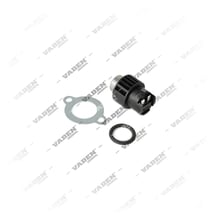
What is the Position Sensor?
The transmission position sensor is a critical feedback element for achieving smooth and correctly timed gear shifts in modern heavy commercial vehicles; the accuracy of the data coming from the sensor directly affects the reliability of the entire shift strategy.
What are the functions of the Position Sensor?
The main functions of the sensor within the transmission control system are as follows.
- Position reporting: Continuously transmits the instantaneous position of the gear selector shaft or fork to the control unit.
- Shift confirmation: Confirms whether a gear shift command has been physically completed, allowing the control unit to confidently issue the next step.
- Fault detection: Enables the control unit to log a fault code when there is a deviation between the expected position and the actual position.
- Neutral detection: Contributes to accurately determining whether the transmission is in neutral, helping establish safe operating conditions.
What are the symptoms of a Position Sensor failure?
A fault in the position sensor causes noticeable changes in the overall behavior of the transmission.
- Delayed gear shifts: When the control unit cannot confirm position data, gear shifts may occur more slowly or hesitantly than normal.
- Warning lamp: A transmission or engine warning lamp may illuminate on the instrument panel.
- Emergency operating mode: The control unit may put the transmission into a limited-performance safety mode when faced with unreliable position data.
- Random gear jumps: An unstable sensor signal can cause unexpected gear changes or the transmission failing to find a gear.
How is the Position Sensor checked?
Inspection is usually carried out with a diagnostic tool combined with an electrical test.
- Fault code reading: Fault codes read from the transmission control unit provide the first clue as to at which stage the sensor is causing a problem.
- Signal observation: The sensor's real-time position signal is monitored via the diagnostic tool to check whether it changes consistently with gear lever movement.
- Wiring and connector inspection: The sensor's connection cable is examined for breaks, corrosion, or a loose connector.
- Resistance measurement: Depending on the sensor type, resistance or voltage values are measured at the appropriate test points and compared against the manufacturer's reference range.
What should be considered during replacement?
The following points should be observed when replacing the position sensor.
- Correct mounting distance: The distance between the sensor and the moving part being detected must be within the manufacturer's specified range; an incorrect distance leads to inaccurate readings.
- Connector cleanliness: Clean and dry electrical connection points directly affect signal quality.
- Calibration requirement: In some transmission systems, the control unit may need to be recalibrated after sensor replacement.
- Correct tightening torque: The sensor must be installed according to the torque value specified in the vehicle's current OE service manual.
How to choose a Position Sensor?
The following technical references should be considered for correct sensor selection.
Transmission Position Sensor technical reference values| Property | Typical value / description |
|---|
| Application area | Automated manual and automatic transmission control systems |
| Sensor type | Inductive or potentiometric position detection |
| Operating voltage | Range suited to the general vehicle electrical system |
| Connection type | Multi-pin connector, specific to the vehicle wiring harness |
| Mounting distance | General range; the vehicle's current OE service manual is authoritative |
In the VADEN catalog, this sensor is matched via OEM reference codes to transmission manufacturers such as ZF and Eaton; for exact calibration and mounting values, the vehicle's service manual should be consulted.
Maintenance and service life
The service life of the transmission position sensor varies depending on the vibration and temperature conditions of the operating environment. Ensuring wiring harness retaining clips do not loosen and protecting the sensor connector from moisture and oil ingress are simple but effective measures against sudden failures. It is recommended to visually inspect the sensor wiring harness during periodic transmission maintenance.
VADEN Position Sensor
VADEN bases the position sensors it produces for heavy commercial vehicle transmission control systems on OE-compatible electrical characteristics and mounting standards. The product is designed to offer a reliable solution at service points, together with the other components in the Transmission > Sensor chain.
Frequently Asked Questions (FAQ)
What does the transmission position sensor do?
It reports the instantaneous position of the gear selector shaft or fork to the control unit, ensuring gear shifts occur at the correct time and safely.
How does the vehicle behave when the position sensor fails?
Delayed gear shifts, a warning lamp on the instrument panel, and in some cases the transmission entering a limited-performance safety mode may occur.
How is a sensor fault diagnosed?
Diagnosis is done by reading a fault code from the transmission control unit and observing the sensor signal via a diagnostic tool.
Is calibration required after replacing the sensor?
In some transmission systems, yes; recalibration may be required for the control unit to correctly interpret the new sensor data.
What is the most critical point during installation?
That the distance between the sensor and the moving part being detected matches the manufacturer's reference, and that the connector is clean and firmly connected.
Related products — Gearbox: Sensor (view all)
Related technical guide: Heavy-Duty Truck Gearbox: Faults, Replacement & Maintenance