What is an Oil Suction Manifold?
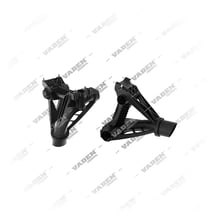
The engine oil suction manifold is a fixed pipe system that transfers oil from the sump to the oil pump, usually carrying a strainer at its end that traps coarse particles. On some engines it is produced as a single-piece casting, while on others it consists of a sheet-metal pipe and a separate strainer housing. The manifold is fastened to the pump flange with a gasket and is positioned at a specific depth inside the sump, below the oil level, so suction is not interrupted even while the engine operates at an angle.
What are the functions of the Oil Suction Manifold?
As the starting point of the engine's lubrication system, the manifold carries out several critical functions.
- Oil transfer: delivers oil from the sump to the oil pump with low resistance.
- Pre-filtering: the strainer at its tip keeps large dirt and metal particles from entering the pump.
- Continuous suction: gathers oil from a position that prevents the pump from drawing in air even while the vehicle rocks under braking or on an incline.
What are the symptoms of an Oil Suction Manifold failure?
When the manifold strainer clogs, the oil pump cannot draw enough oil, the low oil pressure warning lights up on the dashboard, and pressure drops further at idle, especially with a hot engine. If the manifold is drawing in air through a gasket surface, the pump ingests air bubbles, which shows up as fluctuation on the pressure gauge and a metallic knocking sound from the engine. If the manifold cracks or breaks, oil flow can be cut off entirely, an emergency situation that can cause serious engine damage within seconds. Seeing excessive sludge and metal debris build-up on the manifold strainer when the sump is drained is also an early warning sign.
How is the Oil Suction Manifold checked?
The oil sump is removed and the manifold is visually inspected; the strainer is checked for clogging, and the gasket surface for cracks or deformation. With the manifold attached to the pump flange, its sealing can be checked with a light source or compressed air. Real-time pressure data from the oil pressure sensor shows whether the pressure difference between idle and high rpm is within the manufacturer's tolerance; an abnormal drop points to a manifold or pump fault.
What should be considered during replacement?
Before removing the sump, the oil should be fully drained and the inside of the sump cleaned to prevent foreign matter from entering during manifold installation. The manifold should be mounted to the pump flange with a new gasket, with bolts torqued to the manufacturer's value in a crossing pattern. The distance between the strainer inlet and the bottom of the sump must be kept to the manufacturer's specification; positioning it too close increases the risk of air ingestion at the inlet. Before starting the engine after assembly, the oil should be filled to the correct level and the oil pressure gauge watched during the first start.
How to choose an Oil Suction Manifold?
Compatibility should be based on the exact engine code; manifold length, strainer mesh density and flange bolt pattern vary by engine family. Because an overly fine strainer mesh can restrict suction, it is important to stick to the pore size approved by the manufacturer.
Engine oil suction manifold - general reference values| Parameter | Typical range |
|---|
| Oil pump suction vacuum | Varies per the engine manufacturer's current service manual |
| Strainer mesh size | Approximately 0.3-0.6 mm (varies by manufacturer) |
| Material | Cast aluminum or sheet-steel pipe |
| Inspection interval | Visual check at every sump/oil pump service |
Maintenance and service life
Changing the engine oil and oil filter according to the manufacturer's interval significantly reduces the risk of the manifold strainer clogging. If the engine has excessive metal wear or gasket damage, debris entering the sump can clog the strainer quickly, so the manifold must always be cleaned or replaced after such failures. With proper maintenance, the manifold can serve for the engine's entire service life without requiring intervention.
VADEN Engine Oil Suction Manifold
VADEN offers oil suction manifold and strainer sets built to OE dimensions for heavy commercial vehicle engines, aimed at preserving the reliability of the lubrication system.
Frequently Asked Questions (FAQ)
Are the engine oil suction manifold and the oil pump the same part?
No. The oil pump is the mechanical unit that pressurizes the oil; the manifold is the passive pipe/duct structure that delivers oil from the sump to that pump. The two are usually connected by a flange and can be replaced separately.
How often should the manifold strainer be cleaned?
In normal use the strainer is usually not cleaned since the sump is not removed at every oil change; however, if there is internal engine damage, excessive metal wear, or a suspected low oil pressure issue, the sump should be opened and the strainer checked and cleaned.
Does the engine get damaged immediately when the manifold clogs?
If the clog is partial, pressure runs low and wear accelerates over the long term; if there is full blockage or a serious air leak, oil pressure drops rapidly and the engine can suffer serious damage within minutes, so the vehicle should be stopped the moment the warning light comes on.
Can a manifold fault be diagnosed without removing the sump?
While the manifold must be seen for a definitive diagnosis, fluctuation in oil pressure sensor data and low pressure at idle can be early indicators of a manifold- or pump-related problem.
What additional parts should be replaced together with the manifold?
The pump flange gasket, the strainer element (if it is a separate part) and the sump gasket should be renewed in the same job; since these parts are typically low-cost, replacing them together is recommended to avoid a second disassembly.
Related products — Engine: Manifold (view all)
Related technical guide: Exhaust Manifold: Cracks, Leaks, Replacement & Torque Guide