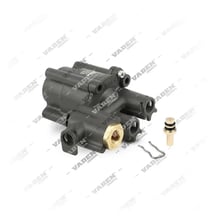
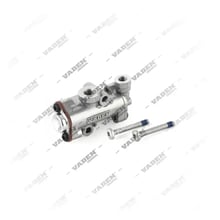
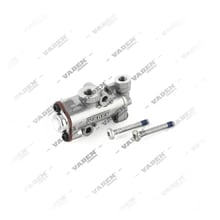
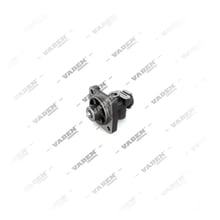
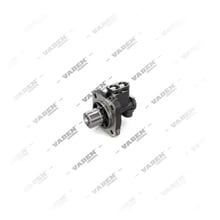
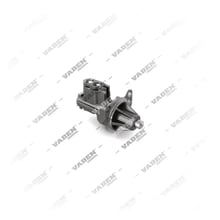
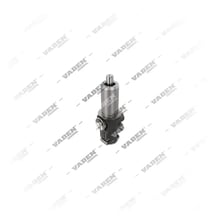
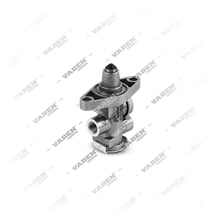
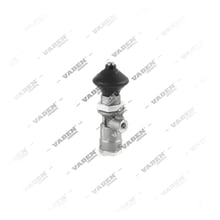
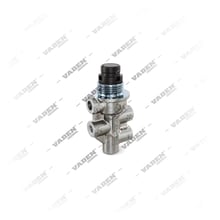
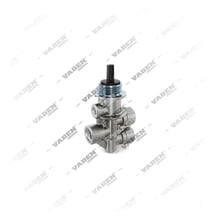
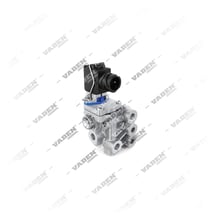
What Does Gearbox Valve (Transmission Gearbox Valve) Mean in This Category?
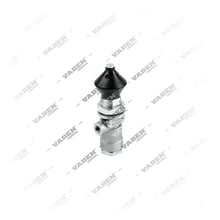
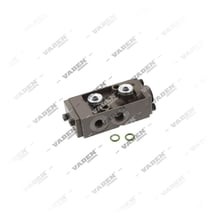
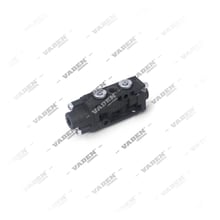
The Valve parts in this category cover complete valve units that operate on the transmission housing — the finished component that a vehicle owner or workshop can install and remove directly, complete with housing, shaft, spring, and gasket set. In heavy commercial vehicle transmissions, these units govern gear shifts, direct the lubrication circuit, or regulate pressure in air/hydraulic circuits, so the gearbox operates with correct timing. In the field, the transmission valve is also referred to as the shift valve or control valve. The focus here is not on describing individual internal components one by one, but on clarifying which complete Valve unit fits your vehicle and how to install it correctly. Most products in this category represent a complete replacement for valves whose internal surfaces or seating faces are worn, whose housing is cracked, or whose spring has lost tension; if the housing shows scoring, pitting, or overheating signs, replacing only the gasket or spring is a temporary fix, and the failure soon returns. If the housing is sound and the problem is purely a sealing issue, the corresponding repair kit category can be a more economical option — this category is for those looking directly for the complete part.
How Does the Gearbox Valve Work?
The Valve is a housing-shaft-spring mechanism that directs the working medium (air, oil, or hydraulic fluid) between channels inside the transmission housing. When the driver moves the gear lever or the electronic control unit sends a signal, the valve shaft changes position and opens or closes the relevant channel. This movement delivers pressure to the cylinders that push the synchronizer forks, or routes the lubrication circuit to the correct gear set. Correct spring tension and gasket sealing ensure the valve positions itself with the same precision every time; otherwise, gear shifts become stiff or delayed.
- Signal/Motion Input: The gear lever or electronic control unit sends a motion command to the valve shaft.
- Channel Direction: The shaft changes position, opening or closing the relevant air/oil/hydraulic channel.
- Pressure/Flow Delivery: The directed fluid reaches the target cylinder or gear area.
Gearbox Valve Technical Specifications
Complete Valve units consist of a cast or forged housing, a hardened steel shaft, corrosion-resistant springs, and a gasket set specific to the transmission type. Housing material and channel geometry vary by manufacturer and transmission module (manual, automatic, AMT), so visual similarity alone does not guarantee compatibility. Pressure ranges and shaft tolerances depend on the transmission manufacturer's technical documentation; for exact torque and pressure values, always refer to the vehicle's current service manual. VADEN ORIGINAL Valve products are manufactured to OE dimensions and material quality for a precise match with the original part.
- Housing: Cast or forged, with channel geometry specific to the transmission model.
- Shaft: Hardened steel, moving within precise tolerances.
- Spring Set: Corrosion-resistant, returns the valve to its neutral position.
- Gasket Set: Specific to the transmission type, ensures sealing.
Gearbox Valve Types and Subgroups
- Gear Control Valve: The main control unit that directs motion from the gear lever to the relevant cylinder.
- Range Selector Valve (Range/Splitter Valve): Manages the low-high range or half-step selection in heavy-duty transmissions.
- Lubrication Directional Valve: Routes transmission oil to the gear or bearing area where it is needed.
- Pressure Regulation Valve: Keeps the operating pressure in the air or hydraulic circuit limited and constant.
- Solenoid-Controlled Valve: A valve group in electronic transmissions that operates on a signal from the control unit.
- Safety and Relief Valve: Safely releases excess pressure that builds up in the system.
How to Choose the Right Gearbox Valve?
Choosing the correct complete Valve unit requires an exact match between the transmission manufacturer, model code, and OEM part number; identical-looking housings can have a different channel layout. The table below summarizes the main selection criteria.
Valve Selection and Compatibility Criteria| Criterion | Why It Matters |
|---|
| Transmission Make and Model | Channel geometry and shaft diameter vary by model |
| OEM Part Number | Visual similarity is not enough — the code must match exactly |
| Valve Type (mechanical/solenoid) | The wrong type causes incompatibility with the electronic system |
| Gasket and Fitting Set | A complete set supplied with the housing simplifies installation |
| Manufacturing Quality | Production to OE dimensions prevents premature wear and repeat failure |
Gearbox Valve Installation and Maintenance
- Clean the Channels Before Installation: If there is residue in the channels of the transmission housing, it must be cleaned thoroughly before fitting the new valve.
- Do Not Reuse Gaskets: Use the gasket set supplied with the new Valve; do not refit the old gasket.
- Check Shaft Movement by Hand: After installation, confirm that the valve shaft moves freely; if it binds, check the alignment.
- Follow the Specified Fitting Torques: Overtightening can crack the housing, while undertightening causes leaks; apply the manufacturer's torque values.
- Test Gear Shifts on First Start-Up: After installation, confirm smooth shifting through all gears.
Common Gearbox Valve Failures and Solutions
- Stiff Gear Shifts: Binding in the valve shaft or a worn spring; a complete unit replacement is required.
- Failure to Engage a Specific Gear: Blockage or fault in the valve feeding that channel; the valve group must be checked and replaced.
- Oil or Air Leakage: Cracked housing or a damaged gasket; if the leak originates from the housing, a complete Valve replacement is essential.
- Sudden Gear Jumps: A fault in the pressure regulation valve; if cleaning is not enough, the unit must be replaced.
- Electronic Fault Code (solenoid valve): Coil resistance may have deteriorated; the solenoid valve group must be replaced completely.
Why VADEN ORIGINAL Gearbox Valve?
- Manufactured to OE Dimensions: Housing, shaft, and spring tolerances match the original part exactly.
- Broad OEM Coverage: Matching part codes are offered for Mercedes-Benz, MAN, Scania, Volvo, DAF, and Iveco transmissions.
- Delivered as a Complete Set: The necessary gaskets and fittings are included, eliminating the need for a separate search.
- Exported to More Than 100 Countries: Field-proven performance across different fleets and climate conditions.
- Long Service Life: Correct material selection and controlled manufacturing reduce the risk of premature failure.
Conclusion
A Valve failure in the transmission housing directly affects driving safety and comfort by disrupting gear shifts. If the housing is damaged or the shaft is worn, a complete Valve replacement is the most reliable solution, not a repair kit. A VADEN ORIGINAL Valve chosen with the correct OEM match and installed correctly keeps the transmission running trouble-free for a long time.
Frequently Asked Questions (FAQ)
When a transmission valve fails, should it be replaced completely or can it be repaired?
If the housing is cracked, severely worn, or the seating surfaces are damaged, a complete Valve replacement is required. If the problem is purely a sealing issue and the housing is sound, the corresponding repair kit category can be a more economical option.
What information should be checked when replacing a Valve?
The transmission make and model information must match the OEM part number exactly. Since visually similar housings can have a different channel layout, ordering based on appearance alone can result in fitting the wrong part.
Which vehicles is VADEN ORIGINAL Valve compatible with?
VADEN ORIGINAL Valve products are offered with OEM-matching codes for the valve groups used in heavy commercial vehicle transmissions from brands such as Mercedes-Benz, MAN, Scania, Volvo, DAF, and Iveco. It is recommended to verify the vehicle and transmission model before ordering.
What should be considered during Valve installation?
The channels in the transmission housing must be cleaned before installation, a new gasket set must be used, and the manufacturer's torque values must be followed. After installation, it should be verified that the valve shaft moves freely and that all gear stages shift smoothly.
What is the difference between a solenoid-controlled Valve and a mechanical Valve?
A mechanical Valve moves directly with the gear lever, while a solenoid-controlled Valve operates on a signal from the electronic control unit. The two cannot be used interchangeably; the valve must be selected to match the transmission's control type.
Related technical guide: Transmission PTO: Faults, Replacement and Maintenance Guide