What is a Gearbox Pressure Limiting Valve?
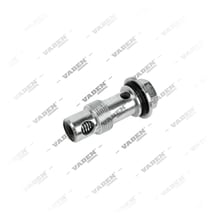
- Location: On the transmission valve block, near the supply point of the control line.
- Material: Steel body, stainless spring and elastomer gasket.
- Operating principle: Using spring-loaded mechanical valve logic, it releases excess pressure once the set pressure value is reached.
- Application: Trucks and tractors with pneumatically or hydraulically controlled transmission systems.
What are the functions of the Gearbox Pressure Limiting Valve?
The valve's primary function is to keep the pressure in the transmission control circuit within safe limits, protecting both the system and driver comfort. Without pressure limiting, sudden pressure fluctuations from the compressor or hydraulic pump could reach the valve assembly directly.
- Pressure limiting: Prevents the system pressure from exceeding the specified upper value.
- Component protection: Prevents premature wear of control cylinders, diaphragms and gaskets.
- Gear shift comfort: Contributes to smooth gear shifts by damping sudden pressure fluctuations.
- System safety: Reduces the risk of possible line rupture due to excessive pressure buildup.
What are the symptoms of a faulty Gearbox Pressure Limiting Valve?
A valve fault usually appears as stiffness or delay in gear shifts, or continuous air/oil leakage. In some cases the valve cannot close fully, so the system cannot build any pressure at all and gear shifting fails to occur.
- Harsh gear shifts: Sudden and harsh shifts because pressure fluctuations cannot be controlled.
- Shift delay: Extended shift time due to insufficient control pressure.
- Continuous leak: Air or oil leakage from the valve body.
- Abnormal noise: Irregular hissing or knocking sound from the valve during pressure release.
- Transmission fault code: Pressure sensor deviation code in electronically controlled systems.
How is the Gearbox Pressure Limiting Valve checked?
Checking starts with a visual inspection of the valve body and connection points. Then, while the system is running, the control pressure is measured with a manometer and compared against the OE tolerance range; gear shift behavior is also observed to assess whether there is abnormal stiffness or delay.
- Visual inspection: Checking the body for cracks, corrosion and loose connections.
- Manometer measurement: Verifying that the control pressure is within the OE range.
- Functional test: Observing gear shifts for stiffness and delay.
- Diagnostic scan: Reading pressure sensor data in electronically controlled systems.
What should be considered when replacing it?
Before replacing the valve, the system pressure must be fully released and, if necessary, the transmission oil drained. During installation of the new valve, the connection orientation and spring preload must be maintained according to factory settings.
- Pressure release: All pressure in the system must be released before installation.
- Correct installation direction: The valve must be installed according to the flow direction marking.
- Tightening torque: A general torque range should be applied to the connection fittings; the vehicle's current OE service manual should be treated as authoritative.
- System test: After installation, gear shifts should be tested to verify whether there is stiffness or delay.
How to choose the right Gearbox Pressure Limiting Valve?
The decisive criteria when choosing the correct valve are the transmission model, control system type (pneumatic/hydraulic) and OEM part number. A valve with a different pressure setting can adversely affect shift quality, so a product with the original pressure value should be preferred.
Selection criteria for the Transmission Control Valve Pressure Limiting Valve| Parameter | Typical value / range |
|---|
| Limiting pressure | 7-10 bar (pneumatic) or a hydraulic range depending on the system |
| Temperature resistance | -30°C to +100°C |
| Body material | Steel or aluminum alloy |
| Spring type | Stainless steel, fixed preload |
| Compatibility | Exact match with transmission model and OEM part number |
Maintenance and service life
The valve's service life depends on the quality of the oil or air in the system and the frequency of pressure fluctuations. Contaminated air or degraded transmission oil can lead to premature wear on the spring and gasket surfaces. Checking pressure values during periodic maintenance and visually inspecting the area around the valve is recommended. On vehicles that shift gears frequently under heavy load, such as urban distribution or construction site transport, the valve is exposed to more frequent thermal and pressure cycling; shortening maintenance intervals for such usage profiles is a practical approach to extending service life.
Regular maintenance of the air dryer also indirectly affects the valve's service life; when moist air reaches the system, corrosion can begin on the spring and gasket surfaces inside the valve. For this reason, maintenance of the transmission control circuit should not be assessed independently of overall air system maintenance.
VADEN Gearbox Pressure Limiting Valve
VADEN bases its pressure limiting valves for heavy commercial vehicle transmission control systems on OEM pressure and material standards. For the correct application, the VADEN product catalog and technical support line are available for reference.
Frequently Asked Questions (FAQ)
Can the vehicle still be driven if the pressure limiting valve fails?
The vehicle can generally still be driven, but gear shifts may become harsh or delayed; while the risk is low for short-term use, checking and replacement as soon as possible is recommended.
Under what conditions does the valve fail more often?
Contaminated air or degraded transmission oil, frequent and harsh gear shifts, and heavily loaded operating conditions are the main factors shortening the valve's service life.
What happens if a valve with the wrong pressure value is installed?
The system pressure falls outside the OE range; this can lead either to overly harsh gear shifts or to gear slipping caused by insufficient pressure.
How should testing be done after replacing the valve?
The vehicle should be run at low speed through several gear shifts, observing the smoothness and timing of the shifts, and if needed pressure data should be checked with a diagnostic tool.
Is the pressure limiting valve the same part as the safety valve?
Although they may show similar functional behavior in some systems, the pressure limiting valve generally regulates continuous operating pressure while the safety valve is designed for emergency release; this distinction can vary by vehicle model.
Related technical guide: Transmission Shift Cylinders: Failure, Replacement & Care