What Is an ABS Sensor Holder?
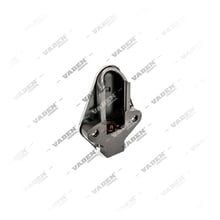
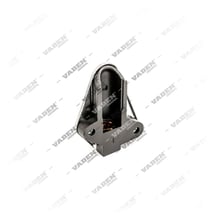
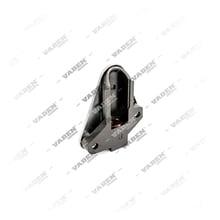
An ABS Sensor Holder is a small but critical mounting part that keeps the wheel speed sensor fixed and correctly positioned at its mounting point on the axle, hub, or chassis. On heavy commercial vehicles the ABS sensor is typically seated in its bore through a clip, a plastic or metal bushing, or a specially shaped bracket; in the field it is also called a "sensor clip" or "sensor bushing." Its job is to hold the sensor body steady against vibration, impact, and road dust so the air gap between the sensor tip and the tone ring stays constant. The ABS sensor holder should not be confused with the tone ring itself; this part is purely a retaining element that secures the sensor. On Mercedes-Benz, MAN, Scania, Volvo, DAF, Iveco, and Renault Trucks heavy vehicles, VADEN ORIGINAL sensor holders compatible with Bendix, Wabco, and Knorr-Bremse ABS/EBS systems are manufactured to original geometry to guarantee correct installation.
How Does the ABS Sensor Holder Work?
The ABS system tracks each wheel's rotational speed through sensors that read the tone ring. For the sensor to generate accurate data, its tip must sit at a millimetre-precise distance from the tone ring teeth. The ABS sensor holder locks the sensor body into this position, preventing it from shifting under vehicle jolts, brake vibration, and thermal expansion.
The holder usually takes the form of an elastic clip that engages a groove on the sensor body, or a bolted bracket; some applications also secure the wiring harness this way. When the holder wears out or breaks, the sensor begins to move in its bore, the air gap changes, and the ABS/EBS unit starts receiving faulty signals.
ABS Sensor Holder Technical Specifications
ABS sensor holders are manufactured in different geometries depending on the diameter of the sensor body, the mounting direction, and the vehicle's axle type. Material selection depends on the holder's exposure to oil, heat, and road salt inside the axle housing. A correctly designed holder must be tight enough to keep the sensor's axial and radial movement close to zero; a holder that is too loose or too tight disturbs the air gap and triggers fault codes. For exact dimensions and torque values, the vehicle manufacturer's current service manual is authoritative.
- Material: Vibration-resistant thermoplastic, reinforced nylon, or a near-stainless metal alloy.
- Mounting Direction: Geometry suited to radial or axial mounting.
- Compatibility: Dimensions vary by vehicle make, axle type, and sensor manufacturer.
- Manufacturing Standard: VADEN ORIGINAL sensor holders are produced to OE dimensions for direct replacement.
ABS Sensor Holder Types and Subgroups
- Clip-Type Sensor Holder: The most common type, locking elastically into a groove on the sensor body for quick removal and installation.
- Bushed (Rubber/Plastic) Sensor Holder: Cushions the sensor against vibration while holding it in place, made from oil- and heat-resistant polymer.
- Bolted Bracket-Type Holder: A more robust design bolted to the axle or chassis, suited to heavy-duty conditions.
- Combined Holder with Cable Clip: Secures the sensor while also holding the cable along its routing to prevent cable damage.
- Axle-Specific Profile Holders: Special forms with different mounting angles and depths for front axles, rear axles, and trailer axles.
How to Choose the Right ABS Sensor Holder
When choosing the right holder, the sensor body diameter, mounting direction, and the vehicle's axle configuration must all be evaluated together. A holder with the wrong geometry can push the sensor outside the air gap tolerance and trigger a fault code. The table below summarizes the key selection criteria; for guaranteed compatibility, verification against the vehicle's chassis number and original part reference is recommended.
ABS Sensor Holder Selection Criteria| Criterion | Evaluation Point |
|---|
| Sensor Body Diameter | The holder's inner diameter must seat against the sensor body without play |
| Mounting Direction | Geometry must suit radial or axial mounting |
| Axle Type | Profile specific to front axle, rear axle, or trailer axle |
| Material Strength | Thermoplastic or metal resistant to oil, heat, and road salt |
| Cable Management | Whether the cable clip is integrated or fitted separately |
| Sensor Brand Compatibility | Fit with Bendix, Wabco, or Knorr-Bremse sensor bodies |
ABS Sensor Holder Maintenance and Key Considerations
- Inspect the Holder Before Removing the Sensor: A cracked or broken holder should be replaced together with the sensor; replacing the sensor alone will not fix the fault.
- Do Not Apply Excessive Force During Installation: Forcing a clip or bracket into place can crack the plastic housing; apply controlled pressure until it seats fully.
- Check the Air Gap After Installation: Once the holder is replaced, the distance between the sensor tip and the tone ring must fall within the manufacturer's specified range.
- Pay Attention to Cable Routing: When replacing the holder, keep the wiring harness away from moving parts and secure it along its original routing.
- Carry Out Periodic Visual Inspection: During axle maintenance, check the holder visually for wear, cracking, or looseness.
Common Faults and Solutions
- ABS Warning Light On, Sensor Appears Sound: Usually an air-gap deviation caused by a cracked or loose holder; replace the holder and re-position the sensor.
- Sensor Moves or Vibrates in Its Bore: A worn clip or degraded bushing has lost its grip; the holder needs to be replaced completely.
- Sensor Cable Damaged by Chafing: When the cable clip is broken or missing, the cable contacts moving axle parts; resolved by replacing the combined holder and clip.
- Recurring Sensor Failure Despite a New Sensor: The root cause is usually an old, deformed holder; replace the holder along with the sensor.
- Holder Has Come Completely Out of Its Bore: The bore in the axle housing or bracket may be damaged; check the mounting surface when replacing the holder.
Why VADEN ORIGINAL?
- Manufactured to OE Dimensions: Holders molded to original geometry that seat against the sensor body without play.
- Broad OEM Coverage: References span numerous vehicle makes and models compatible with Bendix, Wabco, and Knorr-Bremse sensor systems.
- Vibration- and Heat-Resistant Materials: Thermoplastic and metal alternatives strong enough to preserve the air gap under heavy-duty use.
- Exported to More Than 100 Countries: Parts built to international quality standards provide reliable supply to fleet operators worldwide.
Conclusion
Although it may look minor, the ABS sensor holder is a critical part that preserves the air gap the ABS/EBS system needs to read accurate data. A worn or broken holder can cause recurring fault codes even when the sensor itself is flawless. Manufactured to OE dimensions, VADEN ORIGINAL sensor holders provide a reliable solution for correct installation and long-lasting ABS performance.
Frequently Asked Questions (FAQ)
What is the difference between an ABS sensor holder and the tone ring?
The sensor holder is a clip- or bracket-type part that physically secures the ABS sensor at its mounting point. The tone ring, by contrast, is the toothed ring that rotates with the wheel and that the sensor reads to generate the speed signal; the two parts serve entirely different functions.
Does the ABS warning light come on when the sensor holder breaks?
Yes, a cracked or loose holder shifts the sensor's position and disturbs the air gap, causing the ABS/EBS unit to read this as a faulty signal and illuminate the warning light. Even if the sensor itself is sound, the fault can recur if the holder is the actual problem.
Does the sensor need to be replaced when the holder is replaced?
Not necessarily; if the sensor is undamaged and functioning correctly, replacing only the holder is sufficient. However, if the sensor body also shows wear or damage, replacing both together prevents recurring faults after installation.
Which vehicles use the ABS sensor holder?
VADEN ORIGINAL sensor holders are used on heavy trucks, tractor units, and buses from makes such as Mercedes-Benz, MAN, Scania, Volvo, DAF, Iveco, and Renault Trucks, compatible with Bendix, Wabco, and Knorr-Bremse ABS/EBS sensors. For exact compatibility, verification against the vehicle's chassis number is recommended.
Why does the air gap matter when installing the sensor holder?
The air gap is the distance between the sensor tip and the tone ring, and it must stay within the manufacturer's tolerance for a strong, accurate signal. The holder is the component that keeps this distance fixed; an incorrect or damaged holder disturbs the air gap, leading to a weak signal and a fault code.
Related technical guide: ABS Wheel Speed Sensor & ECU: Faults, Replacement & Care