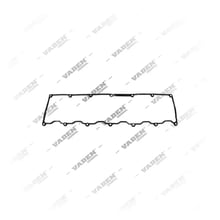
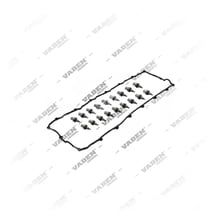
What Is a Valve Cover Gasket?
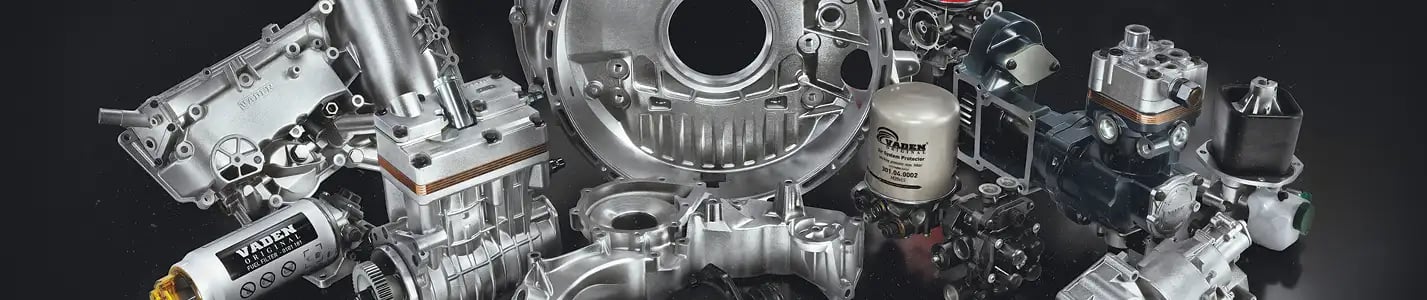
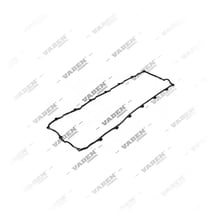
The valve cover gasket is the sealing element fitted between the valve cover and the cylinder head at the top of the engine, preventing engine oil from leaking out. In heavy commercial vehicles, this part is also known in the field as the "cover gasket," "valve cover seal," or "cylinder head cover gasket." The valve cover gasket fills the microscopic gaps between the mating surface of the cover that encloses the cylinder head and the cylinder head surface itself, blocking oil and gas leakage. Since lubrication of the valve mechanism takes place in this area, the integrity of the gasket is decisive for engine cleanliness and for maintaining the correct oil level. Produced in different geometries and materials for Mercedes-Benz, MAN, Scania, Volvo, DAF, Iveco, and Renault Trucks engines, this gasket is manufactured by VADEN ORIGINAL to OE dimensions.
Functions of the Valve Cover Gasket
- Creating a Sealing Barrier: As the cover bolts are tightened, the gasket compresses and forms an oil- and airtight contact line between the two metal surfaces.
- Adapting to Thermal Expansion: As engine temperature rises, the components expand; the gasket's flexible structure accommodates this movement and maintains the seal.
- Damping Vibration: By absorbing engine vibration, it delays the loosening of the cover bolts over time and the resulting formation of micro-gaps on the surface.
- Controlling Crankcase Gas and Oil Vapor: It keeps oil vapor and gases that accumulate under the valve cover from escaping, keeping the engine bay clean.
- Preserving the Oil Level: A sound gasket prevents the unexpected oil loss that results from small leaks accumulating over time.
Technical Specifications of the Valve Cover Gasket
Valve cover gaskets are predominantly manufactured from rubber-based elastomer material (NBR, silicone, or FKM compounds); some older-generation engines also use cork-based or multi-layer metal-elastomer hybrid gaskets. Material selection is determined by the engine's operating temperature, oil type, and cover material (aluminum or plastic); a material that cannot withstand the temperature can harden and crack in a short time. The gasket's cross-sectional profile, groove depth, and compression allowance are manufactured with precision according to the engine manufacturer's design; even the smallest deviation in these dimensions can compromise the seal. On some modern engines the gasket is integrated into the cover and replaced as a single unit; on others, only the rubber gasket is sold separately. Torque values and tightening sequence vary by engine model; the vehicle's current service manual should always be consulted for exact values.
Types and Subcategories of Valve Cover Gaskets
- Rubber (Elastomer) Gaskets: NBR- or silicone-based, this is the most common gasket type in today's engines, flexible and able to reshape itself.
- Cork-Based Gaskets: A traditional gasket type found in older engine generations, low-cost but with limited temperature tolerance.
- Metal-Reinforced Multi-Layer Gaskets: A durable construction combining an elastomer with a metal core, used in engines exposed to high pressure and temperature.
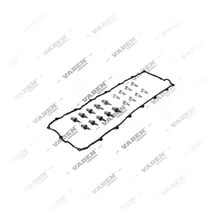
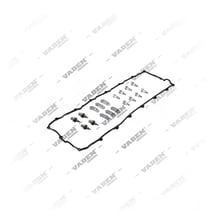
- Cover-Integrated Gasket Assemblies: Gasket sets that come as a single piece with the valve cover and are automatically renewed when the cover is replaced.
- Auxiliary Sealing Elements: Additional gaskets used together with the main cover gasket, such as around the spark plug well or the oil filler cap.
- O-Ring Type Cover Gaskets: Circular-section sealing rings that sit in a groove, used instead of a flat gasket in some compact engine designs.
How to Choose the Right Valve Cover Gasket
When selecting the correct gasket, verification should first be made using the vehicle's engine code and chassis number; even within the same engine family, cover and gasket geometry can vary by production year. The cover material and gasket material must be compatible, and the groove depth and gasket cross-section must match the original dimensions; otherwise, leaks can persist even when the correct torque is applied. The table below summarizes the key criteria in the selection process.
Valve Cover Gasket Selection and Compatibility Criteria| Criterion | Description |
|---|
| Engine Code / Chassis Match | The gasket must be verified exactly against the vehicle's engine code and production year |
| Gasket Material | NBR-, silicone-, or FKM-based elastomer; must suit the engine temperature and oil type |
| Cover Type | Groove depth and mating surface vary depending on an aluminum or plastic valve cover |
| Gasket Structure | Can be a one-piece rubber gasket, a cover-integrated assembly, or an O-ring type |
| Tightening Torque and Sequence | The values and sequence specified in the vehicle's current service manual must be followed |
| OEM Reference Number | Should be cross-checked against Wabco, Knorr-Bremse, or vehicle manufacturer codes |
Valve Cover Gasket Maintenance and Key Considerations
- Clean the Cover Surface: After removal, a new gasket should not be fitted until all old gasket residue has been fully cleaned from the cylinder head and valve cover surfaces.
- Check Surface Flatness: If the cover surface is warped or has deep scratches, a proper seal may not be achieved even with a new gasket.
- Tighten in the Correct Torque Sequence: Cover bolts should be tightened in the specified sequence and in stages; overtightening can crush the gasket.
- Seat the Gasket Correctly in the Groove: The gasket must be positioned so that it seats fully in its groove without twisting or folding; incorrect installation causes leaks in a short time.
- Perform Periodic Visual Inspection: Checking for oil traces around the cover during engine servicing can catch leaks at an early stage.
Common Faults and Solutions
- Oil Leak Around the Cover: The most common symptom, generally caused by the gasket hardening or cracking; the gasket must be replaced completely.
- Burnt Oil Smell in the Engine Bay: Caused by leaking oil coming into contact with the exhaust manifold or hot surfaces; resolved by replacing the gasket and cleaning the surfaces.
- Unexpected Drop in Oil Level: Small leaks can go unnoticed over time and lead to oil loss; the area around the cover should be checked regularly.
- Loosening of Cover Bolts: Bolts can loosen over time due to vibration and thermal cycling; periodic torque checks prevent leaks.
- Leak Persisting Despite a New Gasket: Usually caused by warping of the cover or cylinder head surface; surface flatness should be checked.
Why VADEN ORIGINAL?
- Manufactured to OE Dimensions: Cross-section, groove depth, and material quality are produced to exactly match original part dimensions.
- Extensive OEM Reference Matching: The correct application can be easily identified for Mercedes-Benz, MAN, Scania, Volvo, DAF, Iveco, and Renault Trucks engines.
- Heat- and Oil-Resistant Material: The elastomer compounds used reduce the risk of the gasket hardening and cracking over time.
- International Reach: With a production infrastructure exporting to more than 100 countries, ready-stock solutions are offered to fleet operators and service centers.
Conclusion
Despite its small size, the valve cover gasket is a critical component for the engine's oil-tightness and cleanliness. A gasket fitted with the correct material, correct dimensions, and correct installation technique eliminates the risk of oil leakage for a long time. VADEN ORIGINAL's OE-quality valve cover gaskets offer a reliable solution for heavy commercial vehicle fleets.
Frequently Asked Questions (FAQ)
What does a valve cover gasket do?
The valve cover gasket seals the contact surface between the valve cover and the cylinder head, preventing engine oil from leaking out. It also shields the area housing the valve mechanism from dust and dirt, helping keep the engine running clean.
What symptoms appear when a valve cover gasket fails?
The most common symptom is oil traces accumulating around the valve cover and a burnt oil smell in the engine bay. Over time, an unexpected drop in oil level, loosening of the cover bolts, and oil buildup on the engine can also be observed.
Why does a valve cover gasket start leaking over time?
The gasket material hardens and loses its flexibility over time due to temperature cycles and engine vibration, and micro-cracks can develop. Loosening of the cover bolts or incorrect installation are also common causes of early leaks.
What should be considered when replacing a valve cover gasket?
Old gasket residue should be cleaned off, the cover and cylinder head surfaces should be checked for warping, and the bolts should be tightened in stages in the specified sequence. Overtightening can also cause the new gasket to fail in a short time.
Which vehicles are VADEN ORIGINAL valve cover gaskets compatible with?
VADEN ORIGINAL valve cover gaskets can be used to OE dimensions on Mercedes-Benz, MAN, Scania, Volvo, DAF, Iveco, and Renault Trucks heavy commercial vehicle engines. To confirm the correct application, it is recommended to cross-check against the engine code and chassis number.
Related technical guide: Engine Valve Train & Adjustment Shim: Faults, Replacement, Care