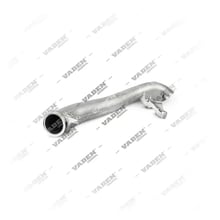
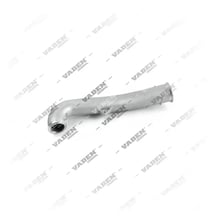
What Is a Turbo Air Charge Pipe?
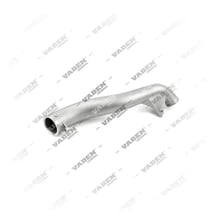
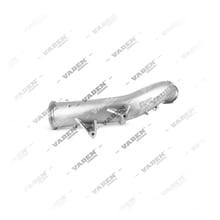
A turbo charge air pipe is the rigid or semi-flexible metal/composite pipe on heavy commercial vehicles that carries the compressed air produced by the turbocharger to the intercooler and, from there, to the engine intake manifold. In the field it also goes by names such as "charge air pipe", "boost pipe", or "turbo intercooler pipe". Positioned within the Engine > Turbo group, this component is the physical carrier of the air circuit both between the turbocharger outlet and the intercooler inlet, and between the intercooler outlet and the intake manifold. The smallest crack, loose clamp, or puncture along the run causes boost pressure to drop and performance to suffer immediately. The integrity of the turbo charge air pipe run is critical to the engine's ability to produce its rated power and fuel efficiency.
How Does a Turbo Air Charge Pipe Work?
The turbocharger compresses atmospheric air with a compressor wheel spun by exhaust gas energy, then sends this pressurized air through the turbo charge air pipe to the intercooler. Air that heats up during compression is cooled in the intercooler and then routed to the intake manifold through a second pipe run. Throughout, the pipe walls are continuously exposed to boost pressures in the 1-2.5 bar range and to engine vibration. Along the turbo charge air pipe run, clamps and gasket surfaces ensure that full pressure reaches the cylinders without any air leakage. If pressure loss occurs anywhere, the engine control unit raises a boost pressure fault, degrading both performance and emissions.
Turbo Air Charge Pipe Technical Specifications
Turbo charge air pipes are made from aluminum, steel, or high-temperature reinforced silicone/rubber hose sections. The hot side (turbo outlet) is usually made from material rated to withstand temperatures up to 120-200 degrees Celsius, while the cold side (intercooler outlet) operates at a lower temperature. Pipe diameter varies with engine displacement and turbo flow rate; the correct inner diameter directly affects airflow velocity and pressure drop. Clamp connection points must be sized to guarantee sealing against system pressure and vibration. Vehicle make, model, engine code, and chassis number must always be verified for compatibility, since pipe geometry can differ by version even within the same engine family.
- Material: Aluminum, steel, or a reinforced silicone/rubber blend, selected according to position in the circuit.
- Heat Resistance: The hot side must withstand continuous temperatures in the 120-200 degree Celsius range.
- Diameter and Wall Thickness: Inner diameter optimized for engine flow rate minimizes pressure loss.
- Connection Standard: Clamp and gasket surfaces must match the original dimensions exactly.
Turbo Air Charge Pipe Types and Subgroups
- Turbo Outlet Pipe (Hot Side): Carries high-temperature pressurized air from the turbocharger to the intercooler.
- Intercooler Inlet/Outlet Pipes: Provide the connection between the intercooler and the turbo and intake manifold.
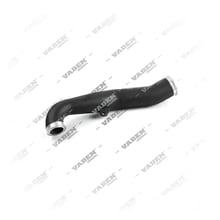
- Flexible Silicone/Rubber Connector Hoses: Absorb vibration and installation tolerance between metal pipe segments.
- Rigid Aluminum or Steel Pipe Segments: Deliver air with low pressure loss along fixed routing.
- Clamps and Connection Hardware: Join pipe to hose and to turbo/manifold connection points in a leak-free manner.
- Pipes with Pressure Sensor Ports: Variants that include a dedicated port so the boost pressure sensor can take an accurate reading.
How to Choose the Right Turbo Air Charge Pipe
Choosing the right turbo charge air pipe requires verifying the vehicle's make, model, engine code, chassis number, and the pipe's exact position in the system (hot side or cold side). The original pipe geometry, diameter, and clamp connection type must match exactly; otherwise installation becomes difficult and the risk of air leakage increases. The table below summarizes the key criteria to consider during selection.
Turbo Charge Air Pipe Selection Criteria| Criterion | Why It Matters |
|---|
| Vehicle Make/Model/Engine Code | Pipe geometry and connection points vary by engine family |
| Hot Side / Cold Side | Material heat resistance and wall thickness differ by position |
| Inner Diameter and Length | Directly affects airflow velocity and boost pressure efficiency |
| Clamp Connection Type | Must match the original type for sealing and ease of installation |
| Sensor Connection Port | The boost pressure sensor must be correctly positioned |
| Material Quality | Determines long-term resistance to vibration, heat, and pressure cycling |
Turbo Air Charge Pipe Maintenance and What to Watch For
- Check Clamp Tightness Periodically: Vibration-loosened clamps are the most common cause of air leaks; check torque values at scheduled maintenance.
- Inspect the Pipe Surface for Cracks and Wear: Micro-cracks on hot-side composite sections can grow into ruptures over time.
- Check Whether Flexible Hose Sections Have Hardened: Replace silicone/rubber sections hardened and cracked by heat as part of preventive maintenance.
- Apply the Correct Torque During Installation: Overtightening can crack the pipe, undertightening causes leaks; follow the torque value in the service manual.
- Never Skip the Leak Test: After any repair, confirm all connections are leak-free with a pressurized air or smoke test.
Common Failures and Their Solutions
- Power Loss and Sluggish Acceleration: Boost pressure leak from a crack or loose clamp; check all connections and replace the damaged pipe.
- Check Engine Light and Boost Pressure Fault Code: A leak at the sensor port or a pipe crack; locate it with a pressure test and renew the part.
- Turbo Whistling or Air Leak Noise: Loose clamps or a torn hose; tighten clamps and replace the damaged hose.
- Rising Fuel Consumption: The ECU compensating the fuel map for low boost pressure; eliminate the leak in the pipe run.
- Increase in Exhaust Smoke: Incomplete combustion from insufficient air intake; inspect the charge air pipe and intercooler connections end to end.
Why VADEN ORIGINAL?
- Manufactured to OE Dimensions: Production that matches the original pipe geometry, diameter, and clamp connection points exactly.
- Broad OEM Coverage: A comprehensive range for Mercedes-Benz, MAN, Scania, Volvo, DAF, Iveco, and Renault Trucks heavy-vehicle engine groups.
- Heat- and Pressure-Resistant Material: Long service life through material selection optimized for hot-side and cold-side conditions.
- Exported to More Than 100 Countries: A quality-controlled production standard trusted by fleet operators worldwide.
Conclusion
The turbo charge air pipe is an invisible but critical link that carries the turbocharger's pressure to the engine intact. Regularly checking clamp tightness and catching cracking or hardening early heads off failures such as power loss and rising fuel consumption. With a VADEN ORIGINAL turbo charge air pipe built to OE dimensions and matched to your vehicle's engine code and the pipe's position in the system, you can secure boost pressure integrity and engine performance.
Frequently Asked Questions (FAQ)
What does a turbo charge air pipe do?
A turbo charge air pipe carries the air compressed by the turbocharger to the intercooler and from there to the engine intake manifold. Through this pipe run, cooled, dense air reaches the cylinders so the engine can deliver its rated power and fuel efficiency.
How can I tell if a turbo charge air pipe has failed?
Power loss, sluggish acceleration, an illuminated check engine light, a boost pressure fault code, a whistling air-leak noise, and rising fuel consumption are the most common symptoms. In any of these cases, the pipe and its clamp connections should be checked as soon as possible.
Why does a turbo charge air pipe crack or puncture?
Continuous heat and pressure cycling, vibration, loose clamps, and material fatigue can all cause a pipe to crack or puncture over time. The risk is higher on hot-side composite sections that are exposed to high temperatures for long periods.
Which vehicles are VADEN ORIGINAL turbo charge air pipes compatible with?
VADEN ORIGINAL turbo charge air pipes are manufactured for heavy commercial vehicle engine groups including Mercedes-Benz, MAN, Scania, Volvo, DAF, Iveco, and Renault Trucks. Verifying the vehicle's make, model, engine code, and chassis number before ordering is recommended.
What should I keep in mind when replacing a turbo charge air pipe?
During installation, apply the torque value specified in the service manual to the clamps, make sure the pipe routing is correctly aligned, and run a leak test once the job is done. Incorrect torque or misalignment can lead to a new leak within a short time.
Vehicle and engine pages that list parts from this category: Volvo D16
Related technical guide: Turbo Intake & Exhaust Inlet Pipe: Faults and Replacement