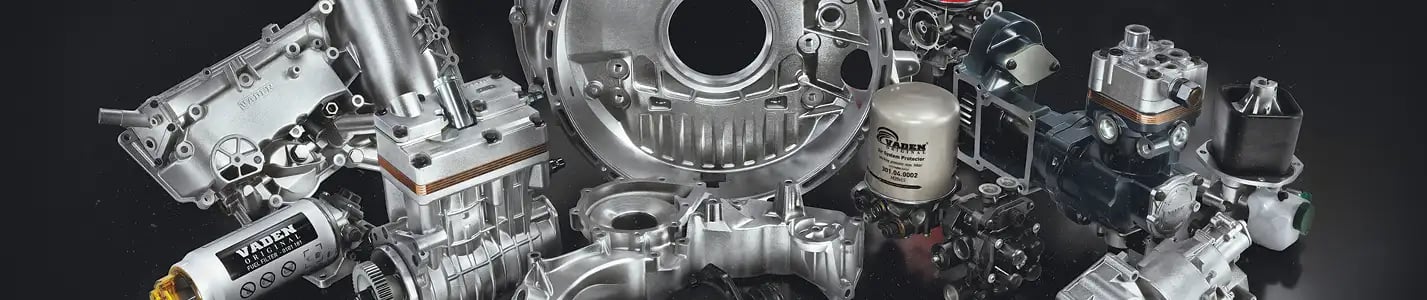
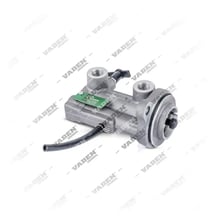
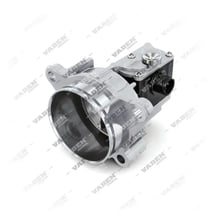
What is Transmission Cylinder?
The transmission shift cylinder is an actuator consisting of a body, piston, seal kit and connecting elements. It is connected to the gear selection and engagement mechanism of the transmission; once the driver's gear request is transmitted to the control valve through the electronic control unit, the valve directs air or hydraulic pressure to the relevant cylinder, and the piston motion moves the shift lever to the requested position.
Before disconnecting the air or hydraulic lines on the cylinder, the pressure in the system must always be released.
What are the functions of Transmission Cylinder?
- Gear selection: Moves the shift fork along the horizontal axis to select the correct gear rail.
- Engagement: Pushes the selected gear in the engagement direction so that the gears mesh.
- Position feedback: On some models, piston position is monitored by a sensor and reported to the electronic control unit.
- Smooth shifting: Supports jolt-free gear changes through staged pressure application.
- Locking: Some designs include a locking function that mechanically fixes the gear position.
What are the symptoms of a failing Transmission Cylinder Cylinder?
Air or hydraulic leaks due to seal wear, delayed, stiff or incomplete gear changes are the most common symptoms. If the piston seizes, the gear may not engage at all or the vehicle may get stuck in neutral. If the cylinder body has a crack, pressure loss and continuously running compressor/hydraulic pump can be observed. In electronically controlled systems, a fault code being logged and the transmission warning lamp lighting on the dashboard are also typical symptoms. If the internal seal wears, an internal leak that is not visible from outside can also occur; in this case, even though the cylinder looks dry externally, gear shift time can lengthen due to pressure loss.
How is Transmission Cylinder inspected?
Inspection starts with a soap-water leak test on the air or hydraulic lines. The cylinder is removed and the piston surface is examined for scratches, corrosion, or seal groove wear. The piston is moved by hand to check for stiffness. On electronically controlled cylinders, a diagnostic tool is used to read sensor signals and solenoid valve commands to distinguish whether the fault source is electrical or mechanical.
What should be considered during replacement?
- Correct model: The cylinder must match the transmission type and gear function (selection/engagement).
- Connecting lines: Sealing gaskets on air/hydraulic connections should be renewed.
- Calibration: On electronically controlled systems, a calibration or learning procedure must be performed after replacement.
- Cleanliness: Dirt and moisture inside the line should be flushed out before installation.
- Function test: All gear stages should be tested after installation.
- Sensor position: If a piston position sensor is fitted, verify it is correctly positioned and the wiring connection is secure.
How to choose Transmission Cylinder?
Selection should verify the transmission brand and model, cylinder function (selection or engagement) and supply type (air/hydraulic). The vehicle's current OE service manual should be used as reference. Since an incorrect model choice can cause the piston stroke length to be incompatible with the internal shift fork and thus prevent full gear engagement, verifying compatibility against the original part number or chassis number before purchase is recommended.
Transmission Shift Cylinder - General Information| Property | Description |
|---|
| Application | Mechanical/semi-automatic transmission gear actuator |
| Working principle | Linear piston motion driven by pneumatic or hydraulic pressure |
| Function | Gear selection and/or engagement |
| Control type | Electronic solenoid valve or mechanical control |
| Service interval | Periodic line leak check and seal inspection |
Maintenance and service life
The service life of a transmission shift cylinder depends on the cleanliness of the supply air/hydraulic oil and seal quality. Regular maintenance of the moisture and oil separator filters in the air system delays corrosion inside the cylinder. In hydraulic systems, oil level and cleanliness should be checked periodically. Periodic movement of the piston is recommended for vehicles left unused for a long time to prevent sticking. On electronically controlled systems, periodically checking the solenoid valve connectors for moisture and corrosion is also recommended.
VADEN Transmission Cylinder
VADEN manufactures selection and engagement cylinders for various transmission families to OE-equivalent quality standards, offering solutions that improve the shifting system reliability of heavy commercial vehicle fleets. With correct piston stroke tolerance and seal material quality, the goal is long-lasting, consistent shift performance in both manually controlled and electro-pneumatic AMT systems.
Frequently Asked Questions (FAQ)
What role does a transmission shift cylinder play
The transmission shift cylinder is an actuator that converts air or hydraulic pressure into linear motion to perform gear selection and engagement.
How can a fault in the transmission shift cylinder be identified
Delayed or stiff gear changes, air or hydraulic leaks, and a logged fault code are typical symptoms of a cylinder fault.
Is calibration required after replacing the shift cylinder
Yes, on electronically controlled transmissions a calibration or learning procedure must be performed after replacement.
Does the shift cylinder work pneumatically or hydraulically
It depends on the transmission type; some models use air pressure, others use hydraulic oil pressure. The correct type should be verified from the vehicle's OE manual.
What should be done before removing the cylinder
Before disconnecting the lines, the air or hydraulic pressure in the system must always be released.
Related technical guide: Transmission PTO: Faults, Replacement and Maintenance Guide