What Is a Thermostat?
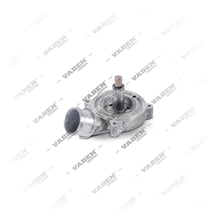
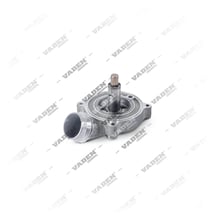
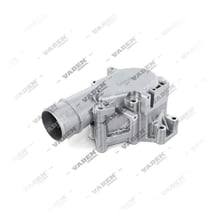
A thermostat is a mechanical valve in the cooling system of heavy commercial vehicles that regulates engine temperature. It determines whether coolant leaving the engine block is sent to the radiator, based on the temperature of the fluid. In the field it is also known as the "coolant thermostat" or "water valve." While the engine is cold, the thermostat stays closed and circulates coolant through a short loop inside the engine, allowing it to warm up quickly; once a set temperature is reached, it opens and lets coolant flow through to the radiator. This simple yet critical component is standard equipment on heavy-duty engines from Mercedes-Benz, MAN, Scania, Volvo, DAF, Iveco, Renault Trucks and BMC, and it has a direct impact on engine life and fuel efficiency.
How Does a Thermostat Work?
Inside the thermostat housing sits a heat-sensitive wax fill element. As coolant temperature rises, this fill expands, pushing a piston that opens the valve plate. When the temperature drops below the set threshold, the fill contracts and spring pressure closes the valve again. This mechanism lets the thermostat operate entirely on its own, without needing any external electrical signal. On some modern heavy-duty engines, thermostats are electronically assisted types that can slightly shift their opening temperature on command from the engine control unit. In both cases the goal is the same: keep the engine at its most efficient operating temperature and prevent wear caused by either cold running or overheating.
Thermostat Technical Specifications
Thermostats are classified by opening temperature; on heavy commercial vehicles this value typically ranges from 79-92°C and is selected according to the specification set by the engine manufacturer. The housing material is most often brass, steel or high-temperature-resistant polymer composite; gasket surfaces are machined to seal reliably against coolant pressure. The full opening stroke and flow capacity of the thermostat are engineered to match the radiator capacity and engine displacement; an incorrect stroke value leads to either insufficient or excessive cooling. Depending on the application, a thermostat may be single-valve, dual-valve (bypass-controlled), or a mappable electronic type. A thermostat without the correct calibration value can cause the engine control unit to read the wrong temperature and disrupt the fuel map; for this reason the opening temperature and stroke values in the vehicle manufacturer's current service manual should always be the reference.
Thermostat Types and Subcategories
- Single-Valve Thermostat: The most common basic type, which only opens and closes the radiator line.
- Dual-Valve (Bypass) Thermostat: Controls the radiator line and the internal bypass line simultaneously for finer temperature balance.
- Electronically Controlled Thermostat: A type that can shift its opening temperature on command from the engine control unit, optimized for load and fuel consumption.
- Thermostat Supplied with Housing: On some engines, the thermostat is replaced as a single unit together with its plastic or aluminum housing.
- Different Opening-Temperature Variants: Versions produced for the same engine at calibrations such as 79°C, 83°C or 87°C are chosen according to climate and duty cycle.
How to Choose the Right Thermostat?
The most important criterion when selecting a thermostat is an exact match to the vehicle's engine code and OEM part number; a thermostat that opens at a temperature different from what the engine manufacturer specifies will negatively affect both cooling performance and the emission control system. The table below summarizes the key criteria to consider during selection.
Thermostat Selection Criteria| Criterion | Description |
|---|
| Opening Temperature | Must exactly match the value set by the engine manufacturer (typically 79-92°C) |
| Housing Type | Single-valve, dual-valve or electronically controlled; selected according to engine design |
| Gasket and Sealing | An original-spec gasket surface prevents coolant leaks |
| Vehicle Compatibility | Mercedes-Benz, MAN, Scania, Volvo, DAF, Iveco, Renault Trucks, BMC platforms |
| Material Quality | Brass, steel or composite housing resistant to high temperature and pressure |
Thermostat Maintenance and What to Watch For
- Check Coolant Level Regularly: A low fluid level can cause the thermostat to operate incorrectly and lead to engine overheating.
- Orient It Correctly on Replacement: When fitting the thermostat into the housing, mount it with the air bleed (jiggle valve) facing upward; reverse installation creates an air pocket.
- Always Renew the Gasket: Do not reuse the old gasket when replacing the thermostat; fit a new gasket to prevent the risk of coolant leaks.
- Bleed the System: After replacement, bleed the cooling system properly; a trapped air pocket causes the thermostat to sense temperature incorrectly.
- Use a Part Matching the Correct Calibration: Fitting a thermostat with a different opening temperature disrupts engine temperature management and increases fuel consumption.
Common Faults and Solutions
- Engine Overheats: The thermostat is stuck closed; remove it and test it, and replace it with a new one if it is faulty.
- Engine Does Not Warm Up Enough: The thermostat is stuck open and coolant is constantly flowing to the radiator; replace the thermostat.
- Temperature Gauge Fluctuates: The thermostat is opening and closing irregularly, or there is an air pocket in the system; bleed the system and renew the thermostat if necessary.
- Insufficient Warm Air from the Heater: The thermostat is opening too early or the coolant level is low; check the fluid level and verify thermostat calibration.
- Coolant Leaking from the Thermostat Housing: A worn gasket or a cracked housing; renew the gasket and, if necessary, the housing at original dimensions.
Why VADEN ORIGINAL?
- Manufactured to OE Dimensions: Opening temperature and stroke values are produced to match original engine specifications exactly.
- Broad OEM Coverage: A comprehensive product range is offered, compatible with numerous heavy commercial vehicle platforms including Mercedes-Benz, MAN, Scania, Volvo, DAF, Iveco, Renault Trucks and BMC.
- Durable Materials and Sealing: A housing resistant to high temperature and pressure, together with precision gasket surfaces, ensures long service life and leak-free operation.
- International Quality Assurance: VADEN ORIGINAL products, exported to more than 100 countries, undergo consistent quality control processes.
Conclusion
Despite its small size, the thermostat is a critical component that maintains the engine's thermal balance and keeps the cooling system running efficiently. Using a thermostat manufactured to OEM dimensions with the correct opening temperature reduces engine wear, preserves fuel efficiency and minimizes the risk of unexpected breakdowns. VADEN ORIGINAL thermostats deliver the reliability and OEM compatibility that heavy commercial vehicle fleets need.
Frequently Asked Questions (FAQ)
Can the vehicle be driven if the thermostat fails?
The vehicle can technically be driven a short distance with a faulty thermostat, but this is not recommended; a thermostat stuck closed can cause the engine to overheat and suffer serious damage. A thermostat stuck open, on the other hand, prevents the engine from warming up sufficiently, increases fuel consumption and weakens cabin heating. As soon as symptoms of a fault are noticed, the thermostat should be checked and replaced as soon as possible.
At what mileage should the thermostat be replaced?
The thermostat has no fixed replacement interval; it generally continues to function until it fails, but it is recommended to inspect it and replace it if necessary during coolant changes or water pump service. The intervals specified in the vehicle manufacturer's maintenance schedule and the overall age of the engine should also be taken into account when deciding on replacement.
What happens if a thermostat with the wrong opening temperature is fitted?
A thermostat that opens at a temperature different from what the engine manufacturer specifies causes the engine to run inefficiently, increases fuel consumption and disrupts the emission control system. For this reason, always use a thermostat that matches the vehicle's engine code and OEM part number.
What should be considered when replacing the thermostat?
When fitting the thermostat, the air bleed must face the correct direction, the gasket must always be renewed, and the cooling system must be properly bled after installation. Incorrect installation or a trapped air pocket in the system can cause the thermostat to sense temperature incorrectly and lead to temperature fluctuations.
Which vehicles are VADEN ORIGINAL thermostats compatible with?
VADEN ORIGINAL thermostats are manufactured to be compatible with numerous engine types from heavy commercial vehicle brands such as Mercedes-Benz, MAN, Scania, Volvo, DAF, Iveco, Renault Trucks and BMC. It is recommended to verify the engine code and OEM part number before ordering.
Vehicle and engine pages that list parts from this category: Freightliner · Ford
Related technical guide: Thermostat Failure Symptoms: Why Does the Engine Warm Up Slowly or Overheat?